

When you’re new to gardening, and don’t know much, there’s one thing you can guarantee – plants need to grow in the dirt. But here’s the thing you’re likely less familiar with – dirt is soil, but soil isn’t dirt. And plants need to grow in soil. Often overlooked by beginners, when you plant your garden in the soil, you need to maintain the soil. It’s not something that you can keep planting in year after year without maintaining it. And that right there is how beginner gardeners end up making mistakes with their soil.
Healthy garden soil does more than just grow healthy plants. It stores more water (meaning you get to water less, yay!) and it also stores carbon from the atmosphere. And that’s a good thing considering the environmental situation we’re currently facing. Healthy soil also provides life to billions of living organisms that we require in order to grow our food, and those living organisms even help fight pests and diseases that are common in the garden.
As a new gardener it’s easy to plant your seedlings in the garden, water them, harvest and close down the garden. Only to do it again next year. But if you don’t maintain your soil you’ll start to notice that your garden isn’t looking quite right. Your plants might be the wrong colour, they might produce less than previous years or they might just not grow at all. So learning to care for your soil is the key to growing a bountiful garden every year.

I mentioned this above but I’ll share it again; dirt is soil, but soil is not dirt. Dirt is only a component of soil because soil is actually a living ecosystem. One teaspoon of soil contains more living organisms than humans on the planet. That’s right, tens of billions of organisms in just a single teaspoon! That is, if the soil is healthy. Soil is filled with insects that help decompose matter, nematodes that eat microorganisms, bacteria and fungi that can either help or harm your garden, and so much more. The goal with a garden is to create soil that can help manage any diseases or pests that find your garden. Good bacteria to fight the bad bacteria, or organisms whose favourite meal is insect eggs. When you have healthy soil you have a healthy garden.
When I was a new gardener, I knew that soil and plant nutrition were a thing, but I didn’t really understand how much nutrients got used up in a season, or how often they needed to be replenished. NPK are common letters thrown around but what they’re needed for or how to add them to your garden can often be forgotten. This is why it’s so important to understand all of the nutrients that are found in your soil and how your plants use them. If you plan to garden in the square foot gardening method then understanding soil nutrition is even more important. This method is very intensive on your soil since so many plants are grown in a small area. This means that nutrients are used up faster than in traditional growing methods. Amending your soil every season, whether it’s in the fall or in the spring, is important in order to keep your soil healthy and full of nutrition. Amendments can include topping your garden with compost or adding mulch.

I’m not sure if this is just a me thing, but I always scoffed at the idea of mulch. Perhaps it was because the only mulch I ever really saw around were the dyed wood pieces that some people add to their ornamental gardens. Or I thought that I wasn’t a farmer or a homesteader and mulch isn’t for urban gardens. Either I’m alone in this thought or perhaps you think it too. However, mulch is a simple way to build your garden soil while also helping you out. A mulched garden holds in moisture for longer which means you have to water less. I don’t recommend using dyed wood chips in your gardens because you’re adding chemicals to your garden, and wood chips are best for perennial gardens and not annual gardens. If you’re growing an annual garden look to use straw, leaves or dried grass clippings. All of these provide food for the microorganisms in your soil. As they break the mulch down it adds nutrients for the season.

I can’t count the number of beginner gardeners I’ve met that have issues with their gardens and can’t quite figure out what’s going on. When I ask them what soil they use, or if they’ve topped up their soil this year, the answer always seems to be the same: manure. The reason that there is so much manure available at the store is because of the amount of manure that is being produced every year from animal agriculture. And to try and find a way to deal with the poop problem, they package it up and sell it to gardeners. But the truth is manure is not required at the quantities that are being sold. Manure is very high in nitrogen, and lower in phosphorous and potassium. Too much nitrogen can burn your plants, lead to too much leafy growth, and even cause pest infestations, particularly with aphids.
If you plan to grow a garden and need to buy soil, looking for a triple mix is your better choice. It’s easy to feel overwhelmed with all of the soil options that are being sold – there seems to be a bag for everything – but the truth is most of these bagged soils are the same. The ratio of ingredients is often the only difference. If you’ve already filled your garden and you’re looking to maintain the nutrients, look to add compost to your garden, and build your soil with mulch. You can also plant nitrogen fixing plants to amend your soil. Manure is an okay addition to your garden, but use it sparingly.
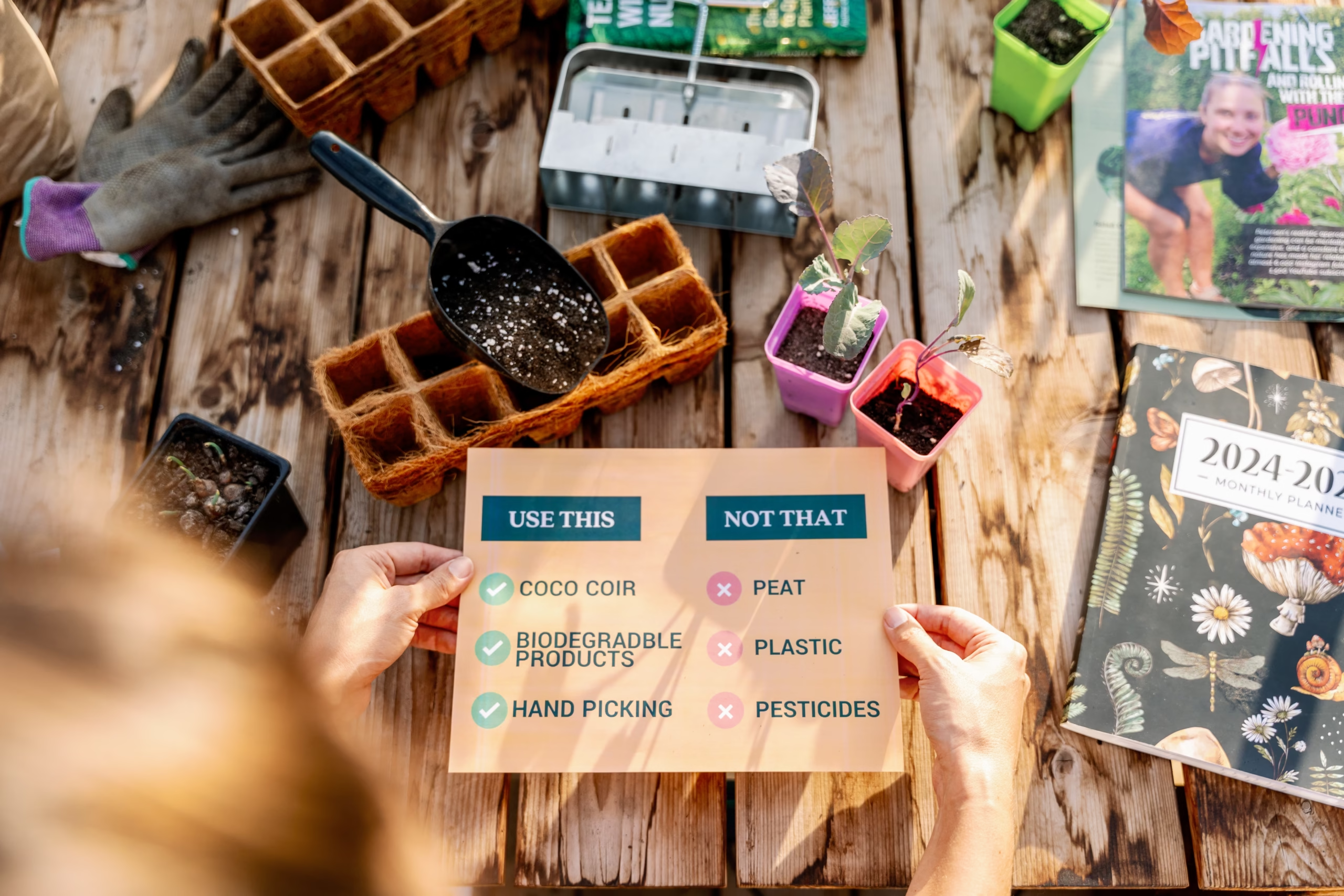
If adding manure to your garden is a mistake, then adding black earth to your soil is a BIG mistake. Black earth is sold at almost every greenhouse or big box store, you’ll know it’s there because the bags are only $1 or $2 and there’s a reason for that. Black earth isn’t true black earth. It’s actually black peat which is an incredibly unsustainable product, and also adds zero nutrition to your garden. Black earth appears to be good for the garden because of its dark colour. And that is literally all it’s good for. Your soil will look healthy, but doesn’t actually make it healthy. It’s a waste of money, waste of plastic, and destroys ecosystems in order to be extracted. Skip the black earth every single time.