
Water is a vital part of the garden, without it your garden won’t be able to grow. Depending on where you live, you either receive adequate amounts of rain, or you experience a dry growing season. Even if you receive regular rain, learning how to conserve water is both better on the environment, and will help reduce your water bill during the growing season.
Why Water Conservation Matters
Water is becoming more of a scarce commodity as weather becomes more erratic and temperatures rise. Some areas in Canada and the US are seeing increased rainfall (and massive flooding) while other provinces and states are experiencing prolonged droughts, year after year. These weather patterns are also being experienced around the world as we’ve seen increased wildfire activity from these prolonged droughts.
Because of this, it’s important to understand how to conserve water in your garden. Not only are many gardeners experiencing droughts, but major issues can take place with your city water supply. Whether you garden as a hobby, or for the purposes of food security, understanding how to manage water is important. So here are 5 ways to conserve water!
1. Drip Irrigation Systems

Drip irrigation systems are one of the easiest ways to water your garden and conserve water. Luckily, drip irrigation systems are affordable to buy and simple to install. You have the option to get an out-of-the-box system, but there are also companies that allow you to custom build an irrigation system that suits the size and shape of your garden. Since the water drips out of the pipes directly onto the soil and at the base of your plants, it helps prevent any disease on your plants while also directly watering the roots.
When you water overhead with a hose or sprayer, a lot of water gets blown in the wind or can land on the leaves of your plants, meaning that watering is far less effective and you’re using more than required. Drip irrigation solves this problem.
2. Clay Pots or Clay Pipelines
You can either make your own clay water reservoir or buy one. The main goal with this way of watering is that you bury the clay pot in your garden and it slowly sweats water out into your garden. You can either choose to buy one or you can use a terra cotta plant pot. To use a terra cotta pot you want to bury it in your garden, bottom down, and cover the hole with a rock to ensure it isn’t wide open. Bury it so that 1/2 – 1″ of the pot is above the soil. Terra cotta pots often come with drip plates which you can use as a lid for your garden to help lower evaporation. Then you’ll plant around the pot so that all of the plant roots get access to the water. From there you can water your garden by filling up the pot and putting the lid on it. The pot is permeable so it will slowly leach water into your soil.
Another option is to build a clay pipeline where you use terra cotta piping or pots and bury them underground like a pipe. The pipe would have access from above the ground so you can pour water into it and fill it up. Similar to above, the water will slowly leach into the soil around your plants. This works best if you are building a brand new garden since it does have to be built underground.
3. Collect Rainwater
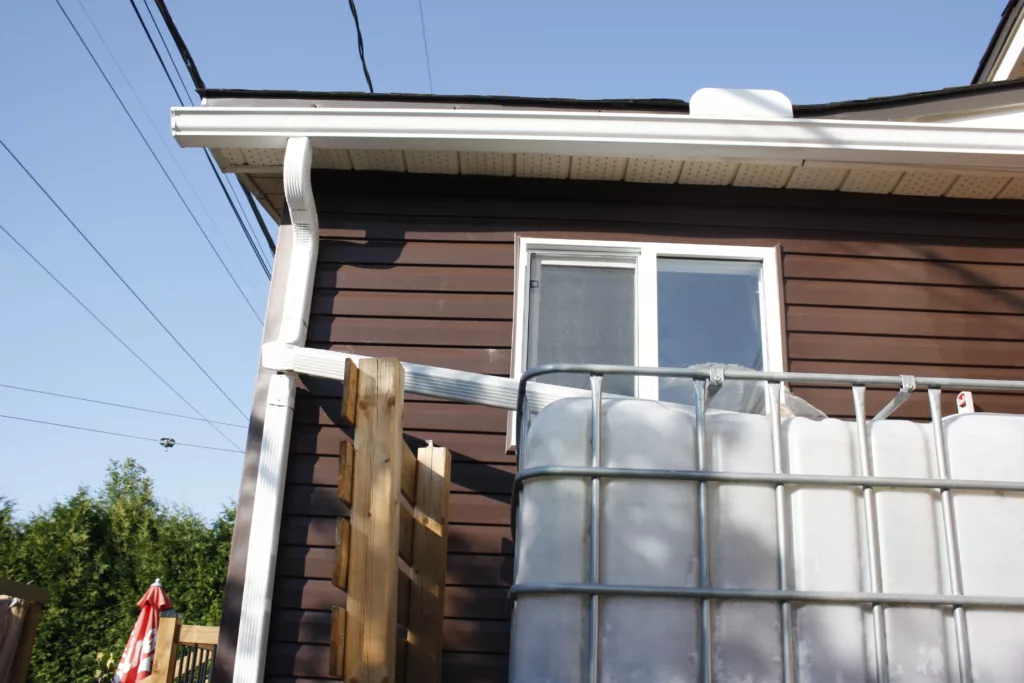
Collecting rainwater is the best way to reduce your reliance on municipal water. This helps you save money on your water bill while using water that spring showers gives you. Plus rainwater is filled with nutrients and vitamins that your plants love. Check out our comprehensive article on collecting rainwater to learn more!
Continue growing your garden knowledge
- 5 Tips to Know When to Harvest Any Vegetable
- I Was Wrong About Crop Rotation – Let Me Explain
- Drowning in Tomatoes? Here are 11 Ways to Use Your Harvest!
- 8 Tips to Build Healthy Soil (When Yours Sucks)
- Drowning in Zucchini? Here are 11 Ways to Use Your Harvest!
4. Utilize Mulch
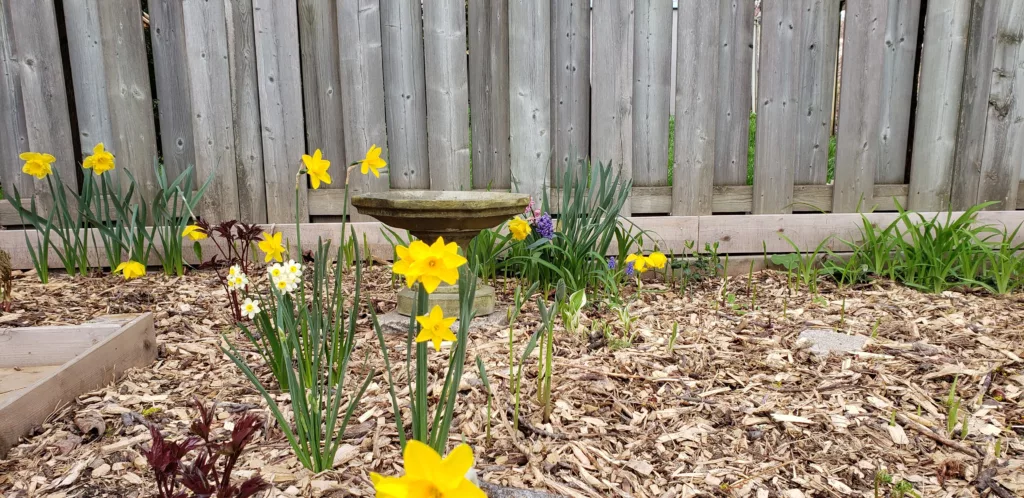
Mulch is an important tool to keep water in the soil and reduce evaporation. When mulch is applied properly your soil will stay cool which helps keep water in the ground, reduces the amount of weeds that can grow (and steal water from your plants) and reduces how much you need to water your plants!
5. Swales and Basins
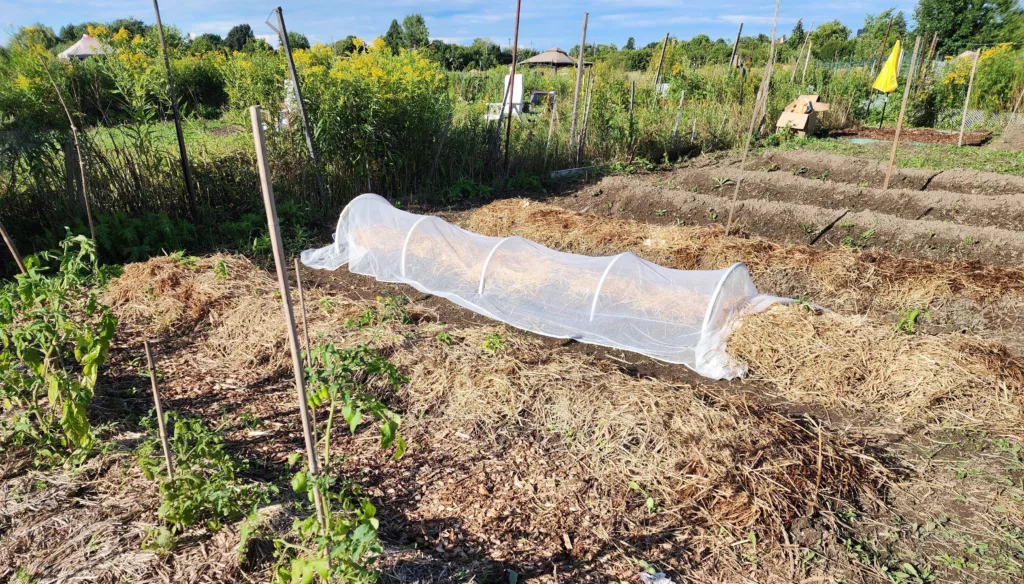
Moving the soil around can be a key tactic in order to reduce water usage and to move rainfall exactly where you need it to go. This can be done with swales, basins or even mounds and trenches. Additionally, if you garden on a hill or any type of uneven ground, moving soil in ways that can direct water is a great way to get nature to work for you. If you are unsure of what a swale is, the most common type you’ve seen before are ditches on the side of the road. Essentially it’s a water management tool where you shape the ground to create high and low points in order to direct water to a location of your choice.
Basins are similar, but in this case you are digging the ground and creating a grid like pattern, where the “lines” of the grid are high points, and the “squares” in the middle are low points for water to pool in. This allows you to capture the rainwater and have it slowly disperse in the ground around it.
Finally, in the photo above you can see trenches and mounds. If you live in an area that has little rainfall, planting in the trenches allows the water to pool and collect at the base of your plants, rather than running off if they were planted in mounds. You’ll notice in the photo above that I plant in mounds and that’s because where I live we get excessive rain so I use it to move water away from my plants to ensure they don’t rot or drown.
Putting It All Together
The 5 options above can be combined in any and all ways in order to increase your water conservation. You can choose to implement one of these options, or implement all 5 in your garden – it’s whatever suits you best. However, learning how to conserve water now means that you’ve built important skills for the future when you might not be able to guarantee access to water due to unforeseen circumstances. Water conservation is a critical skill to have as we experience new weather patterns and prolonged periods of heat and drought.