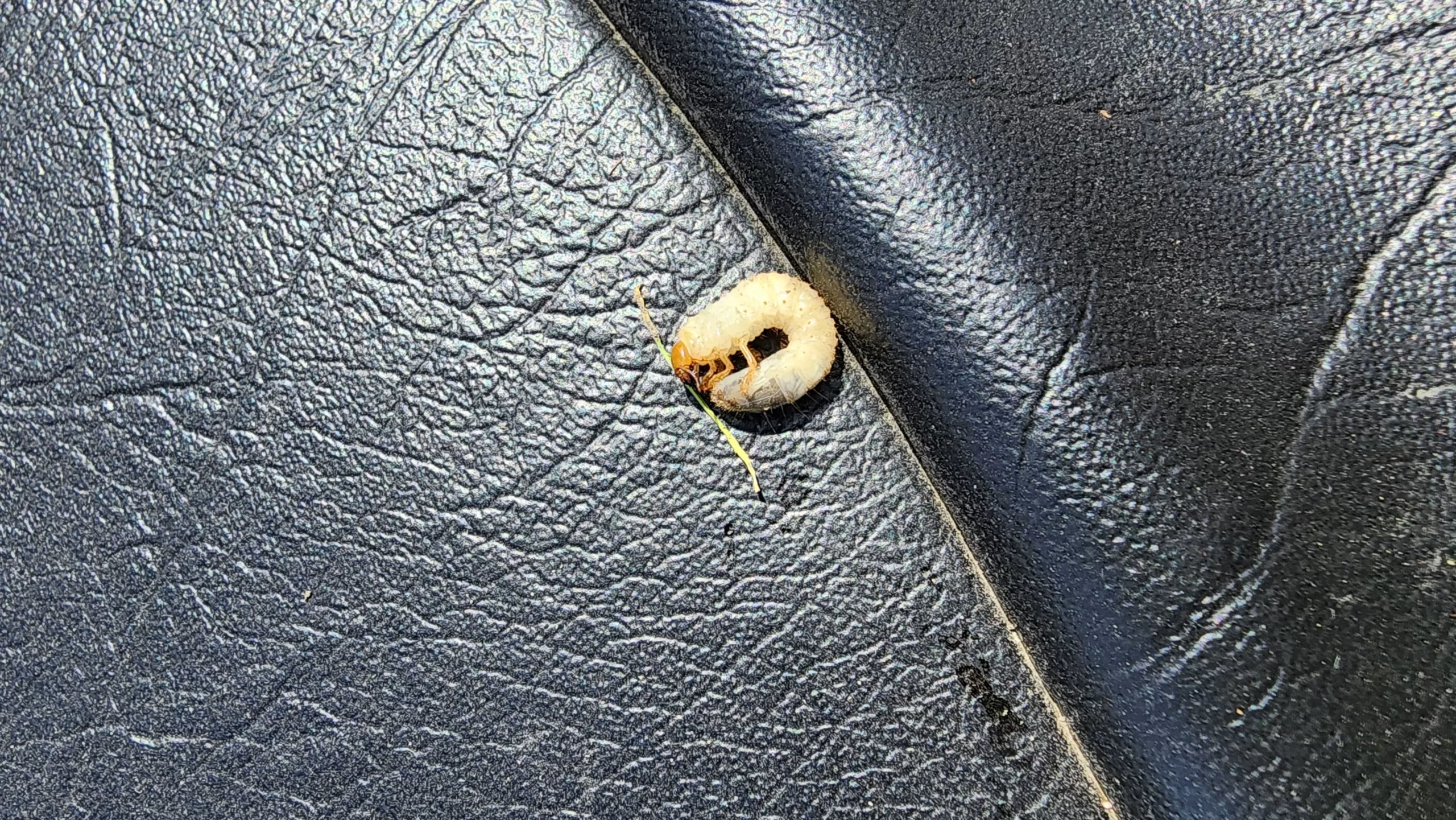
If you’ve ever gone to bed one night and woken up the next day to see your grass has holes in it or has been flipped upside down, you’ve experienced lawn grubs. We have a neighbour that decided to have his lawn removed and re-sodded. I guess he’s not a big fan of weeds and felt this was his best choice to start fresh (jokes on him though since our lawn over here is a dandelion haven!). The day after his lawn was resodded we went for a walk in the morning – and to our amusement we saw multiple rolls of sod had been flipped and folded back up. This didn’t just happen one day, but it happened over multiple. It’s difficult for sod to root when it keeps getting flipped over.
This kept happening because skunks and raccoons were visiting at night looking for dinner. And what an easy place to look – no digging required! Although his old lawn had been removed, the grubs remained. Or at least a few must have for the animals to return multiple times. I’m not sure why he decided to lay new grass, but if it was because of grubs, he made the wrong choice. Replacing old sod with the same type of sod isn’t the solution. If, like my neighbour, you’re having problems with lawn grubs, read below on how you can manage them without having to get a whole new lawn!
What are Lawn Grubs?

Lawn grubs are the general name for the larvae of multiple types of insects. Here in Canada the main insects are June beetles, Japanese beetles and the European Chafer. Both Japanese beetles and the European Chafer are invasive to Canada, and are a smaller grub than the June beetles. As June beetles are native to Canada, this is the predominant grub you’ll find. As Japanese beetle populations continue to increase though, they may become more common to find as well.
How to Identify Lawn Grubs & Their Damage
No one has ever looked at a grub of an insect and thought “oh, well that’s pretty!”. Lawn grubs are no exception. These grubs are white and translucent(ish), they have a brown head, a big back-end and will quickly curl into a C-shape when disturbed. They most often are found within the first 3-4″ of soil as this is where they tend to feed.
Since they feed on grass roots, their damage is isolated to your lawn. You’ll know you have lawn grubs if you have brown patches in your lawn that when stepped on feel soft or spongey. Another great indication is if you have loads of birds on your lawn, commonly you’ll find grackles or starlings in groups as they’re digging up the grubs. Finally, a dug up lawn is a great indicator that there’s grubs – especially if your lawn gets dug up frequently. Nocturnal animals like raccoons and skunks are looking for their next meal and they enjoy a good grub.
The government of Canada has an interesting chart on the timeline of damage based on June beetles, European chafers and Japanese beetles. Unfortunately the damage does overlap across the months, so you can’t determine which kind is your issue. But based on the chart you can see that damage to your lawn can occur any time from March-October!

Why Grubs Love Your Lawn So Much
Grass is the host plant of these insects! It’s as simple as that. It’s their preferred food, which is why adult beetles will lay their eggs in your lawn. The irony of it all is that the type of grass that these beetles love is the same type of grass that grass-loving homeowners create. Healthy, well trimmed, moist grass is the ultimate place to lay eggs.
Once the eggs hatch they get to feeding on the grass roots. June and Japanese beetles, along with European chafers are considered scarab beetles, and the grubs of scarab beetles prefer to eat within the first 5-6″ of the lawn and soil so they stay fairly close to the surface. It’s easier for them to get to the grass, and also how birds and animals can dig them up so easily.
Life Cycle of Lawn Grubs
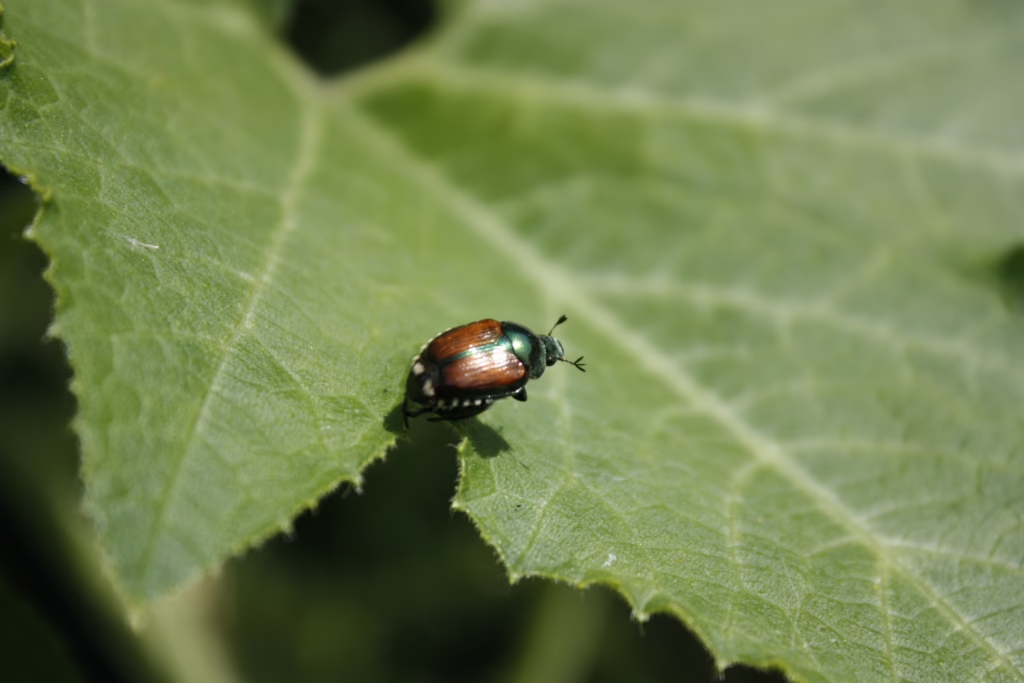
All three beetles mentioned in this article have different lifecycles, but the damage to your lawn happens around the same time, from March to October. For example, June bugs have a very fascinating lifecycle and can take up to 3 years to mature into adults. Because of this, and the fact that June beetles are the most predominant grub in Canadian lawns, lawn grub outbreaks may happen just once every 3 years.
Generally though, adult beetles will crawl out of the ground in spring, they’ll feed, mate, and then lay eggs in your lawn. Unfortunately for your lawn, these beetles lay eggs for months. Eggs are laid from May through August and hatch within 14 days. After the eggs hatch the grubs will start eating. This means that from as early as May the grubs will be eating your lawn. And then they have all of summer and early fall to continue feeding before they enter their pupal stage.
Often the grubs will move deeper into the soil to prepare for winter. This is important to note when it comes time to treating your lawn. Come early spring they come back up to the surface to finish feeding before coming out as adults to start again.
Just How Bad Is Your Grub Problem?
We aren’t lawn people. In fact, we’re almost the opposite of lawn people. And this is the key to our success. We don’t have a ton of dead spots, and rarely do we find holes dug by skunks, raccoons or other animals. We don’t water our lawn, we rarely mow it (and when we do we keep it longer), and otherwise it’s left to its own devices. Yet, even though we do all the right things to keep grubs away, we still have grubs.
The reason I know we have grubs in our lawn is because of the amount that I found while digging up our new perennial garden. And this is how you can find out if you have grubs too.
Take an area of your lawn and cut a square of grass. Pull up the grass and look within the first few inches of soil and along the roots and see if you find any grubs. If you find no grubs, you don’t have much of a problem – but the more you find, the bigger the issue. I recommend removing those grubs before returning the lawn back. You may as well hand pick some of the problem while you’re looking at it. I have a friendly neighbourhood robin I like to feed my grubs to. I drop them on the side of the curb for the robin to come enjoy – since it’s nesting season in the spring it’s helpful to feed them to the birds.
If you didn’t find any grubs, or less than a handful, you don’t have much of a problem! But keep in mind scarab beetles can fly – so if you don’t have much of a problem now, you can have an issue later on. If you found more than a handful of grubs in the area you dug up, the below tips will help you manage your problem.
How to Control Lawn Grubs

If you’ve been around here for a while you’ll already know that the first thing I’m going to say is NEVER spray your lawn with chemicals. What is a pest to us, is a food source to birds and animals. We also don’t believe in spraying something on your lawn that requires a warning label for children and animals to say “stay off, could be poisonous”. No thanks.
There’s alternatives that are good for the planet, and good for your health that can help with this problem. The below recommendations will help control both the grub population in your lawn, as well as the adult beetle problem.
Nematodes
This is my favourite suggestion for anyone who wants to remove their lawn grubs, because nematodes are a natural, living organism that eats them. Nematodes are microscopic organisms that naturally live in our soil, but there are certain strains that specifically target the grubs of Japanese and June beetles.
As nematodes gain popularity it’s important that you buy them from a reputable source. In order for them to stay alive they need to be refrigerated, so don’t buy any that are on a shelf or are shipped without refrigeration. They also only last a couple of weeks in your fridge so you need to order them when you know you have time to use them.
Nematodes are only effective in spring and early fall when the grubs are closer to the surface. The grubs emerge as adults in late spring which means there’s nothing to spray. You want to catch them before they become adults, or after they’ve hatched from their eggs. However, by late fall the grubs have started to crawl deeper into the ground.
Nematodes are simple to apply to your lawn. All you need is the nematodes, a hose, and a sprayer to mix them with water. I prefer to use the kind that attaches to my hose so that I don’t run out of water while applying.
Continue growing your garden knowledge
- 5 Tips to Know When to Harvest Any Vegetable
- I Was Wrong About Crop Rotation – Let Me Explain
- Drowning in Tomatoes? Here are 11 Ways to Use Your Harvest!
- 8 Tips to Build Healthy Soil (When Yours Sucks)
- Drowning in Zucchini? Here are 11 Ways to Use Your Harvest!
Grow a Different Type of Lawn
New lawn solutions are being created that will grow varieties of grass that the grubs don’t like. They make your lawn unappealing, and unappetizing. Certain grasses like fescues and ryegrass contain endophyric fungus in them and they keep the grubs away. The only drawback to this is it’s best used when you’re seeding a new lawn vs seeding over an existing lawn.
Another option is to maintain your lawn in a way that the adult beetles don’t like. They don’t like to lay their eggs in long grass (at or over 3″), which means you get to mow less, and other insects will find refuge in your lawn as well. When you are mowing, leave the leftover lawn cuttings on the lawn as they’re high in nitrogen. As the lawn breaks down it works with microorganisms that break down thatch. Thinner hatch means less food for grubs. Finally, grubs love a well-watered lawn. This is another reason why watering your lawn doesn’t make sense. In an attempt to make your lawn greener, you end up killing it more. So put the sprinkler away.
Invite Birds to Your Property
Having birds feel comfortable around your garden and property is a two pronged approach. Birds eat a ton of insects during nesting season which happens to align with the time that many adult beetles are out. Of course, the more adult beetles being eaten, the less eggs that can be laid. And as I mentioned above, if you have starlings or black birds (like grackles) in your area, they love to eat grubs. Therefore, bring on the birds and let them eat all these immature beetles to help reduce their populations. The best way to bring birds to your yard is to have safe spaces for them to hide, like trees or bushes, and to put out bird baths.

How to Prevent Grubs from Choosing Your Lawn
Finally, the last method to deal with lawn grubs is to prevent them from coming to your yard at all. If you employ all of the options above, that is; keeping thatch down, killing adults by hand or with the help of birds, being okay with animals coming to eat, and letting go of the idea of a perfect lawn you’ll come out ahead!
And one final suggestion, leave those anthills alone. Ants actually eat June beetle eggs, helping reduce grubs from ever hatching. Ants are our friends, not our foe.