
I have a love-hate relationship with aphids. I hate finding them on my plants, but I love them as an insect. What a fascinating insect they are! We think we understand how other living beings work based on what we know about ourselves, we are mammals after all, but the insect world is a weird and wacky place. And that couldn’t be more true than when it comes to aphids. You may think you know aphids from seeing them in the garden, but do you really know them?
Throughout this article I’m going to take you through the wild world of these insects but also give you practical tips on how to manage them in the garden, because they can be a pretty annoying garden pest.
What are aphids?
If you’ve ever had aphids in your garden, or had or been around lice before you’ll understand why aphids are often called “plant lice”. It’s a fitting name. Aphids are small insects in the Aphididae family, they have oval shaped bodies, come in a variety of colours, and are sap-sucking. Aphids use their mouthparts to pierce plants and suck sap out of them.
There are over 4,000 species of aphid and many of them are specific to the plant they target. Green aphids are found on garden vegetables like cabbage, broccoli or cauliflower. Black aphids (often called blackfly) are common on broad beans, orange aphids are often found on milkweed, and root aphids are found on root vegetables.
How to Identify Aphids & Their Damage
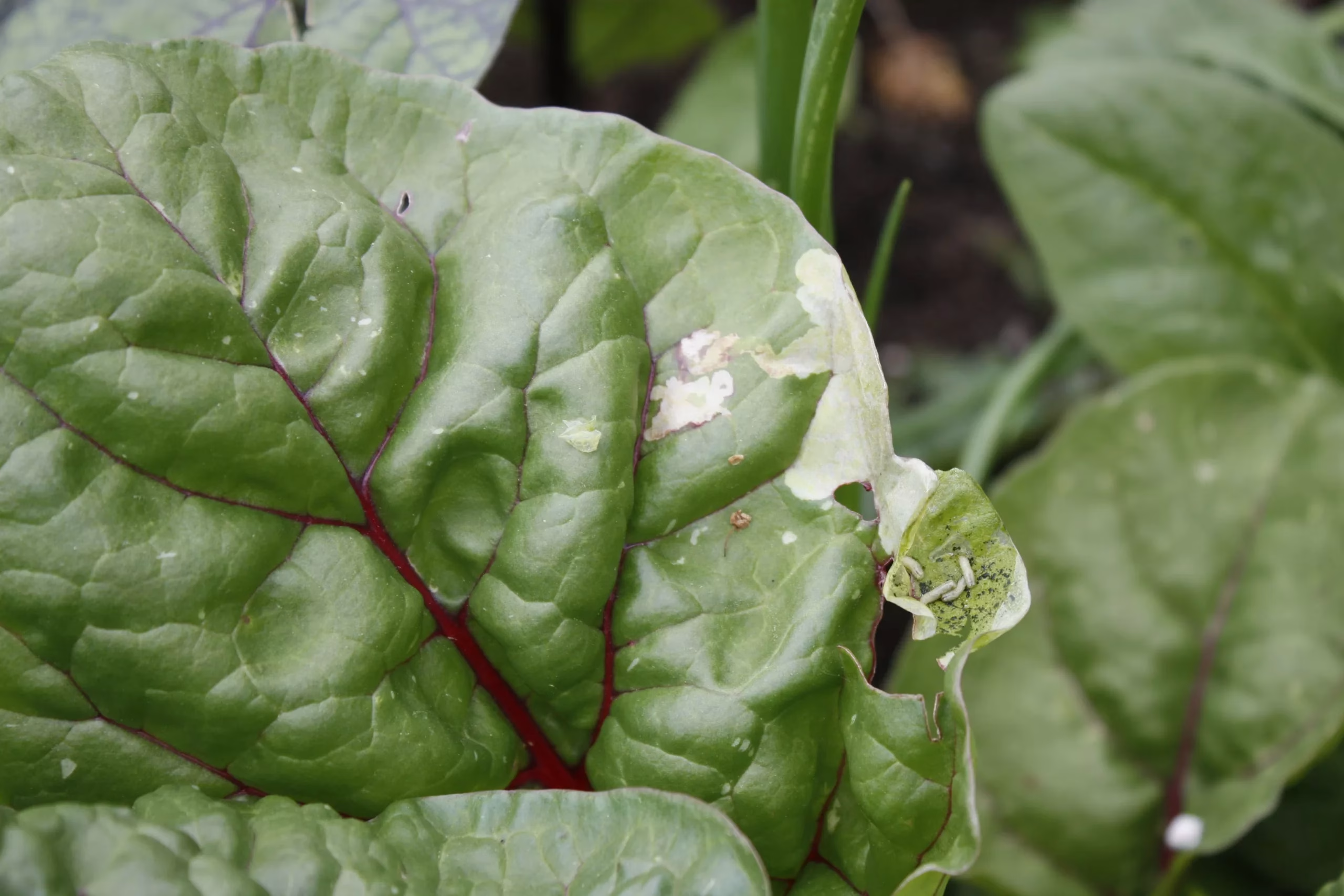
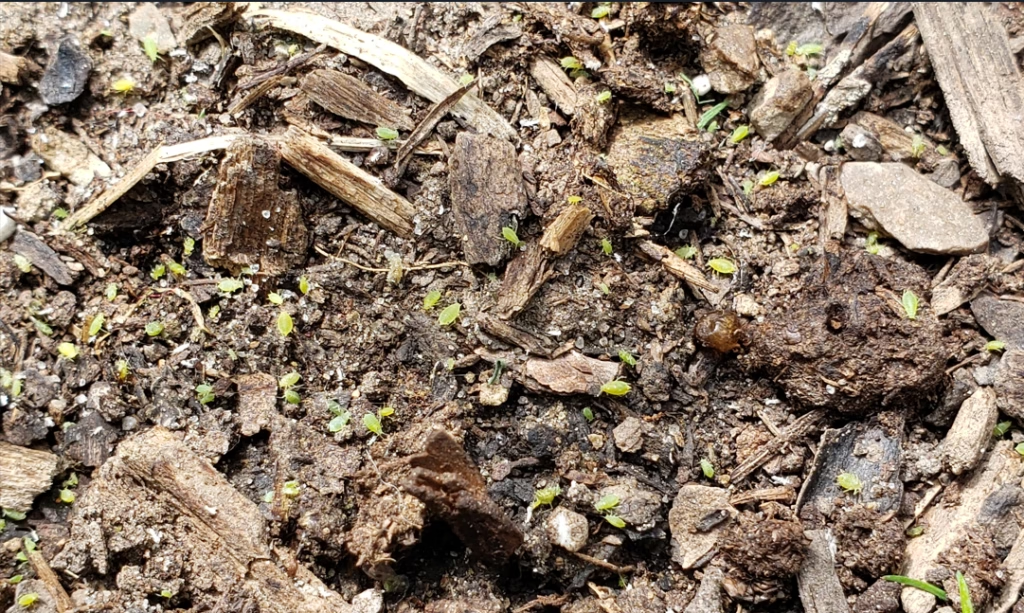
Green/white aphids are very camouflaged and can be hard to spot. They also move quickly and can move from the top of a leaf to the underside to prevent being seen. One year we had aphids in our seed starting soil (before we made our own) and the aphids were difficult to spot as they spent most of their time in small, newly forming leaves. However, we knew we had a problem because our seedlings were stunted. Because seedlings are so small and require a lot of energy to grow, aphids will dramatically slow their growth as they steal energy from the plant.
When growing outside, sometimes it can be really easy to spot aphids because they live in such large groups. Brassicas tend to be a favourite of aphids and I’ve seen photos and videos of these plants completely covered. It’s easy to know you have a problem when there’s a million aphids on your plant.
Another way to identify aphids, even if you can’t see them, is if you notice yellow spots on the underside of leaves. This is where the aphids are feeding on your plants. If you find spots, carefully inspect your plants. If my plants are small, or I can get below them, I like to hold them up to the light and look from below because the aphids will cause a shadow on the leaf.
Orange/red aphids are easy to spot because they stand out on green plants. We find that orange aphids are most often found on milkweed and are in their largest numbers in the middle of summer. They don’t kill the plant but they do draw in wasps looking for the ‘honeydew’ or sap that comes out of the plant where the aphids have damaged them. This honeydew is the excess sugar that aphids have discarded after getting what they need from the plant sap.
Finally, if you see ants spending a lot of time on your plants then you likely have an aphid issue. Ants will ‘farm’ aphids, keeping them working on a plant so they get access to the honeydew. This is a common sight on broad/fava beans with black aphids, and also in trees.

Commonly Affected Plants
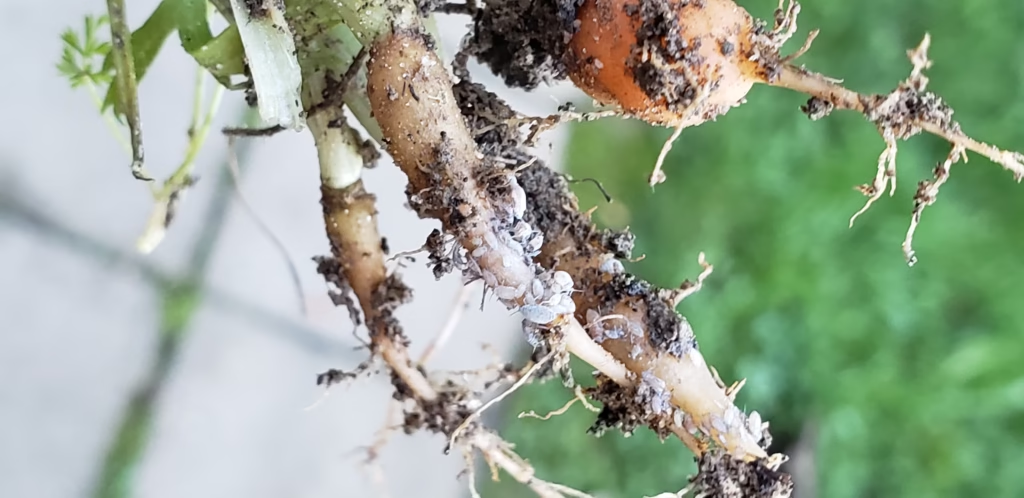
With 4,000 species of aphid you can imagine that there isn’t many plants that they don’t love. However, when it comes to the vegetable garden, there’s some plants that get affected more than others. The plants that tend to get a lot of aphid damage are the brassicas; such as broccoli, cauliflower and cabbage. Broad beans are commonly affected, and your root vegetables are even a target. In the photo below you can see aphids on my carrots. Sadly root aphids are impossible to find unless you pull them up, and they’re the reason these carrots never grew.
Life Cycle of Aphids
Alright, this section is the spot you’ve been waiting for if you’re curious about the ‘weird and wacky’ world I mentioned in the introduction. Aphids don’t have sex, don’t lay eggs and rarely is there a male aphid around. That’s because aphids reproduce through parthenogenesis which is a form of asexual reproduction.
Aphids are clones of one another. Thousands on thousands of clones all on one plant. And what’s even wilder, these aphids will give birth to a live female that’s essentially pregnant and ready to give birth to her own clone in just a couple of days. If you’ve ever wondered how your garden went from aphid free to full infestation in just a day or two, now you understand how.
According to a study from 1994, if aphids were left unchecked for an entire year they would produce a layer of clones 150km deep over the entire surface of the earth! If that isn’t interesting enough, aphids have the ability to change their form, even when cloning. The two main types that are created are feeding or multiplying aphids. As you’d suspect, the feeding aphids entire job is to eat as much as possible, and create as many clones as possible. These are the types of aphids you see on your plants.
The multiplying aphids are clones with wings – their job is to fly and find the next host plant that will support their populations. They’re also responsible for cloning and creating new populations.
To make things a little stranger, aphids do have sex. Maybe once a year, maybe every two years, and sometimes not at all. Turns out that biologists aren’t entirely sure how often or why aphids have sex since they can clone – but sometimes they do.
How to Control Aphids
By now you might be wondering, how could anyone possibly control an insect that can multiply every 2 days?! Although you’ll never get rid of aphids, you can easily control their populations in your garden. And when I say easily control, I also mean without any type of pesticide. It’s possible to control aphid populations naturally and there’s no reason to cover your plants in chemicals that are harmful to you or any beneficial insect that you want to have in your garden.
But before we get into the control methods, here’s another fun fact about aphids. If you’ve ever gotten nice and close to a group of aphids, and particularly I’ve seen this with the red/orange aphids.. they do a dance! This is a defense mechanism that aphids use to tell you to back off, or else. Of course they aren’t a threat to us humans, but if you’re a small insect that’s found itself in an aphid colony, I’d suspect you’d want to get out of there before the eldest aphids take a bite or two out of you.
Spray Aphids with Soapy Water
So there are two different ways to control aphids by spraying them. The first is to just spray them with a really strong stream of water from your hose. It’ll help clean a bunch of the aphids off your plant – but this isn’t a method I love for a couple of reasons. The first is your plant needs to be well staked if you’re going to do this to not damage the stem, or to throw any fruits off of it. The second is that if you leave any aphids behind you can imagine that they’ll be back within no time. This is why, when it comes to spraying your plants, my preferred method is to spray it with soapy water.
Aphids, like many insects, breathe through their skin. When you spray them with soapy water it coats their bodies and suffocates them. This is why spraying with soapy water is an effective way to handle aphid populations. But again, due to how fast they reproduce, this is one method of many that you’ll need to employ together. To make a soapy water spray you just need soap, water and a spray bottle. The size of your spray bottle will determine how much soap you’ll want to add but the goal is to get some suds/bubbles showing when you spray the plant. Since this is being sprayed outside, make sure to only use biodegradable soap like castile soap. Do your best to target only the aphids to reduce any accidental spraying on other bugs. It will take time for the aphids to die so spray your plants/aphids a couple times a day for multiple days and you should start to see a decline in populations.
Continue growing your garden knowledge
- 5 Tips to Know When to Harvest Any Vegetable
- I Was Wrong About Crop Rotation – Let Me Explain
- Drowning in Tomatoes? Here are 11 Ways to Use Your Harvest!
- 8 Tips to Build Healthy Soil (When Yours Sucks)
- Drowning in Zucchini? Here are 11 Ways to Use Your Harvest!
Hand Remove Aphids from Your Plants
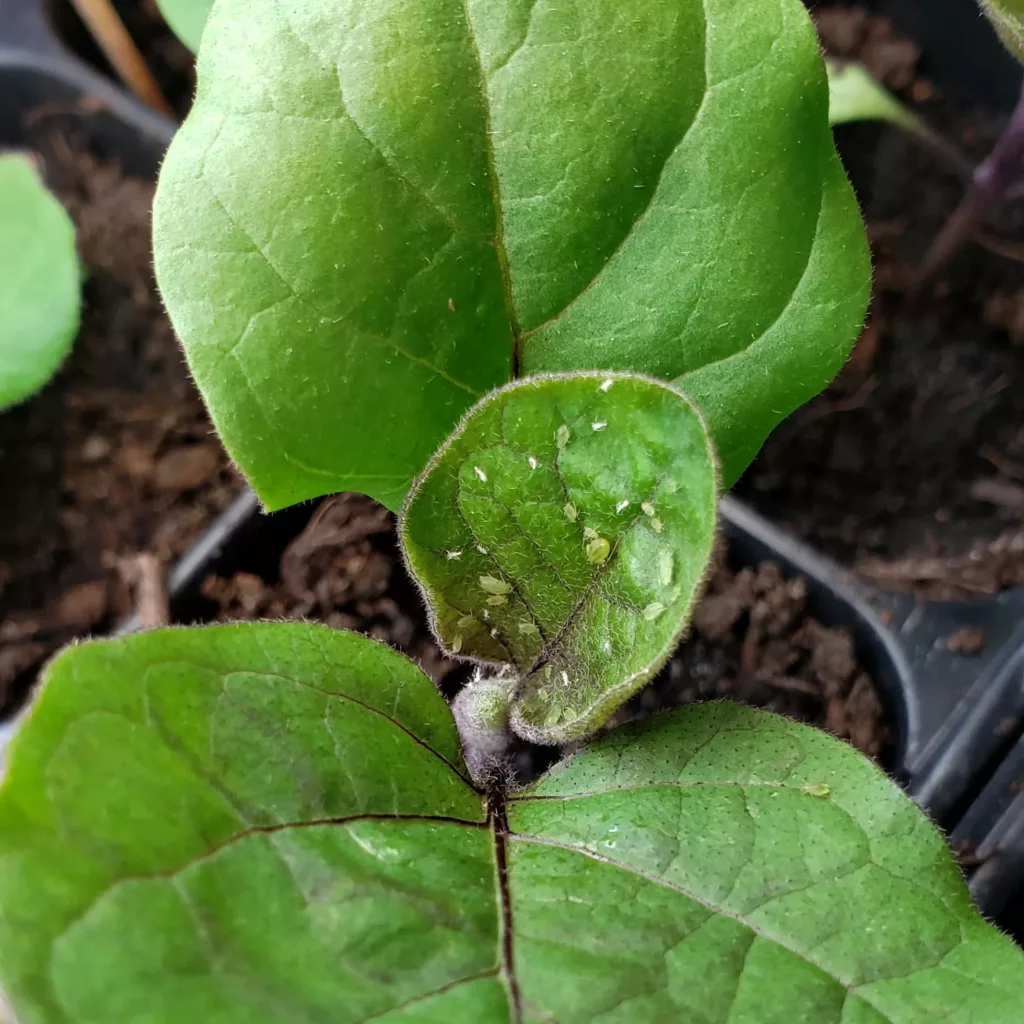
If you’re having trouble with aphids on your seedlings, like the photo above, hand cleaning is an easy way to manage them. If you didn’t notice the picture at the top of this article, scroll up and you’ll see that it’s a piece of tape that’s been wrapped with the sticky side out. This is an easy way to hand clean aphids off of smaller plants. Take a piece of tape and wrap it around your finger or thumb, with the sticky side out, and start sticking the aphids to the tape. This has got to be one of the most satisfying ways to clean off pests!
Predators That Eat Aphids
Luckily for us gardeners, there are a lot of insects that LOVE to eat aphids. Some of the most common insects that enjoy eating aphids include ladybugs, hoverflys, lacewings, soldier beetles and parasitic wasps. The easiest way to bring these insects into your garden is to plant flowers with your vegetables. Many of these insects like the same flowers which includes dill, yarrow, alyssum, Queen Anne’s Lace and other flowers that grow small clustered blooms. Adding these to your garden will invite insects that will help you fight the aphid battle.
Small birds also include aphids in their diet. Some people have reported seeing chickadees, American goldfinches and house wrens eating aphids off their perennial flowers. Creating safe places for birds to hide and bird bathes are simple ways to invite them into your garden to help manage aphid populations.
Remove the Infested Portions
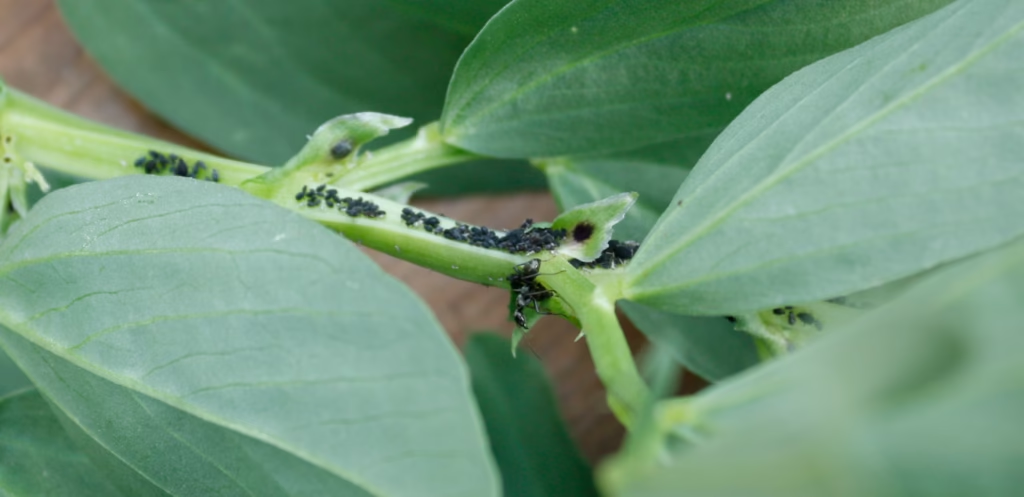
This method doesn’t work with all plants, but works well for broad/fava beans. Often black aphids will group at the top of broad bean plants since this is where the tender new growth is and it’s easy to just chop the top of the plant off and dispose of it. It won’t affect the rest of the bean pods that are growing on the plant and can even help promote branching on the plant.

How to Prevent Aphids
It’s not possible to completely prevent aphids from being in your garden but there are steps you can take to reduce their population. By following the steps above you’ll severely limit their population. Another key tip is to avoid using synthetic fertilizers that are high in nitrogen. High nitrogen fertilizers are used to promote leafy green growth – but when a plant grows new leaves at a fast rate it makes them even softer and juicier – an aphids favourite food choice. This excessive leaf growth signals a high supply of food so aphid populations are going to start growing here. It’s important to always use a balanced fertilizer.
Another tip is to apply a layer of mulch in your garden using grass clippings, broken up leaves or wood chips. This gives a place for beneficial insects to hide and have quicker access to the aphids when their populations do arise. Using these tips combined will keep your garden safe from aphid infestations!