
If you’ve been thinking about getting into gardening, or if you should build your own raised bed or if you should buy one, this article is for you. Here we’re going to answer the most common questions people ask when it comes to raised bed gardening from the disadvantages, to their lifespan, and even how to fill the garden. So if you’ve got questions, we’ve got answers!
What You’ll Find in this Article
Overall Garden Questions

In this section you’ll find some common questions related to raised garden beds as a whole. We’ll talk about if they’re right for you, how long they last and the best material to garden in.
What are the disadvantages of a raised bed?
If you’re looking to grow in a wood raised bed then the main disadvantage is that you need to know how to build. This means you need to have the knowledge and the tools to build a garden since it will require you to do all of the work. Another disadvantage with wood raised garden beds is that they will rot after a while. Depending on the type of wood you use will depend on how long they’ll last but you’ll have to know how to rebuild parts of your garden as they age. Finally, you need to get the right type of wood in order to create a garden. Some materials (like railway ties) are filled with chemicals so it’s important to make sure you understand the material before building.
If you’re looking for a metal raised bed the main disadvantage is that they can be very expensive. If you plan to buy a lot of gardens the cost will add up quickly which can make the hobby seem unaffordable. You also have to understand the material and how it reacts with water and soil. You don’t want to get a garden that has been treated with chemicals that can poison your soil. And you also don’t want one that rusts after the first season.
Other disadvantages, for both metal and wood raised beds is that they need a lot of soil to fill the garden. You have to take into account the amount of soil and cost to fill the garden – plus if you have the right tools (like a wheelbarrow and shovel) for moving the soil. The other concern is if you ever want to move your gardens it’s a lot of work to empty the garden and move it or dismantle it.

When should you not use a raised bed?
In all transparency, I love raised beds so there’s only a couple of situations where I would tell you to not use a raised bed. The first is if you’re trying to save money. Gardening directly in the ground is the cheapest way you can garden so if you have a small budget, skip the raised bed. Another reason to not use a raised bed is if you plan to move in a short period of time. If you only plan on gardening in your area for a single season, or if you’re new to gardening and don’t know if you’ll like the hobby – grow in the ground. Just be mindful that growing in the ground poses more challenges than a raised bed does.
How many years do raised beds last?

The amount of years a raised bed lasts will depend on the material you use. If you grow in a wood raised bed, the wood will start to break down, however it won’t happen instantly. The type of wood you use and how you use it will also affect how long it will last. If you use thin wood, like fence boards, they will break down faster than thicker wood will (like deck or post boards). Also, if you have two gardens built side by side with no space between them, where airflow is limited (like the two small wood beds photographed on the left), this will also affect how fast they break down. Thin wood gardens will easily last 5 years, with thicker wooden gardens lasting 10+ years.
Many metal raised bed companies advertise that they will last 20+ years but I’ve never owned one that long to confirm if this is true. The most important thing is to be mindful of the company and the quality, otherwise the garden could rust early. It’s always a good idea to read reviews so that you can find the best one for you as they can be pricey depending on where you purchase it from.
What is the healthiest material for raised beds?
Before getting into the details, I want to give the quick answer for this. Using treated lumber, cedar lumber or metal raised beds are all healthy material options for your raised bed.
For the longest time people were against using treated wood for raised garden beds, citing the arsenic that was used in the treating process. However, they removed arsenic from the process in 2003 in favour of using copper. Some people still think this is dangerous, however soil scientists say that plants will die from excess copper before you’ll ever get too much copper in your diet to cause you harm. People have often chosen to use cedar in place of treated lumber which is also a healthy choice, however cedar is significantly more expensive than treated lumber is, and since it’s sold in thinner boards there’s a chance it will break down faster than a treated deck board will.
When it comes to material that is unhealthy to use for raised garden beds, the biggest one is rail ties. Rail ties are the wood pieces used across railroad tracks and, I guess, there’s a lot of them laying around that people want to use, but I will never recommend using these. Rail ties are filled with chemicals like creosote which are meant to slow the wood from decaying. Creosote is a long lasting chemical (it’s actually a collection of 300 chemicals) that is linked to health issues, such as cancer, so this is something you absolutely DO NOT want in your garden.

What is the ideal depth for a raised garden bed?
The ideal depth for your garden depends on a few different factors. The first is, what kind of surface are you placing it on? Are you building it on a concrete pad like a patio? Are you building it over clay soil? The second factor is, are you getting a raised bed to help with mobility issues? And finally, what do you plan to grow in your raised bed?
If you’re building your raised garden on a concrete surface, or a non-organic surface, the ideal depth for the raised garden bed is a minimum of 12″, however 18″ is better. If your raised garden bed is being built on an organic surface like soil or even grass, you can build it as low as 6″, but the ideal depth is again 12″.
If you’re building your raised bed due to mobility issues, the ideal depth of the garden soil will again be 12″, however the ideal height of the garden will be based on your mobility needs. For example, there are metal raised garden beds that are 32″ high, you can build a wood raised bed this height, or you can get raised garden beds that are on stands that can help with accessibility.
Should I drill holes in my raised bed?
If your raised garden bed is bottomless and on an organic surface (like grass, soil or gravel) then you don’t need to drill holes because the water will be able to drain out of the bottom. If your garden is bottomless but built on a concrete base, you’ll want to check if the water can drain out of the bottom by overwatering the soil and seeing if it comes out of the bottom on its own. If it can, then you don’t need to drill holes in your raised bed, but if it doesn’t drain you’ll definitely want to consider drilling holes.
If it’s a standing garden with a bottom on it, most gardens come with drainage holes on them – but also can be advertised as water retaining. If the garden has a bottom and doesn’t have any drainage holes, you should definitely drill holes into the garden.
What is the best shape for a raised bed garden?
The best shape for a raised bed garden depends on what you’re looking for and how much space you have. The main consideration is that you can’t easily reach more than 24″ in front of you, so when choosing a garden bed shape, make sure that if it’s wider than 24″ that you have access from both sides. If you do have access from both sides, don’t let it be wider than 48″ or else it’ll be difficult to garden in the centre. If you’re like me, and like the feeling of being immersed in your garden, look for a U-shape garden or something similar where you can step into the garden space and have plants all around you.
How deep do raised beds need to be for vegetables?
Different vegetables have different root depths, so the depth of your raised bed will depend on what you want to grow. Some vegetables, like brassica, have shallow roots while others, like tomatoes, can go 18″ or more. If you’re growing potatoes or carrots you’ll want to make sure your soil is deeper for them. If you aren’t sure what you want to grow but want a depth that will cover all vegetables, make your raised garden bed at least 18″ deep.
Continue growing your garden knowledge
- I Was Wrong About Crop Rotation – Let Me Explain
- Drowning in Tomatoes? Here are 11 Ways to Use Your Harvest!
- 8 Tips to Build Healthy Soil (When Yours Sucks)
- Drowning in Zucchini? Here are 11 Ways to Use Your Harvest!
- 6 Spring Garden Pests You Should Know
Under the Garden

Most gardens, whether you build it or buy it, are bottomless. So the question is, what do you put at the bottom?
Why don’t raised garden beds have bottoms?
Raised gardens aren’t containers, so they won’t come with a bottom. Raised garden beds work well when put on top of soil, whether it’s on your lawn or another place with an organic material. They’re used as a supplement to your current soil. So if you only have clay soil you can put a raised bed on top, fill it with quality soil and allow your plants to grow in that soil and only reach the clay soil if they need to.
Should I put a bottom on my raised bed?
No, there’s no reason to add a bottom on your raised bed. In fact, adding a bottom to your garden is only going to cause issues with drainage or cramped plant roots.
Should I put fabric on the bottom of a raised garden bed?
Never add fabric to the bottom of your raised bed. First off, the fabric is actually made of plastic and you don’t want those chemicals in your garden. The fabric is going to break down and it won’t actually do anything in terms of preventing weeds. There are better options, like cardboard (or nothing at all), that will do a better job than fabric that leaches chemicals.
Should I put chicken wire under my raised garden bed?
You don’t need to add chicken wire under your raised bed, but it can definitely be helpful if you have animals that dig under your garden and climb up it. If this is the case you can consider using chicken wire. The main thing to keep in mind is that chicken wire isn’t super strong and often the holes are quite large so this will only protect your garden from large mammals, but not smaller ones like voles.
Should I put hardware cloth under my raised garden bed?
Since hardware cloth and chicken wire are essentially the same thing, yes you can put it at the bottom of your garden if you have a problem with animals digging under your gardens. Hardware cloth is the stronger option of the two, so if you’re worried about it being chewed through, this is the better option. To prevent all animals, including voles, make sure to use a mesh that is no bigger than 1/4″ in size.

Filling the Garden
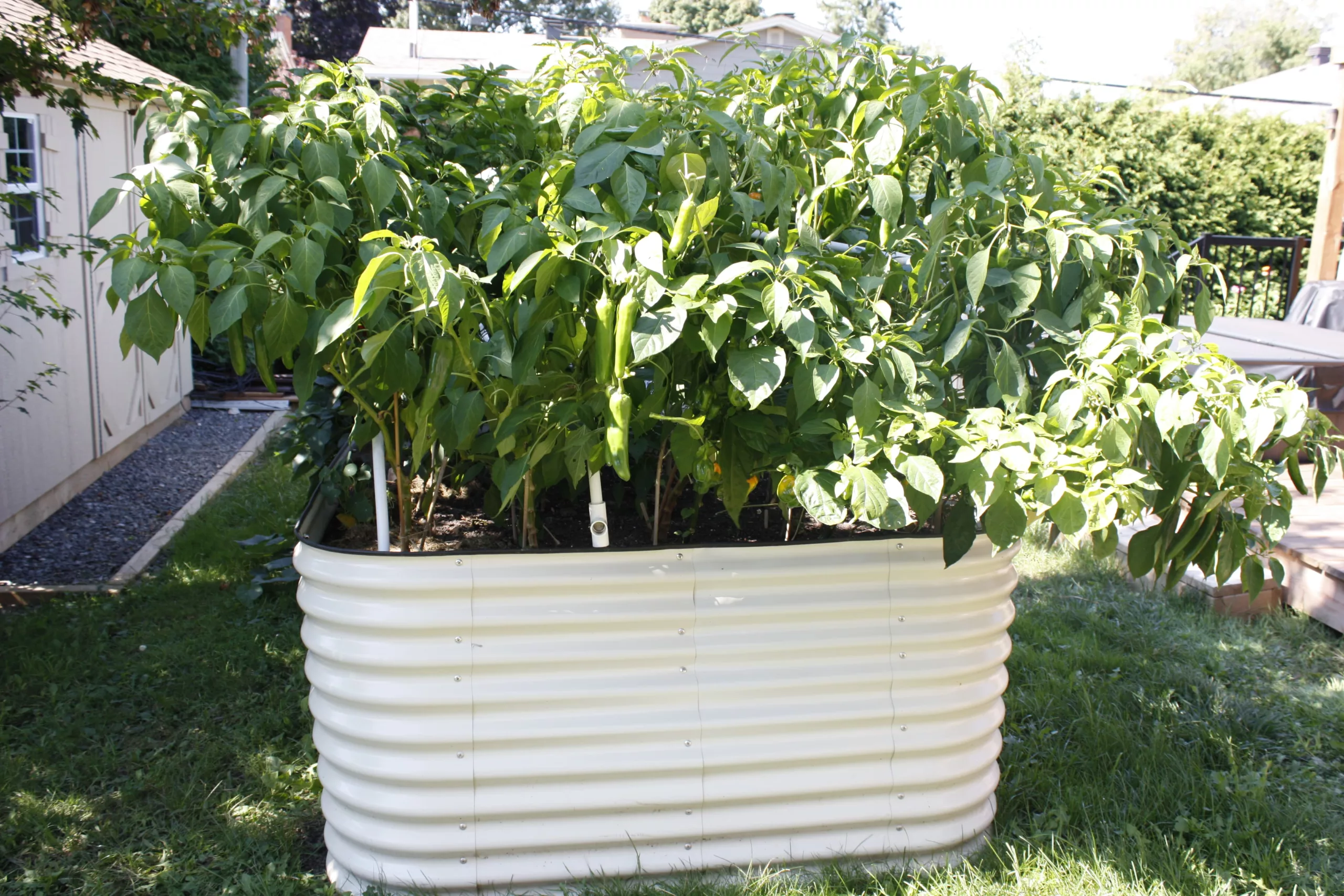
Filling your garden is very simple, but depending on the height of your garden you might be wondering how to fill it. Let’s discuss!
What do you put in the bottom of a raised garden bed?
What you put in the bottom of your raised bed depends on how deep it is. If your garden is 12″ or shorter, fill it only with good quality garden soil. If your garden is 16-24″ in height you can fill it with good quality garden soil, or you can fill the bottom with some branches and fallen leaves to help fill up 1/4 to 1/2 of the garden before filling the remainder of it with good quality garden soil. If your garden is over 24″, you definitely want to fill at least half of the garden with branches, tree trunks and/or fallen leaves before topping it up with good quality garden soil. If your garden is tall, I definitely recommend buying your soil in bulk to save on plastic and to save money.
What do you not fill a raised bed with?
The most obvious answer to this question is to avoid putting anything hazardous, or filled with chemicals in your garden. This can include old treated wood, old household material that has paint on it, or as mentioned above, railway ties. The other thing you wouldn’t want to add in your garden is sand or other nutrition-less fillers. An example of this is black earth. This is sold in very cheap bags at the nursery and they’re sold mainly because they are dark black in colour so it makes people believe the soil is nutritious – but it isn’t. Finally, manure is OK to add to your raised bed but never fill your entire garden with manure. It’s far too high in nitrogen and will poison your plants before helping them. The best option is to look for a good quality triple-mix garden soil blend or compost.
Should I put rocks at the bottom of my raised garden bed?
I can see why you might think this would be helpful for drainage, but there’s way better options to both help with drainage and take up space in the garden. Here’s the thing, good soil drains well. So as long as you have quality soil in your garden, drainage will never be an issue. If you have a tall raised bed (24″+), you can put a rock or two in there if you have them laying around and you want to fill up space, but you really want to use that space for materials that are going to break down and feed the soil. And of course, the rocks are never going to do that.
What is the best base layer for a raised garden bed?
This depends on the height of your garden. If your garden is 12″ tall you shouldn’t have a base layer in your garden, it should only be high quality garden soil. If you have a 24″ tall garden, you don’t need a base and can do high quality garden soil, or you can add a small base of branches and leaves at the bottom. If you have a garden higher than that you definitely want to add a base layer and you want to add things that will build your soil – this includes branches, trunks, leaves – things that will break down and feed the soil. You can also add cardboard at the bottom of the garden as a weed barrier, but you really don’t need to. I’ve placed raised beds directly on my grass lawn and never had an issue with a weed finding its way to the top of my garden bed.
What is a hugelkultur bed?
Hugelkultur is a German word that means ‘mound culture’ and it’s a permaculture practice that has been used for hundreds of years in Germany and eastern Europe. It’s a method that you can follow to fill your raised garden bed. It uses 5 different layers: wood or branches at the base, leaves or grass cuttings next, compost on top, followed up garden soil. At the very top you’ll cover the soil with mulch. These 5 layers will break down over the growing season adding nutrients, feeding the microorganisms and building high quality soil that will feed your plants and retain water.
This method is great for raised beds that are tall, because it’s a way to fill your garden without the high cost of soil. Be mindful, as the leaves and branches break down the soil will settle so you want to make sure you’re using this method for annual gardens only. Perennial plants and fruit trees don’t want their roots being disturbed through settling. Finally, it’s important to know that, because of the settling, you’ll need to top up your garden again next season with high quality garden soil.