
What is the zucchini plants biggest nemesis? The squash vine borer. These insects are the biggest pest to zucchini and can take your plant from being completely healthy to fully dead overnight.
What are Squash Vine Borers?
Squash vine borers are an orange and black moth with black dots on their back. They differ from other moths as they are a daytime flying moth. They target squash plants, using them as a host for their eggs and larvae.
How to Identify Squash Vine Borer & Their Damage

Squash vine borers are easier to spot since they fly during the day and they’re orange. The moths are about 1 inch in size, can fly quickly, and can get to the base of your zucchini plant surprisingly well. The adults lay brown eggs on the stem of the plant and once the larvae hatches they burrow into the stem of the zucchini.

As the larvae grow, they continue to feed on the stem of the plant until it can no longer take up water to the rest of the plant. If you see holes in your zucchini stem, or what looks like chewed up stem on the outside of the plant, than you probably have squash vine borer larvae in your plant.
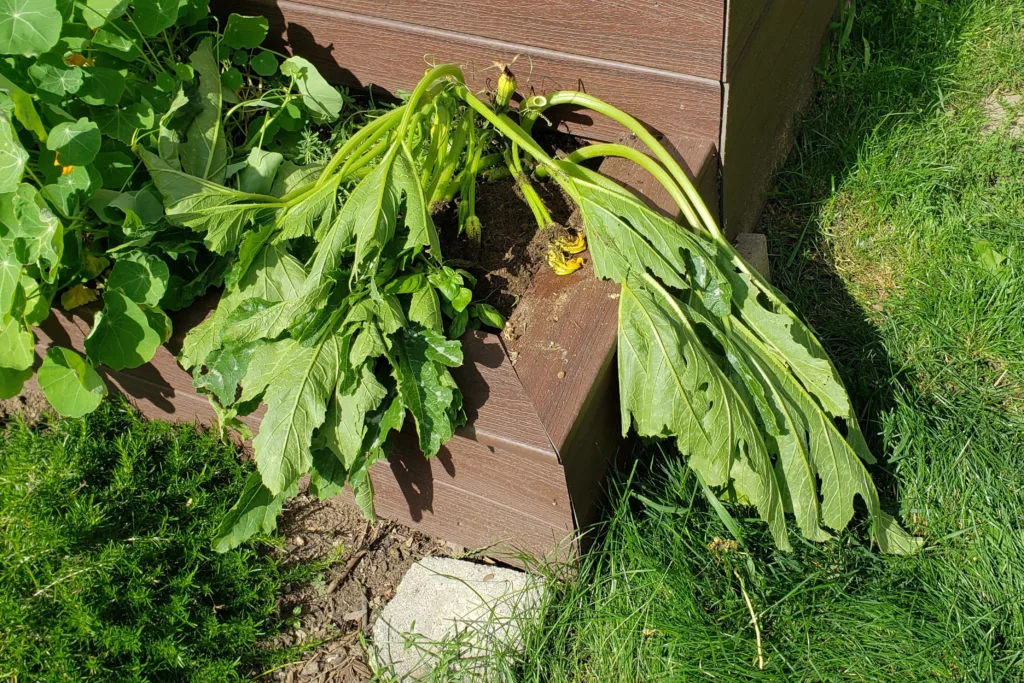
The next stage of damage is when your plant looks completely wilted. Often times, your plant looks fine in the morning or evening, and the next time you check on it, it looks completely dead. This is because the entire stem has been eaten by larvae.

Commonly Affected Plants by Squash Vine Borer
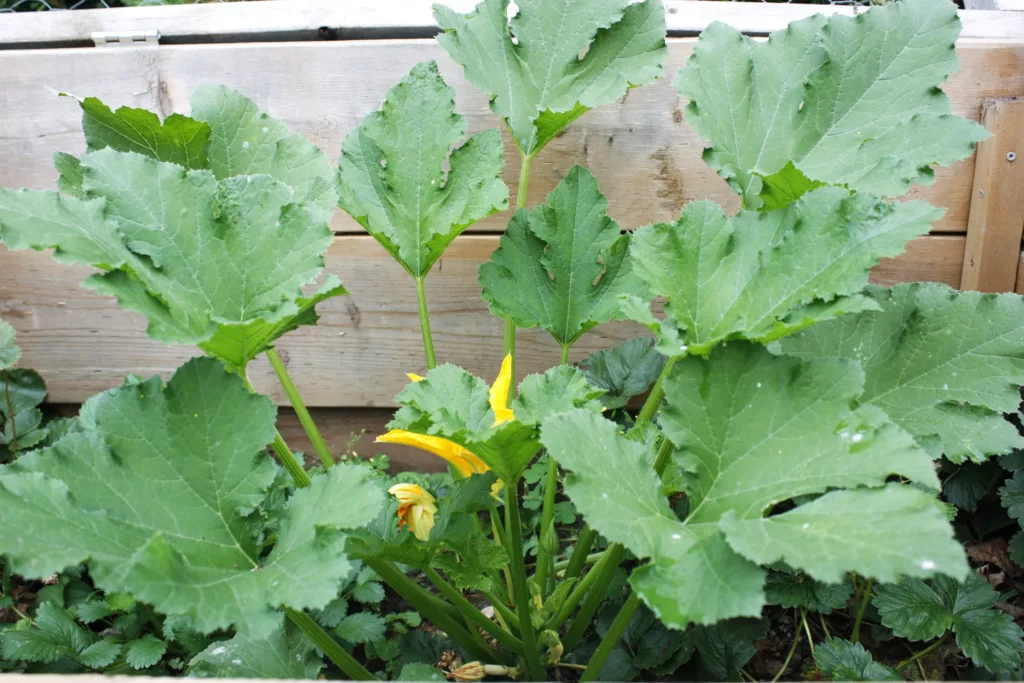
Squash vine borers will target any plant that is in the squash family – such as pumpkins, delicata, and zucchini.
Life Cycle of Squash Vine Borers
Squash vine borers have one life cycle a year. Adult moths lay small brown eggs on the stem of squash plants (usually the base of the plant), and around 10 days later the larvae hatch and immediately burrow into the stem. The larvae feed for just under one month before leaving the stem to pupate in the soil below the plant.
How to Control Squash Vine Borers
There are a few different ways you can try to prevent or control squash vine borers, and we’ll explore them below. Our overall experience is that squash vine borers are really difficult to manage and we have lost plants to them every single year.
Check for Eggs

Squash vine borer eggs are small, round, brown eggs that are laid on the stem of the plants. Often times the eggs are laid on the base of the stem near the soil level. Checking for eggs and wiping them off can help slow down the chances of larvae killing your plant.

Continue growing your garden knowledge
- I Was Wrong About Crop Rotation – Let Me Explain
- Drowning in Tomatoes? Here are 11 Ways to Use Your Harvest!
- 8 Tips to Build Healthy Soil (When Yours Sucks)
- Drowning in Zucchini? Here are 11 Ways to Use Your Harvest!
- 6 Spring Garden Pests You Should Know
Bury the stem
If you’re growing vining squash such as pumpkins or delicata, look for nodes on the stem and then you can bury the stem under a pile of soil. Those nodes will grow roots, so if the vine borer gets in the stem of your squash, it will only kill the stem they are feeding on, and the new roots will help support the rest of the plant.

Vine borer resistant varieties
There are some varieties that are supposed to be resistant to vine borers. Butternut squash is one of the least attractive plants to vine borers, while zucchini is one of the most attractive. Squash in the C. moschata are more resistant to squash vine borer, so consider growing these varieties.

Other Options to Control Squash Vine Borer
There are a few other options that you can try to fight squash vine borer. The first is to cover your plants with insect netting. You can either keep them covered the entire season and hand pollinate, or wait until they’ve opened their first bloom and remove the insect netting.
Your next option is to plant multiple rounds of seeds. Depending on the length of your growing season, if the variety has a short growing season (like most zucchini, but not pumpkins), you can plant seeds every couple of weeks to get fruit continuously.
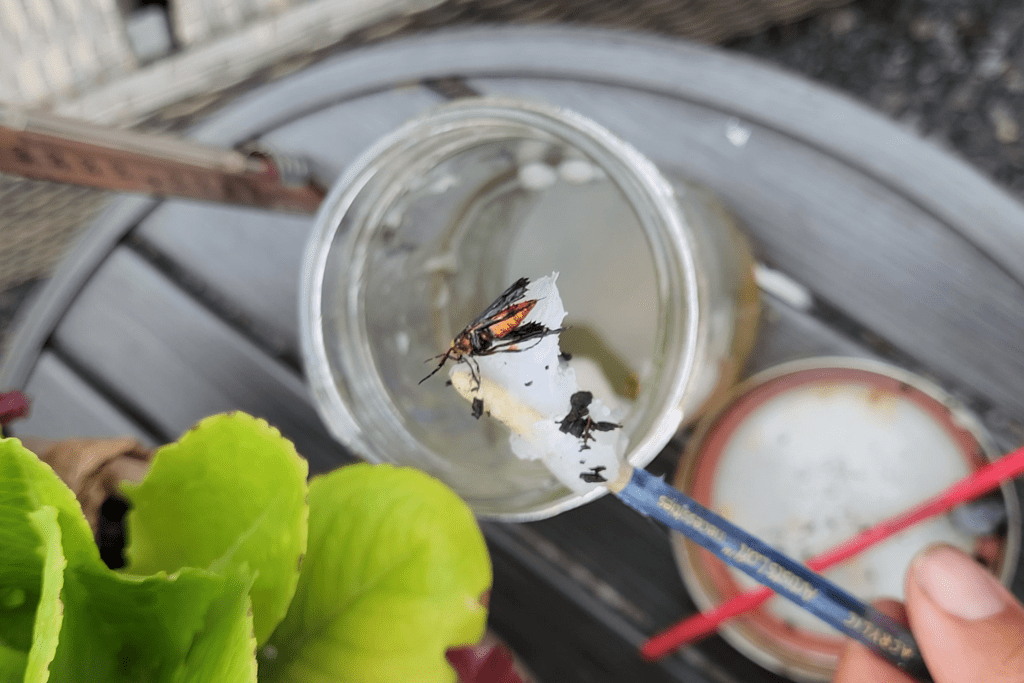
The next option is to catch them in the act. Since the moths are a daytime flying moth you can actually see them flying during the day. They’re hard to catch since they fly quickly, but we found that with two people it’s possible to catch them. What worked for us is one person uses a spray bottle of soapy water and sprays the moth continuously to slow it down or knock it to the ground, while the other person is ready to stick it to a stick covered in petroleum jelly (as seen in the photo above)
One final option is attempting to do BT injections, however I tried this one year and wasn’t able to get it to work. The theory behind this is to inject BT from a needle into the stem of the plant to kill the larvae, but it’s difficult to do because the stem is solid, and you need to know exactly where the larvae are. BT is an insecticide that kills caterpillars. It is an indiscriminate insecticide, which means it will kill any caterpillar that comes in contact with the chemical. This means, if you aren’t careful, you can kill butterfly and beneficial moth caterpillars. Therefore, if you choose to use this option, do so carefully.