
Basil is one of the most reliable herbs to grow in your summer garden. It’s an aromatic herb that we grow as an annual here in Canada. It’s easy to grow from seed and is delicious in many dishes. When grown in the right conditions, and properly cared for, basil can grow over 30cm tall and wide, providing you ample flavour over the whole summer! In this article, you’ll learning everything you need to grow basil successfully, so that you can eat it all summer long and still have enough left over to save as a pesto, or as a dried herb!
A Quick Summary
Basil is a heat loving plant that prefers to grow in full sun. It comes in many different varieties and colours and can be dried for winter use and is used in many dishes which we will share at the end of this article. Basil is grown for its flavourful leaves, but also creates beautiful flower spikes that can be used in flower arrangements, or is great for the bees.
Varieties
Disclosure: This blog is reader-supported. Some of these links may earn us an affiliate commission when you purchase from them.
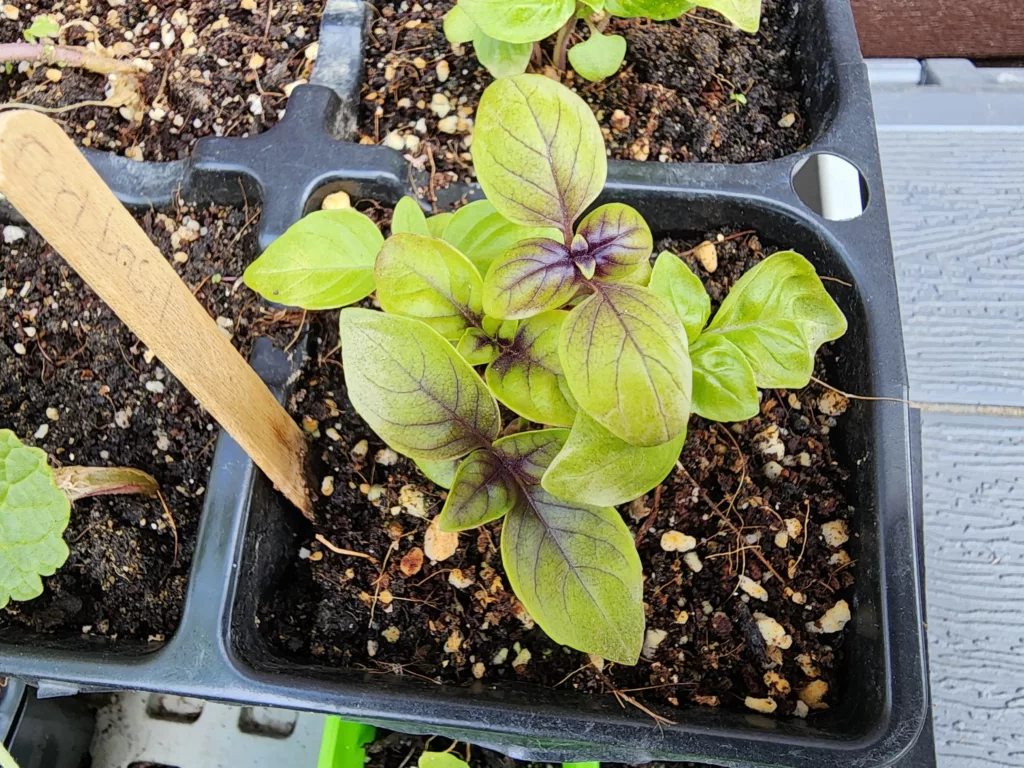
There are many varieties of basil on the market making it a fun addition to have. The most common basil grown is Genovese basil, which is a large leaf variety used in cooking, such as in pasta dishes. There are quite a few unique varieties such as Mrs. Burns Lemon (one of our favourites), lime basil, red basils such as Red Rubin, cinnamon basil and Thai basil.
Sun & Soil Requirements for Basil
Basil is a heat loving plant so it thrives in full sun. Basil grows best in well draining, nutrient-rich soil. Because basil is grown for its leaves, fertilizing with nitrogen helps support leaf growth.
How to Plant Basil Seeds
Basil loves warm conditions so growing the seeds on a heat mat will help speed up germination. If you have a heat mat and a growing dome this will help them grow faster, however it’s not required. Plant seeds at a depth 2x the size of the plant, and once the seeds germinate, put them under grow lights and remove the heat mat and dome.
Caring for Seedlings

Once the plants have grown their first set of true leaves, separate them into their own pots or garden space. When growing them indoors, keep them under grow lights until you plant them outside. If you’re planting the seedlings directly into your garden, leave 6-12 inches between each plant, to allow space for them to get bushier.
Continue growing your garden knowledge:
- I Was Wrong About Crop Rotation – Let Me Explain
- Drowning in Tomatoes? Here are 11 Ways to Use Your Harvest!
- 8 Tips to Build Healthy Soil (When Yours Sucks)
- Drowning in Zucchini? Here are 11 Ways to Use Your Harvest!
- 6 Spring Garden Pests You Should Know
Planting Guide
When planting indoor grown basil outside, make sure to properly harden them off. Since basil is a heat-loving plant, don’t bring basil outdoors until the temperature is above 10°C. Basil can be planted out after all danger of frost has passed, and night time temperatures stay around 10°C (+/- a couple of degrees).
Plant basil 6-12 inches apart from one another to allow space for the plant to grow. Given the space, basil plants will grow quite large so you want to make sure not to overcrowd them. Planting basil around other vegetables may help reduce the amount of pests that cause damage to your other crops.

A crucial step that is often missed by gardeners is to pinch your basil. When you pinch the main stem it creates large, bushy plants. Once the plant has grown around 4 inches tall and has 3-4 sets of leaves, pinch the stem directly above a set of leaves. In the armpit of the branch, new stems will grow.
Once the new branching stems have grown 2-3 sets of leaves, you can pinch those stems as well to promote even more branching.
There are a few things to note in the photo shown here. First, you’ll notice that the pinched stem that is identified, is actually a branch that has been pinched. The original stem is in the circle, close to the base of the plant.
When you harvest, always harvest a stem and not just the leaves. By harvesting your plant, you are also “pinching” the plant. Therefore, the more often you harvest, the bushier the plant will get.
Pinching basil is critical for bushy plants
Finally, lightly fertilize your basil to help promote growth. Fertilizer that has more nitrogen can help promote leaf growth.
Watering
Basil likes to stay hydrated. Water it regularly, ensuring that it is planted in well draining soil. The key is to not let it dry out.
Harvesting
Basil can be harvested once it has grown 3-4 sets of true leaves. This will be your first harvest, which is also your first pinching to promote growth. Once any stem has grown 4 sets of leaves you can harvest 2-3 of those leaves and stem to promote branching, and to enjoy the herb!
If the plant is starting to create a flower stem, you can still harvest from the plant. You’ll know your plant is going to flower since the leaves will get smaller and closer together. When this happens, harvest deep down on the stem. This will slow your plant down from producing more flowers, but the plant will continue to try creating flower stems. If you haven’t started new seeds, this is your sign to plant more seeds. When this happens, you can harvest the entire plant and process all the leaves!
Ways to Enjoy Basil

There are many ways you can enjoy basil – some of the most common uses include; fresh in pasta sauces, blended as a basil pesto, or dehydrated/dried which can be used all through winter. This is the dehydrator that we use and love.
Common Pests & Problems
Herbs tend to have less pest issues than other vegetables, and it is no different for basil. Slugs or aphids may cause you issues with your basil, however it’s not a super common issue.
The main issue that can affect basil is bacterial leaf spot. This is a bacteria that causes yellowing lower leaves and brown spots on the leaves. It will affect the entire plant, so it’s best to harvest any leaves that look healthy and throw the plant out.
To help prevent the likelihood of bacterial leaf spot, mulch around your plants, water at the base of the plant to avoid soil splashing onto the stem, and prune any vegetables around the basil to allow proper airflow around the plant.
Saving Seed

Saving seed from basil is very easy. Basil plants will create a flower stalk, with soft purple leaves on them that the bees love. Once the flowers have been pollinated, the seed pods will form. Wait until the pods turn brown and dry out and that’s when the seeds are ready. Break open the seed pods on a piece of paper and shake the seeds out, and voila! You now have a supply of basil seeds straight from your garden.
One final note, if your basil plant flowered quickly and didn’t provide you with much, don’t save seed from it. These seeds will produce plants that flower prematurely. Only save seeds from strong, well producing plants!