
Cauliflower is a great addition to your garden because it can be planted early in the season and can save you money on groceries since it’s fairly expensive to buy at the grocery store! Plus it’s overall an interesting plant to watch grow. So why not get in an early crop and also save some money.
A Quick Summary
Cauliflower is part of the brassica family and is a cold season crop. This means that it can be planted earlier in the season to get an early harvest, or late in summer for a fall harvest. If growing in the spring, make sure to choose a variety that has a short days to harvest (only 50-60 days) to beat the heat. Cauliflower has become quite popular in food because of its versatility, so it’s a great veggie to add to your garden.
Varieties
This blog is reader supported. Some of the links in this article are affiliates which earn us a small commission, at no cost to you.
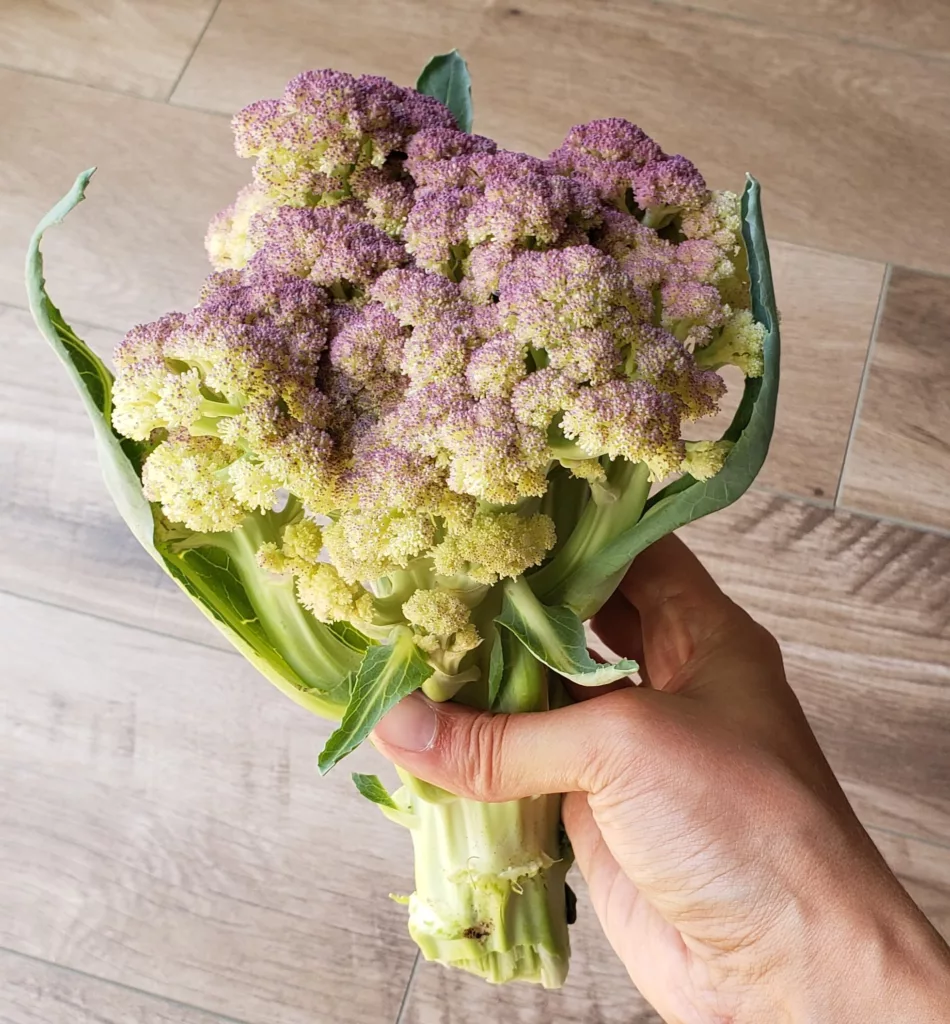
Cauliflower is fun to grow because it comes in such a wide variety of colours found outside of the grocery store, from purple to orange to green. They even come in different shapes! For a classic white cauliflower you can grow Skywalker, or an orange variety called Cheddar, or Violetta Italia which is the purple cauliflower pictured above.
Sun & Soil Requirements
Cauliflower prefers to grow in full sun of 6 hours or more. Especially if you start your plants in early spring you’ll want to plant them in a sunny spot to keep the temperatures higher. Make sure to plant your cauliflower in fertile garden soil, and fertilize the plants with a balanced fertilizer regularly. When the cauliflower head begins to grow, make sure to provide some shade for the plant either with shade cloth or by folding the leaves in on the head.
How to Plant Cauliflower Seeds

If you want to plant your cauliflower plants out before your last frost date, start your seeds indoors 8-10 weeks before your last frost. This gives them enough time to grow to a decent size before planting out. Plant the seeds at a depth 2x the size of the seed in moist seed starting soil. Place a dome over the seed tray and if you have a heat mat, you can use it here. A heat mat isn’t required, however it does speed up the germination. Once 60-70% of your seeds have germinated, remove the dome and place them under grow lights.
Caring for Seedlings
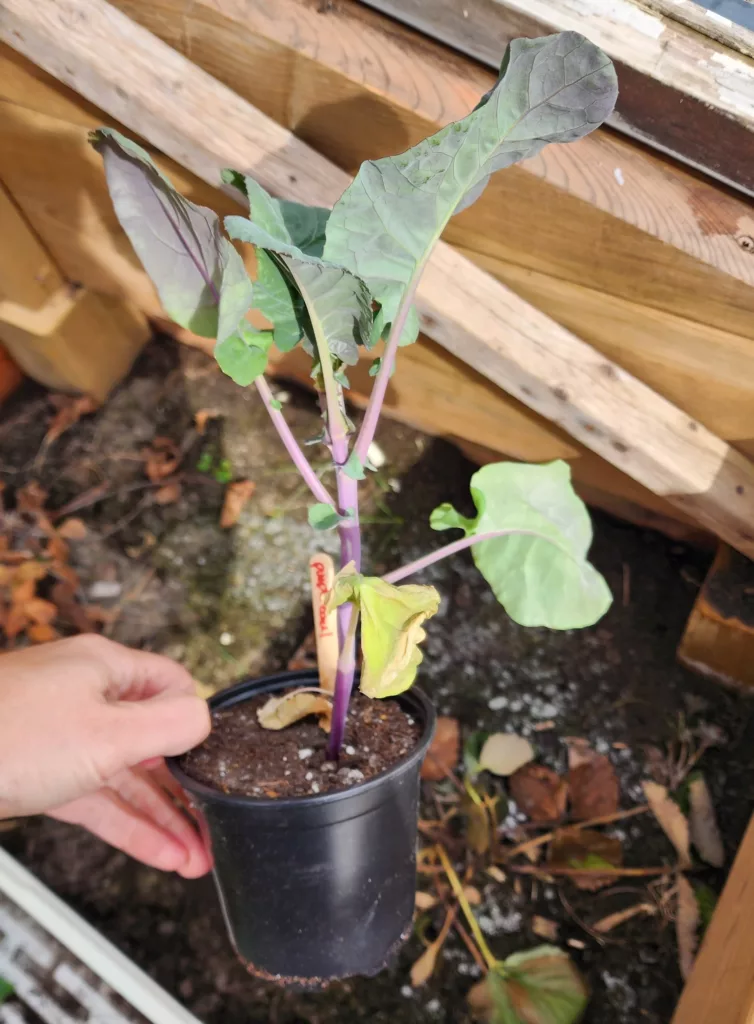
Pot up your cauliflower into 2″ pots once the first 2-3 sets of true leaves have grown. This size pot can support the cauliflower until plant out time, but if they do seem too large for the pot you can upgrade them one more time to a 4″ pot (like the photo above). Keep your seedlings well watered and under grow lights until they are ready to be hardened off.
Continue your garden learning:
- I Was Wrong About Crop Rotation – Let Me Explain
- Drowning in Tomatoes? Here are 11 Ways to Use Your Harvest!
- 8 Tips to Build Healthy Soil (When Yours Sucks)
- Drowning in Zucchini? Here are 11 Ways to Use Your Harvest!
- 6 Spring Garden Pests You Should Know
Planting Guide
Cauliflower can handle temperatures as low as -7°C which means they can be planted out weeks before your last frost date. Before planting out, make sure to harden off your plants for a couple of weeks – starting with just an hour a day during peak warmth.
If you’re planting a fall crop, you can direct sow your seeds 45-60 days before your first frost date. If you’re forecasted to get a hard frost, make sure to cover your cauliflower overnight. They can handle a light frost but not a hard one so it’s a balancing act to make sure you plant them before a proper, hard frost comes.
When planting outdoors, don’t bury the plant too deep, keep them at the same depth as they were in their pots. Add some water and a balanced fertilizer when planting. Don’t plant more than one cauliflower plant per square foot to allow them space to grow.
Watering
Cauliflower prefer regular watering, so make sure to have a good watering schedule for these plants. When you see your plants start to form a cauliflower head, cover the head with it’s own folded in leaves, shade cloth or newspaper to keep the cauliflower from getting bitter. Maintain a regular watering and weak fertilizer schedule to keep the plant growing.
Harvesting
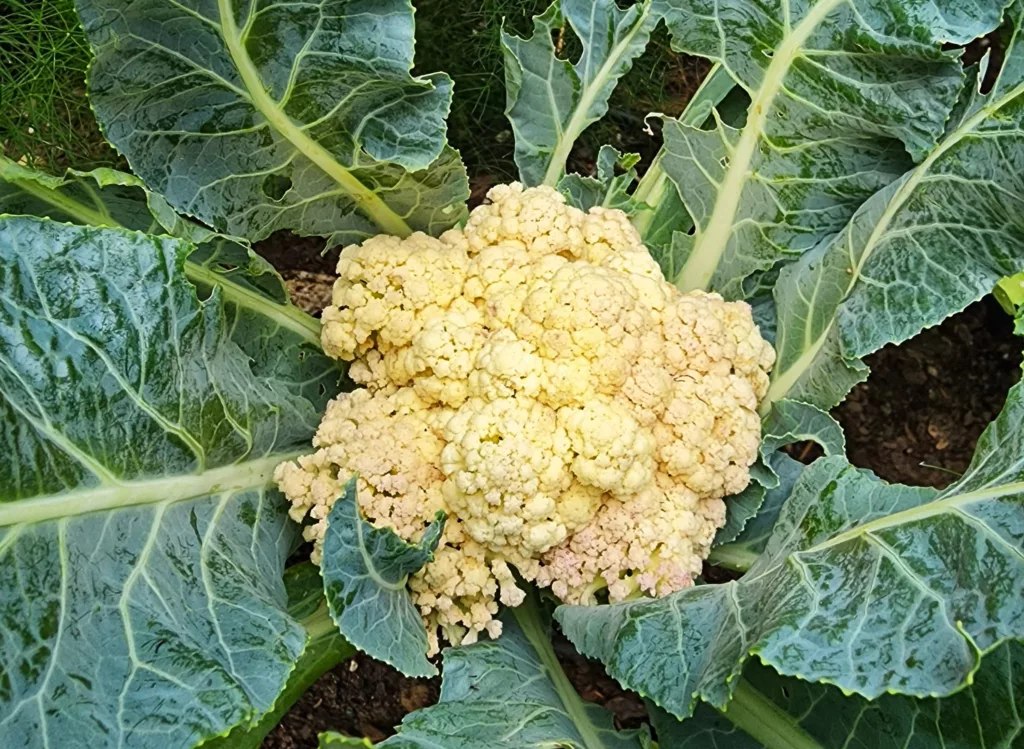
Cauliflower is ready to be harvested when it reaches the size that the variety suggests it will grow to. The size is dependent on the variety, however you want to make sure you don’t wait too long and the cauliflower head starts to go to flower. A proper cauliflower head will have tight florets, but if you notice they start to grow larger, this means that it is going to go to flower and you should harvest it, regardless of the head size.
Ways to Enjoy Cauliflower
Cauliflower has recently had its moment in the spotlight because of how versatile it is. You can eat it fresh with dip, as cauliflower ‘rice’, made into pizza crust, or baked in the oven like cauliflower ‘wings’.

Common Pests & Problems
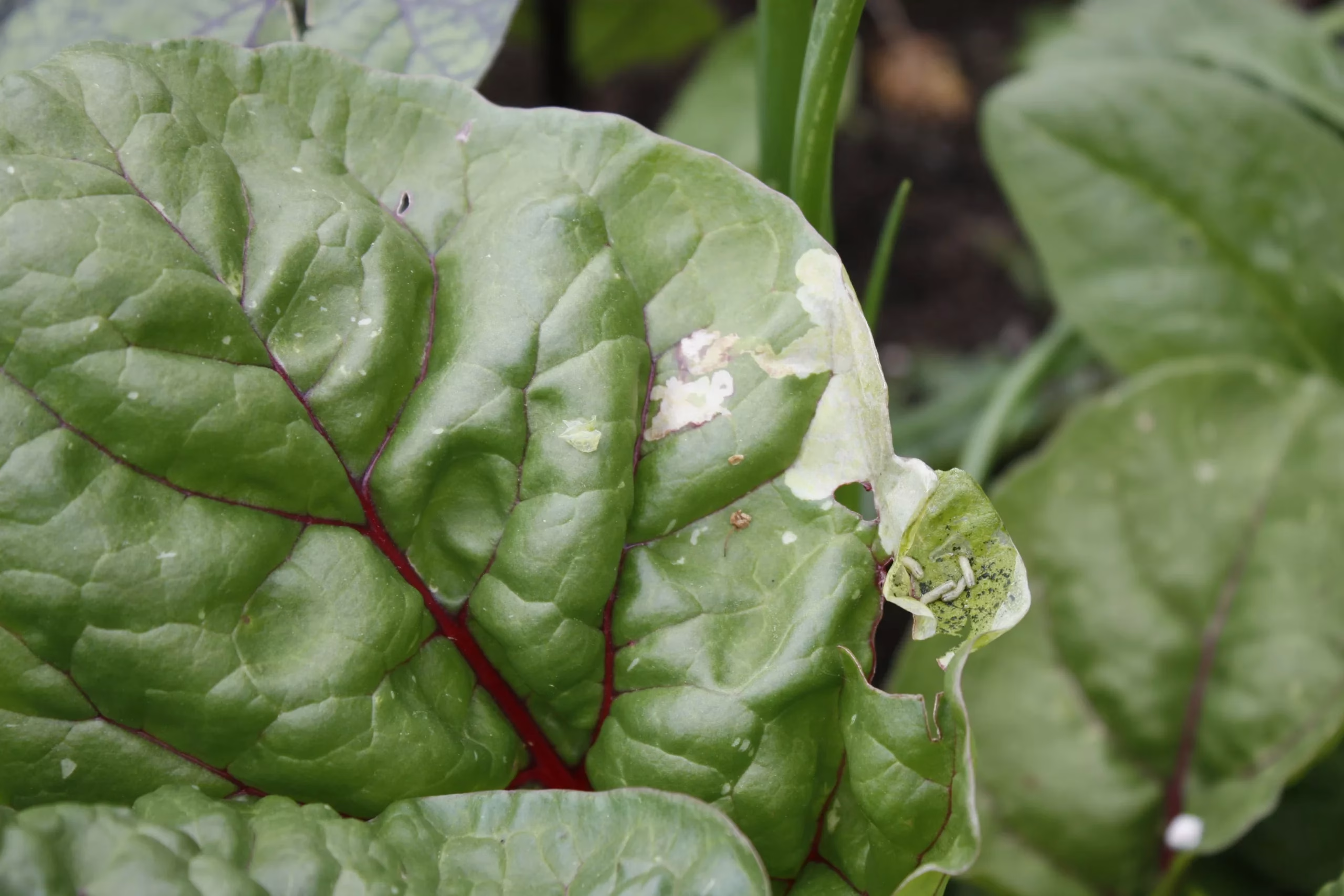
The most common pest for cauliflower is the cabbage moth. The easiest way to combat these moths is by covering your cauliflower with insect netting to prevent the moth from being able to lay their eggs.
Last year I had a problem with groundhogs, and let me tell you, they have a FEROCIOUS appetite! And what did they have an appetite for? An entire head of cauliflower. I went to bed one night with a cauliflower to harvest, and woke up to nothing. Groundhogs are really difficult to manage, but finding a way to cover your cauliflower with fencing or a chicken wire cover might help slow them down.
Saving Seeds
In order to save cauliflower seeds you need to forfeit eating the head. Therefore, if you hope to save seeds from your plant, make sure to plant one extra plant that you can save from. If your cauliflower goes to seed before it forms a full-sized head, do not save seed from it and harvest it to eat.
Therefore, choose your strongest cauliflower plant and allow the head to grow into flower stalks. Once the flowers have been pollinated, they will form seed pods. Allow those pods to dry out before harvesting them. The seeds are inside of the pods, so you can crack them open and place the seeds in a labelled envelope. Store the seeds in a cool, dark place.