

Cucumber beetles are the nemesis of many gardeners. These flying beetles come in masses, take over cucumber plants, and without proper management, they’ll stop you from getting any harvests at all!
There are two different types of cucumber beetles; the spotted cucumber beetle and the striped cucumber beetle. Here in Canada the most common is the striped cucumber beetle. These beetles are attracted to cucurbits, and eat the leaves, stems and flowers of plants.
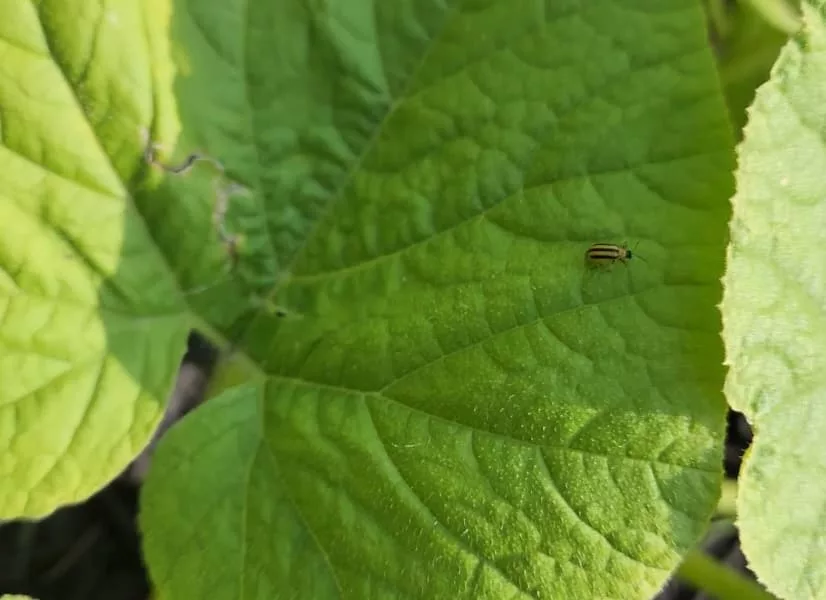
The most common cucumber beetle you’ll see is the striped beetle which is a yellow beetle with black stripes. The other type is the spotted beetle which is a yellow beetle with black spots. They’re small, around 5mm in size, and fly which makes them hard to catch.
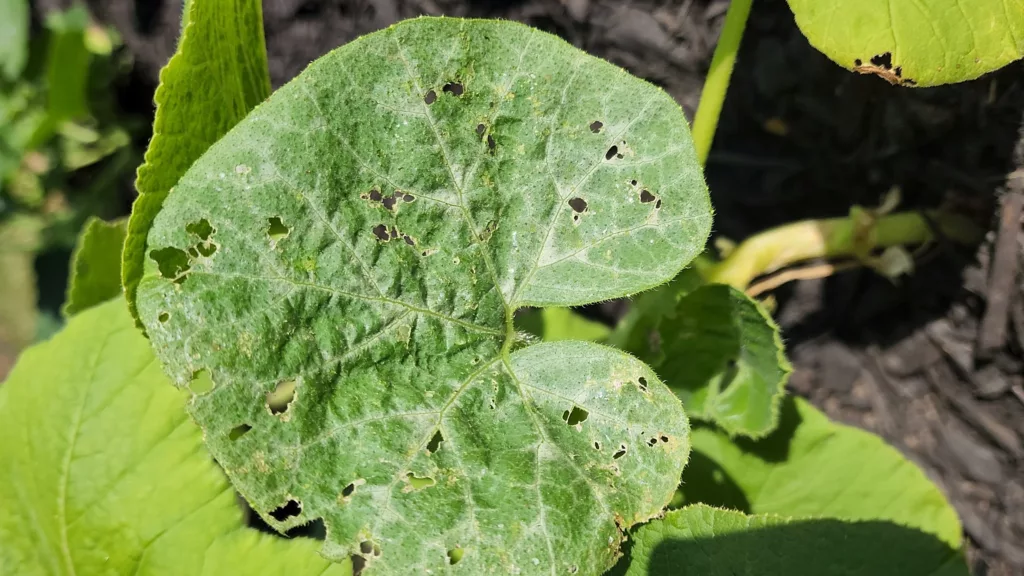
Cucumber beetles eat the leaves and flowers, creating holes in both, but killing the blooms. They also feed on the roots and can transmit bacterial wilt. The biggest damage that they do is eating the flowers of the plants, as it blocks any chances of pollination, leaving you with no fruit on your plant.
Cucumber beetles are attracted to cucurbits such as zucchini, squash and cucumbers. However, they’re most attracted to cucumbers and do the most damage to these plants.
A cucumber beetles life cycle is 8 weeks, and adults come in two cycles each year. The female beetles lay eggs in the soil near the cucurbit plants, and these larvae feed on the roots of the plant. The first set of adult beetles emerge in June, where they’ll eat young cucurbit plants. They then lay eggs in the soil, and a second generation emerges in September.
Cucumber beetles are a difficult pest to control because they lay their eggs in the soil, and adults can also hide in the soil, if needed. Often times, the easiest way to manage pests is by removing the eggs from the plant, however you can’t do that with cucumber beetles. So here are some ways to help manage their populations.
The main way to deal with cucumber beetles is to remove them from the plant. You can either pinch them on the plant and crush them, or you can pick them off and drop them into a bowl of soapy water.
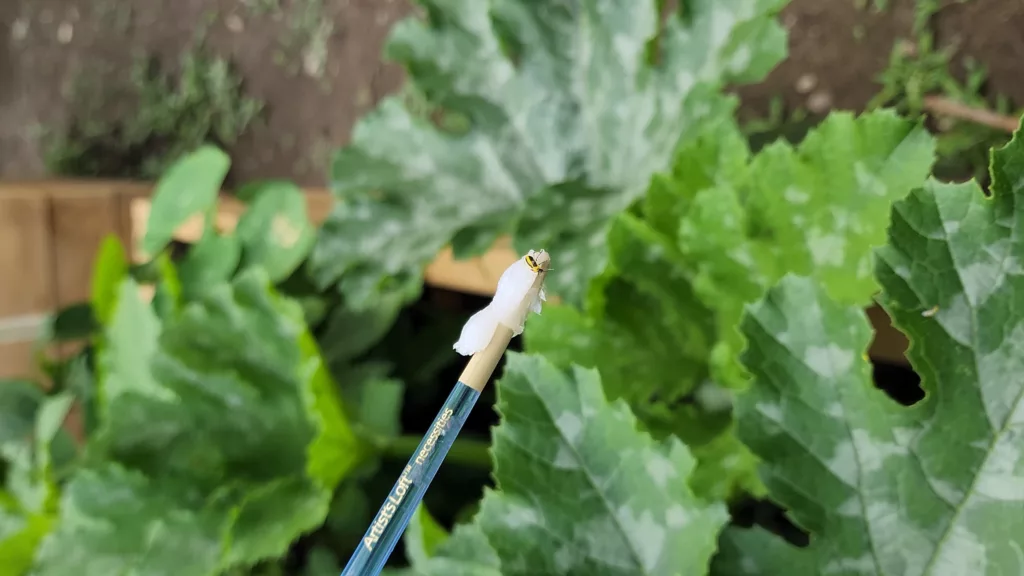
Because cucumber beetles can fly, and quickly, you have to be fast with picking them off the plant. The two ways we’ve found success is by putting the soap bowl under the leaf and smacking the leaf so the beetle falls directly into the bowl. The second is by using Vaseline and a stick and catching the beetles on the jelly (shown in the photo above). This method is good for beetles that are in flowers and are harder to reach.
When checking for beetles, make sure to look inside closed flowers as they often are found inside of the flowers.
Since the first generation of cucumber beetles emerge in June, you can attempt to avoid the largest populations by planting your cucumbers later in the spring. Planting seedlings in mid-June may help with the fight against these pests.
There are a few other methods you can try in order to reduce the pressure. The first is putting insect netting over your cucumber plants from the time of planting until the first blooms open. You’ll have to remove it once the flowers open to allow for pollination, however it gives your plants a chance to grow and gain strength.
The second is Kaolin clay. This is a recent method that is being tested. Kaolin clay is used often for cosmetic purposes, however you can try and add it to water and spray it on the leaves. You want it to be at a consistency where the leaves look like they are covered in the clay. Be mindful that when it rains, or if you water the leaves, that the clay will wash off.
The third option is to use a small, hand-held vacuum to suck them up and drop them in soapy water away from your plants. If you choose to do this option, be very careful that you’re only targeting cucumber beetles and not accidently sucking up any pollinators.
Some websites suggest making traps using something yellow, like a bowl, and covering it in vaseline or another sticky substances. The issue with this is that you’ll catch bees and other pollinators at the same time. So if this was something you thought about trying, we recommend trying one of the other options above instead.
A great question is: “how do I get rid of cucumber beetles?”, but the reality is: you can’t. Unfortunately they’re a major pest in agriculture, they’re native to the area and they’re very good at what they do. So the best you can do is mitigate the damage.
Since adults lay eggs in the soil where the cucurbits are planted, you can plant in a new spot each season. However, the larvae do minimal damage in comparison to the adults, and since the adults can fly they’ll be able to locate your cucumbers since most home gardens are quite small.
Our best recommendation is to wait and plant later, around the first or second week of June and to cover your plants with insect netting to help lower the populations, and reduce the damage. And after that, prepare to give some time and energy into picking the beetles off your plants.