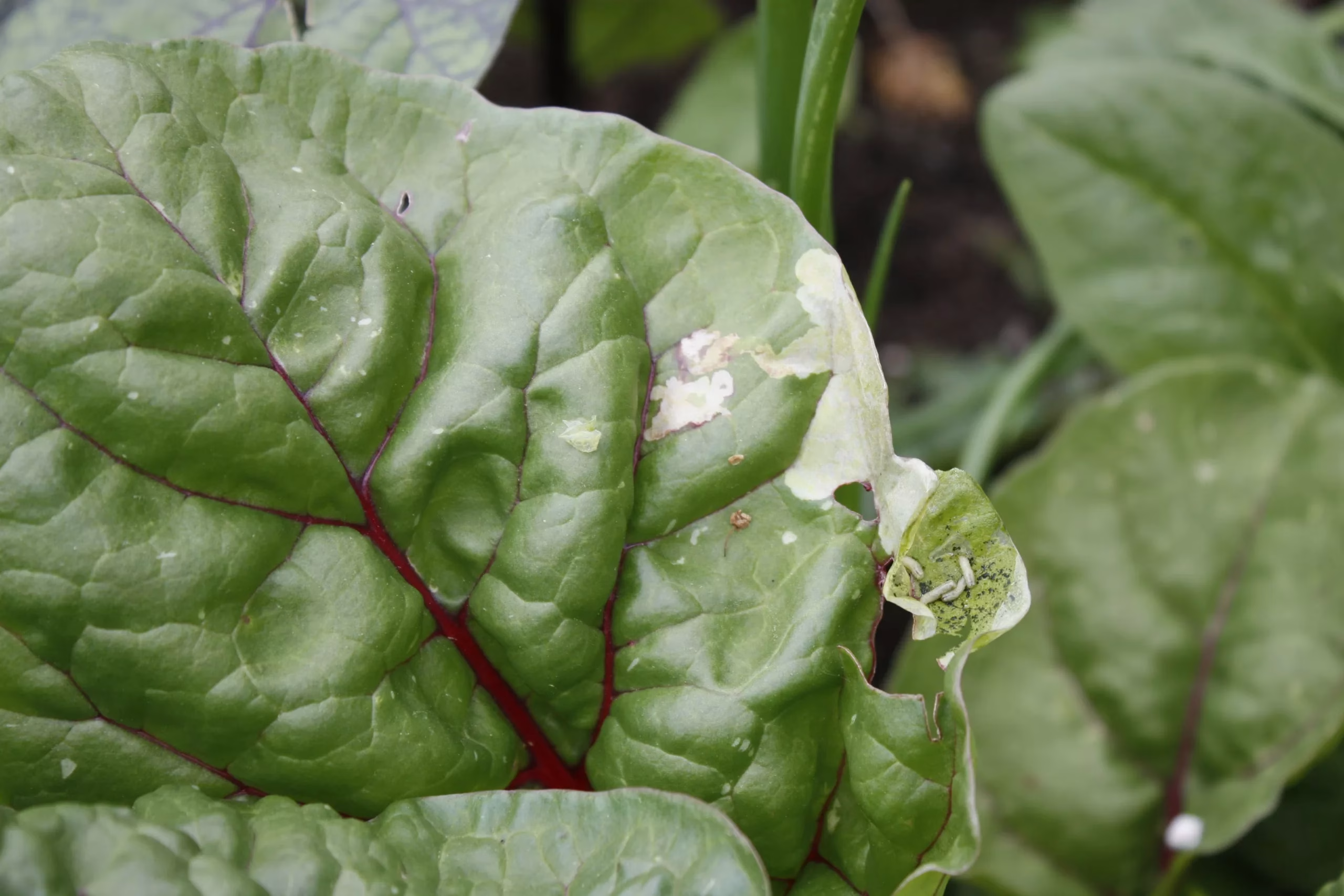
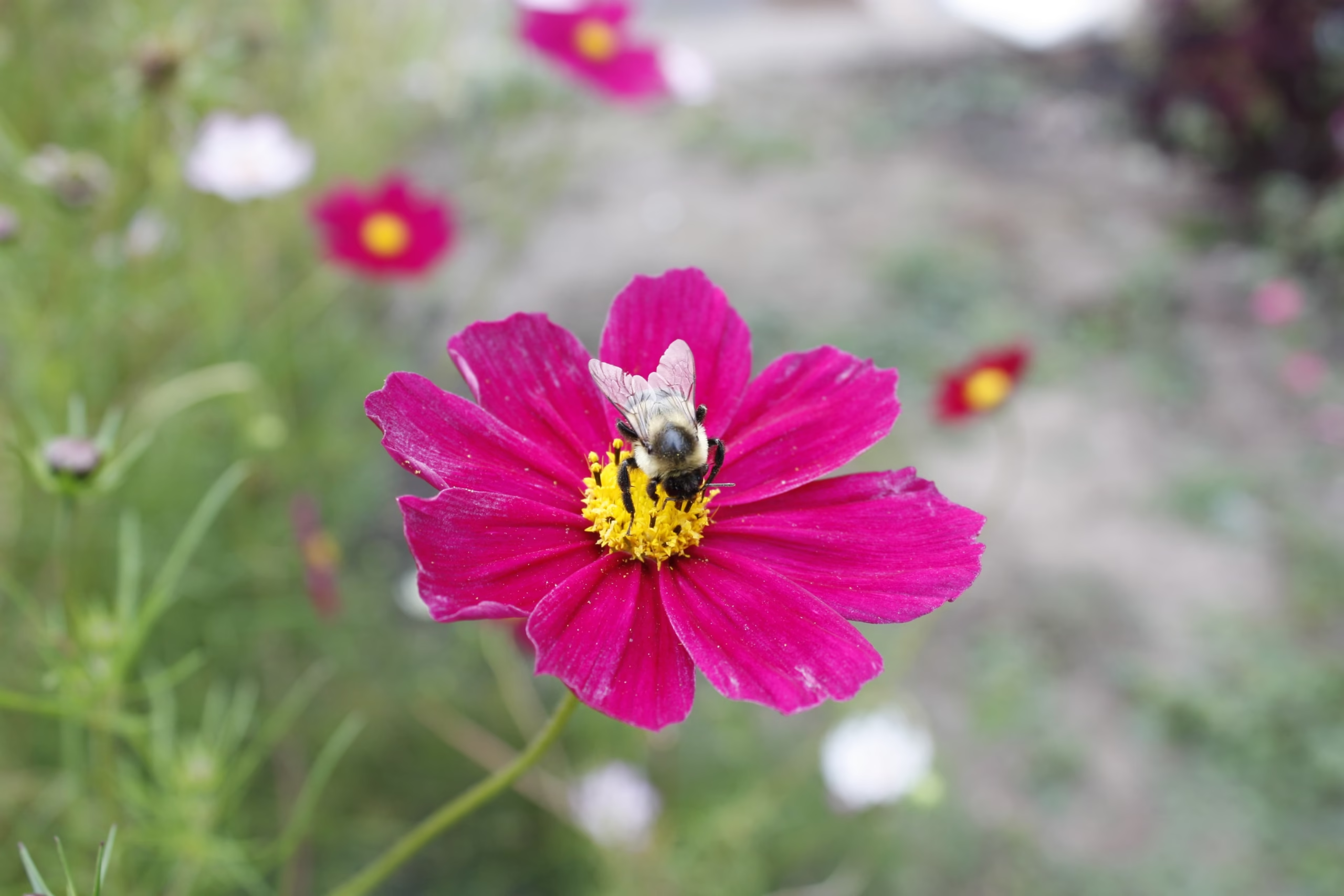
If you take a moment and do an internet search looking up ‘pollinator decline’ you’ll be overwhelmed with articles on the topic. For example, NBC News put out an article saying that 70% of honey bee colonies are going to die in 2025. There was a 2019 study done by Biological Conservation that said that 40% of our insects are facing extinction. And Forbes just put out an article that there are scientists doing studies that are showing that the nighttime temperatures aren’t dropping down to cool enough to allow the bees to relax. There’s so many problems that our pollinators are facing right now and I want to discuss the causes of why our bee populations are struggling and why you might not be seeing any bees this season.
Unpredictable Temperatures
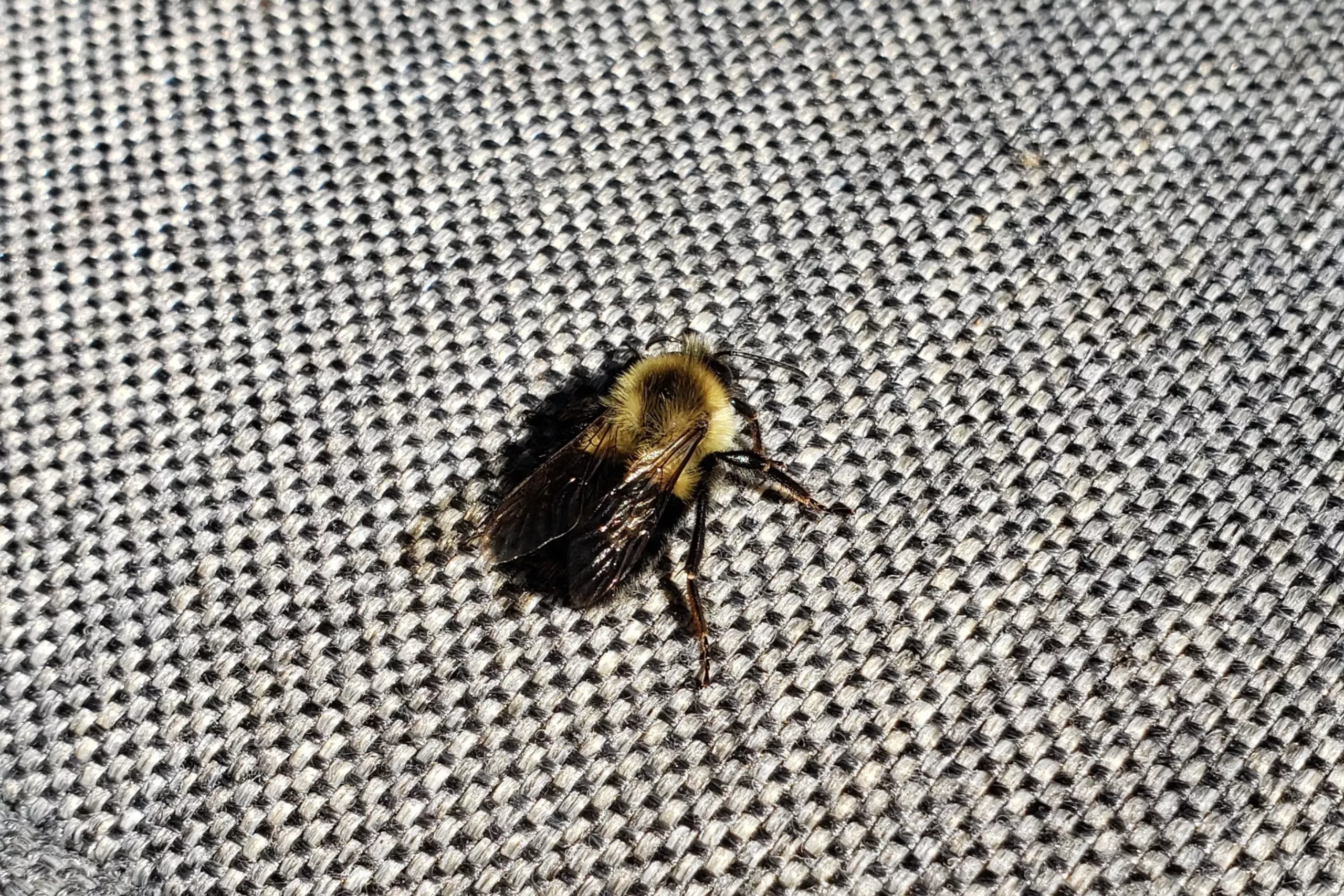
So here in Southeastern Ontario, we had a very cold winter in the ’24/25 season. Normally our winters can be quite mild, with daytime highs averaging around 0°C to -10°C with a random polar vortex, one time. But this winter it stayed consistently cold, frigid cold! We were at -20° C all winter long! And on top of the cold, our winter was really dry. We’ve had recent winters with over 10 feet of snow, but this winter was dry, with only one or two major snowstorms late in the season. At the time I didn’t realize it was also a forecast for how our summer would turn out too.
After our unusually cold and dry winter, spring finally came. But instead of the usual spring weather, we had a lot of extreme temperature fluctuations. Late April saw some really hot temperatures (over 30°C), before we were plunged into unseasonably cold temperatures mid-May. Our average temperatures in May range from 15-25°C, but we were seeing daytime highs of only 4°C.
At this point you may be wondering why I’m telling you this. Here’s why all of this information is so important. When we get warm temperatures in spring, particularly temperatures above 10°C, this signals to our bees that it’s time to come out of hibernation. So when we hit that 40 degree heat wave in April, the bees would have woken up and started their life cycle. But the problem comes when the temperatures plummet below seasonal. Our weeks should have stayed warm, but since we dropped below 10°C, the bees can no longer fly. It’s too cold for their bodies and their muscles stiffen up.
Low temperatures require a lot more energy to forage so they instead won’t come out of their nest. The problem is, the bees only keep so much nectar in their nests for spring time. When the weather is acting as it should, bees wake up from hibernation and can get out to forage. On days where it’s raining too much, or the temperatures drop, the bee can rely on their food storage to get them through to the next day. But when the temperatures drop below seasonal, and stay there for extended periods of time, they run the risk of running out of food stores and being starved to death.
So if you have a cold spring that lasts longer than usual, be aware that your bee populations will take a hit. A lot of bees may have used up all their food stores before the temperatures warmed up enough to be able to come out and forage and start taking in new calories.
Urbanization & Human Sprawl
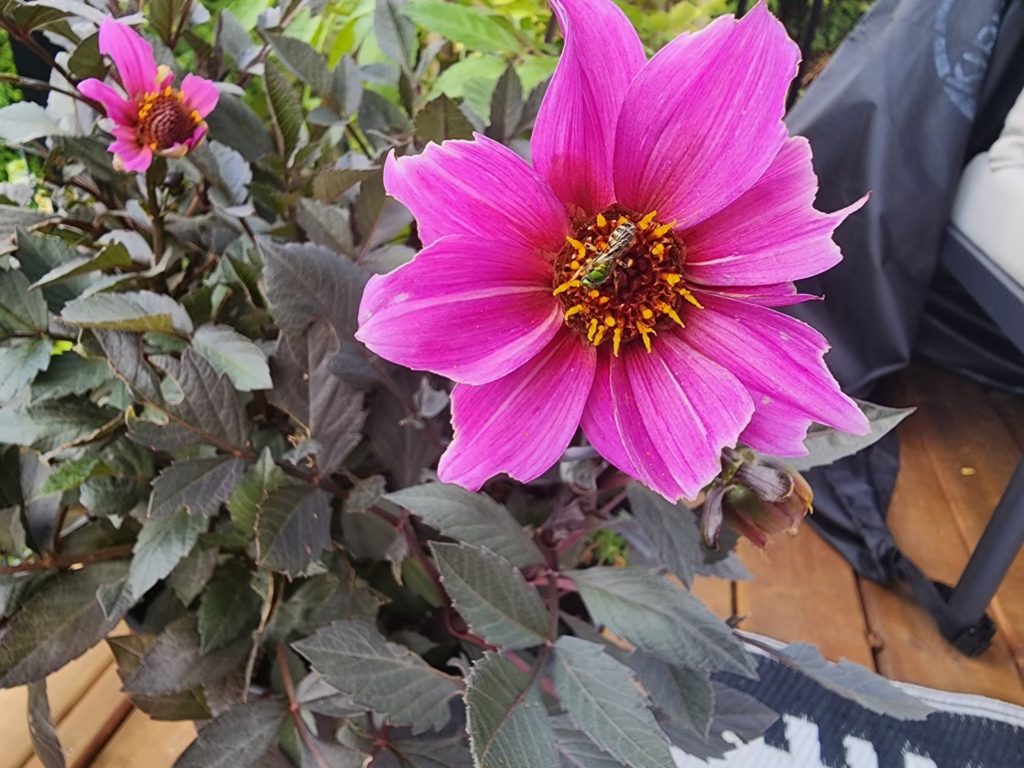
Urbanization and human sprawl is a major contributing factor to the loss of bee populations, especially when it comes with urbanization in the form of lawns. The more that humans are expanding, building bigger cities and more houses, the more forests, fields and meadows are being removed. The problem is that they’re being replaced with concrete parking lots, houses, buildings, roadways and lawns.
Meadow and natural spaces are being converted to grass to create parks, neighbourhoods, and other recreational areas. But your lawn is a biodiversity wasteland. There’s nothing for bees to forage for in your lawn. If your space is all grass, or ornamental plants that produce no flowers, the bees can’t find any type of food. Any bee that is nesting near your house won’t be able to eat and some native bees can only travel about 300 meters from their nest.
This means that either A) they’re not going to nest in your area at all or B) they’re going to have a really hard time finding food. So the more lawns, golf courses and neighbourhoods that we’re building, the harder it is for bee populations to survive. And on top of that, many people are spraying pesticides on their lawn to try and keep that perfect green golf course look. But these pesticides are killing our bees. These chemicals can kill all of the bacteria in their stomach which stops them from being able to eat properly.
In extreme cases, some bees can fly up to 8 kilometers to find food but many of our native bees are only flying 1km in distance or less. This means that as urbanization grows wider and further, our bees have to travel further for food. As long as people continue to build houses, and cover the remainder of the land with concrete and grass, our bees are going to struggle. And, neither us, nor the bees can survive without food.
Chemical Use
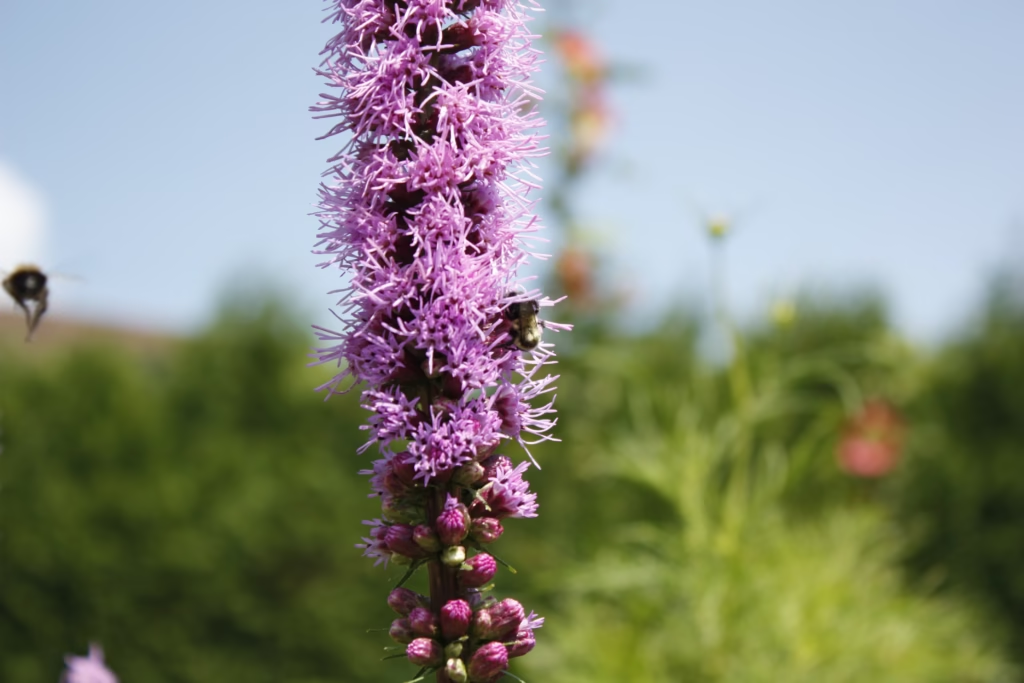
I wish that certain plants had a PR team. Because if they did we would be redefining a lot of plants from being a “weed” to a “native flower”. In the pursuit of the “perfect” lawn, homeowners everywhere are killing native flowers. Common native flowers found in Ontario lawns include yarrow, clover, forget-me-not, daisies, and wild strawberries, to name a few. If our lawns were left to grow more naturally, you’d realize just how many food sources exist for our native bees. But somehow these flowers got a bad reputation and stopped being native flowers, and started being seen as weeds. And everyone hates weeds. There’s a war on weeds and the only way people seem to want to manage them is with pesticides.
Or even the ‘dreaded’ ant. Everyone seems to hate ants too, so again, they turn to chemicals. But neither ants, nor wildflowers are harmful to your lawn. Sure, some ants can get into your house, but you can manage them properly without the use of chemicals. If you don’t know this yet, those chemicals that kill ants, they also kill bees. It’s important to realize that anytime you’re using a pesticide, you have to recognize that it’s never going to kill just one specific insect. It’s actually going to kill multiple insects and on top of that all, these ants can be food for birds. So are you okay with poisoning birds too? It’s incredibly important that you realize when you use chemicals in your lawn, you’re harming more than just whatever you think you’re targeting.
Rising Temperatures
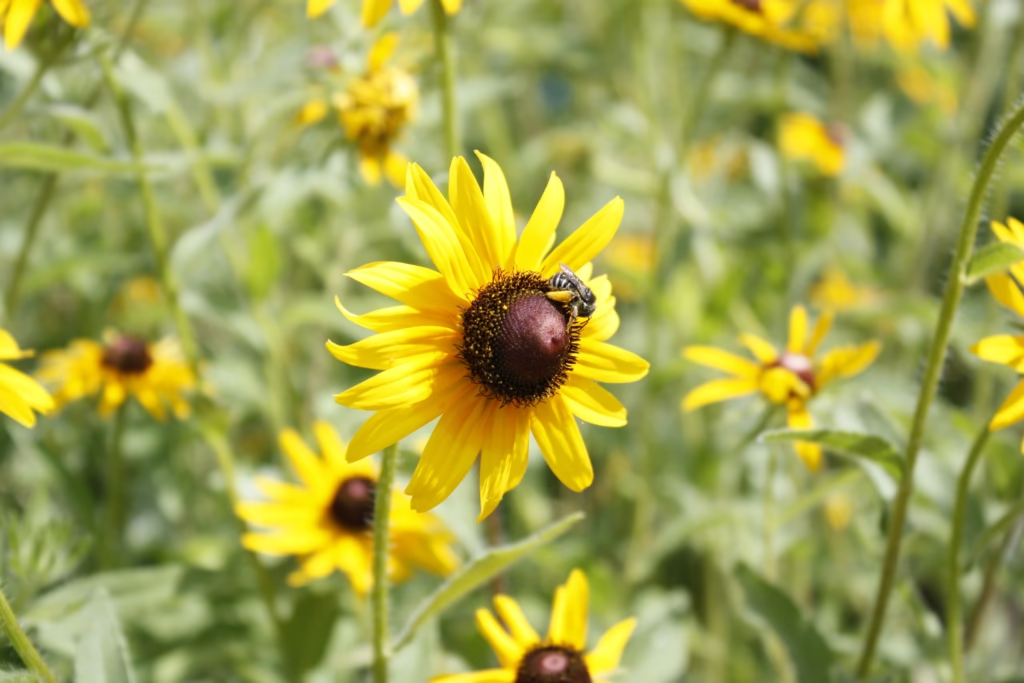
Unfortunately, temperatures are rising as the climate crisis is intensifying. And these rising temperatures are affecting our bees. Scientists are currently studying how these rising temperatures are affecting our bees and what they’re discovering is that temperatures are rising at a higher rate at nighttime than they are during the daytime. So what used to be, for example, an average summer night of 12°C, is now 16 or 18°C.
The problem is that bees regulate themselves through exterior temperature. Bees know when to leave their nest and return home through the air temperature. As temperatures decrease in the evening, it signals to bees that it’s time to go home. However, since nighttime temperatures are staying so high, the bees aren’t able to recognize when it’s time to return to their nest. Or, when they do return to their nest, their bodies are in an active state all night long and they’re not able to rest. This heat is causing them to stay as active as a foraging state, which means that they’re burning extra calories while they’re trying to sleep at night and it’s exhausting them. Because of this additional calorie burning, it means that they have to work harder during the daytime collecting more food in order to survive.
Every bee species is different which means that there’s a different temperature that signals to them when it’s time to go home, but the range is anywhere from 10 to 18°C. Tragically, there’s a lot of nights in the summertime now that don’t go down below 18°C. I’ve seen many nights that stayed around the 24°C mark, so these bees have gone home at night and stayed active in their nest. We don’t want bees that are too tired to forage the next day – for both their health, and the health of our gardens.
Continue growing your garden knowledge
- I Was Wrong About Crop Rotation – Let Me Explain
- Drowning in Tomatoes? Here are 11 Ways to Use Your Harvest!
- 8 Tips to Build Healthy Soil (When Yours Sucks)
- Drowning in Zucchini? Here are 11 Ways to Use Your Harvest!
- 6 Spring Garden Pests You Should Know
Droughts & Reduced Precipitation
Another common weather pattern we’re experiencing now is a change in precipitation. Many areas have been experiencing prolonged droughts and this is affecting both the plants and the pollinators. Plants need water in order to survive. It’s a key component for so many different functions within a plant. One of the common issues of droughts is that plants abort their flowers. This is something that both vegetable plants and flowers will do.
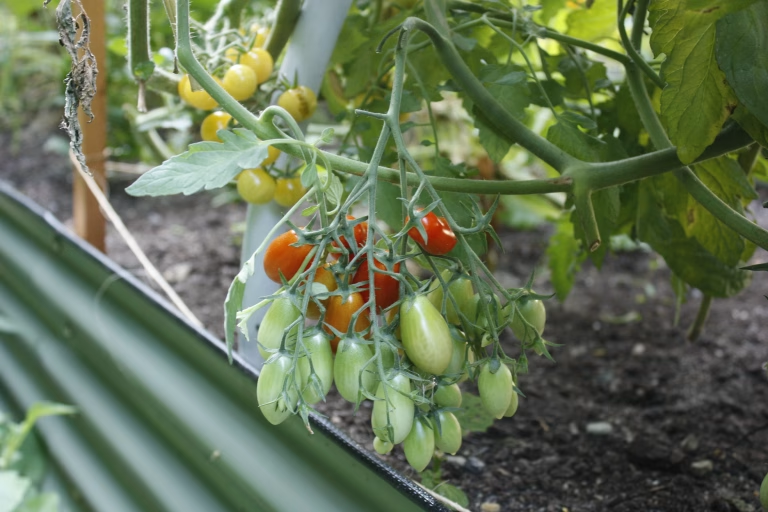
A common vegetable where you see blossoms being aborted is on tomatoes. Plants use this as a survival mechanism as flowers require a lot of energy. Dropping some, or most, of their flowers will help them conserve energy until they can get access to water. This also happens in perennial flowers as well. Your perennial flower bush may produce fewer, or no flowers at all if the weather is dry. The biggest problem with this is that if there are no flowers, there is no food.
Even if there’s a mild drought it still affects plants. Plants affected by mild droughts can look like; producing fewer flowers, smaller flowers, less nectar or pollen that is of lower nutritional value. This means that droughts affect both the flower itself but affects whether bees can forage for food or not.
There was a study done where scientists used clover to test how rain affects pollen. They watered one with ample water and did a semi-drought condition for the other to test the quality of the pollen. They discovered that the pollen from the semi-drought clover actually had 8% less protein in it than the clover that was well watered.
This shows that as we go through more drought-like conditions, the quality of food that our bees are foraging is declining. Additionally, they looked at bumblebees that were foraging off of these semi-drought like conditions and it turned out that they didn’t live as long as their counterparts and they laid less eggs. Of course, this is a major issue for future populations.
Beyond the pollen, when plants are going through these drought or semi-drought like conditions they set less seeds. Less seeds means less food for birds to forage, and less blooms for bees to forage on and for any other pollinator or insect that relies on these flowers in future years.
Flooding
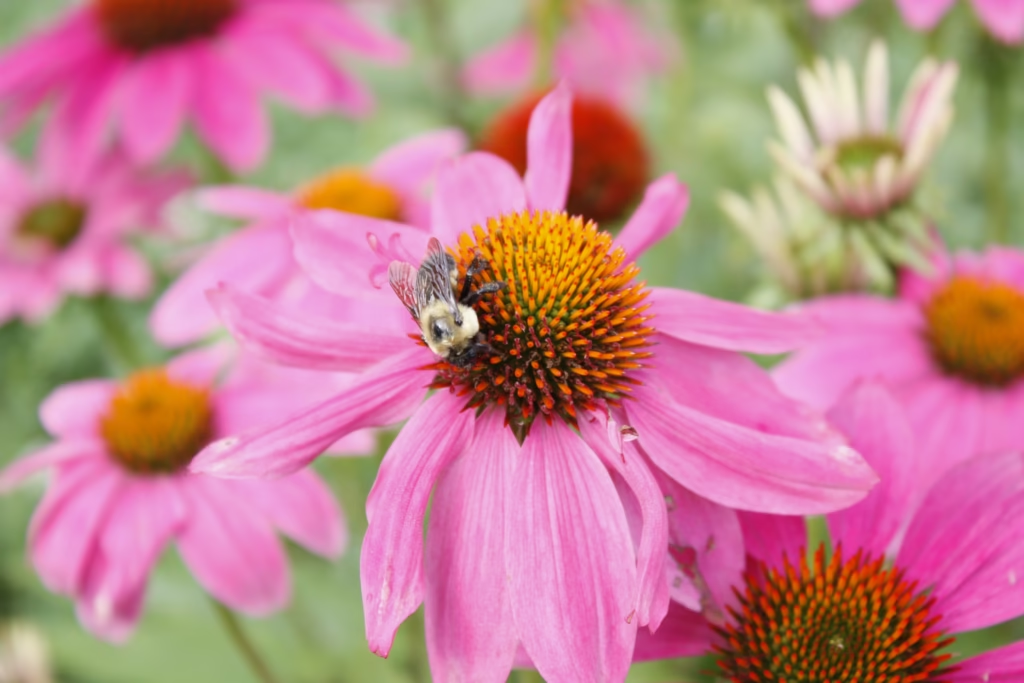
On the opposite side to droughts is flooding. And many of our bees actually are ground nesting bees. For example, bumblebees live in colonies in the ground in old mammal or rodent nests. So when a flood is coming, how do they manage to survive underwater?
It turns out that during hibernation bees can survive up to eight days underwater. This means that bees are able to survive during the freeze and thaw cycle in the spring and wintertime. Many bees actually lay their eggs and wrap them in different coatings such as resin that’s waterproof. So if there is a flood these eggs can survive.
In the mid-season the queen is laying eggs, having broods, and the colony is filled with worker bees. Floods that happen mid-season can affect, and kill, an entire colony.
It turns out that one of the causes of colony failure is from flooding and this comes third to animal predation and human disturbances. If the bees can’t get out early enough in the spring from cold temperatures, can’t find quality food and then are met with floods and endless rain, how will our bees survive the season?

The other issue is that when it’s consistently raining the bees can’t go out to forage, which again, means that they have to rely on the food that they’ve stored in their nest. When its consistently raining, the bees have to make up for lost time when the rain finally stops. They have to work harder to make up the food they weren’t able to forage during the rainy days. Some bees won’t fly in the rain, while others will. This is due to the weight of their bodes when they get wet as it causes them to use up extra energy when going out. So when it rains every single day, these bees need to have food stored in order to survive.
The final issue that you often don’t think about as a home grower is how heavy rain affects agricultural land. Fields where farm animals graze have flowers on them. However, as the ground gets muddy and the animals graze, they’re stepping on the flowers. The flowers are already beaten down from the rain, often tipped over or flattened. They can’t pick themselves up until they dry. To have animals walk over them means that it’s actually killing a lot of those flowers that those bees rely on. Bee colonies often live near agricultural land so it’s just another way that rain, and especially heavy rainfall, can be affecting our bee colonies.
Your Paying More Attention
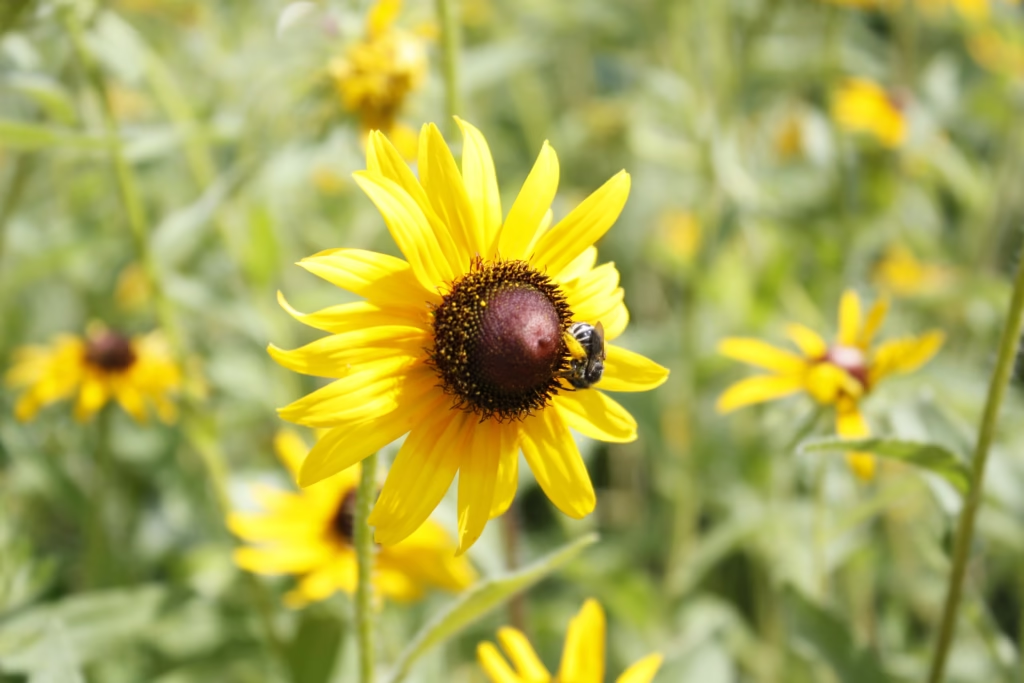
The truth is, you might be seeing less bees only because you’re paying more attention than before. If you have a new garden, or you planted native flowers, you might be out with a more watchful eye. Especially if you’ve heard a lot of people say that there’s no bees. You can’t be outside patrolling all day long, and when you do go out, it might be the wrong time or the wrong temperature to be looking for them.
It’s also difficult because, unless you’re counting and documenting bee species in your yard, you don’t have anything to compare it to in order to see that the population sizes are declining. But the truth is that bee populations truly are declining so it is likely that you’re seeing less bees this year.
Honeybees vs Native Bees
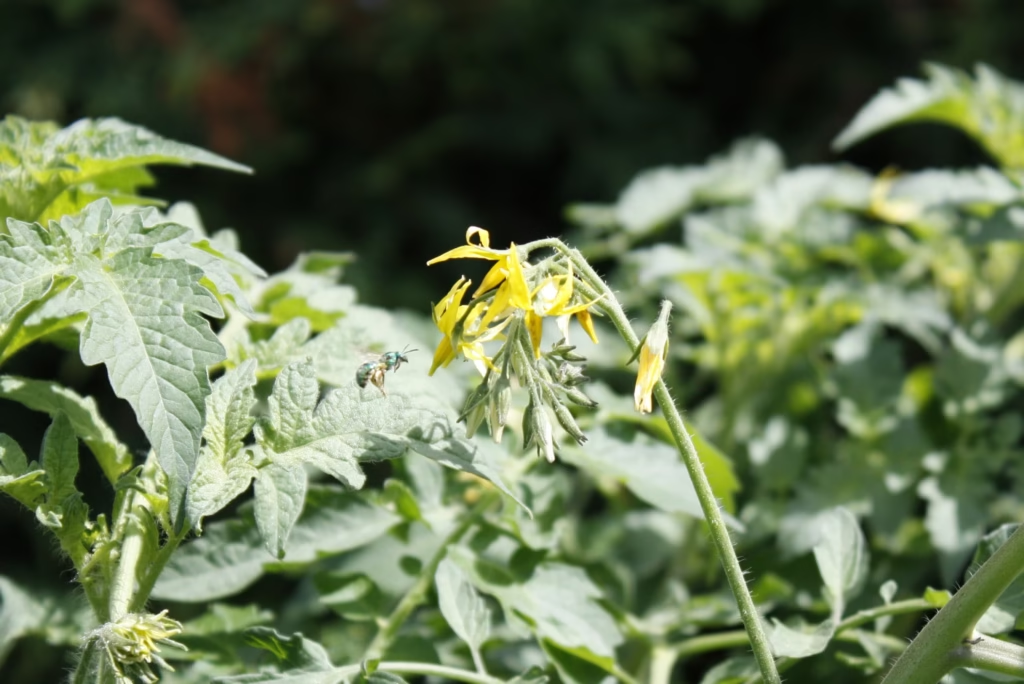
A lot of people think that they can help our bee populations by becoming a backyard beekeeper. But the truth is that honeybees are a part of the problem as they’re outcompeting our native bees. In North America we have over 3,600 native bees. There are over 800 in Canada alone, yet the honeybee is just one species of bee (non-native) that is out competing thousands of our native bees.
Honeybees wake up earlier in the season than our native bees do. They’re alive, awake and ready to grab all the nectar and pollen while our native bees are actually still waking up from hibernation. The native bees are still slow, they’re groggy and they’re just not quite getting to the plants as fast as the honeybees do. Honeybees are bigger than the average native bee which means they consume more pollen than our native bees do. Some people estimate that 10,000 honey bees can take as much pollen in a three month time span as 100,000 of our native bees. So if an average beehive has anywhere from 20,000 to 80,000 bees, that means that they’re taking the pollen of 500,000 native bees in just ONE summer season!
Not only are honey bees massively out competing our native bee population, but because honeybees are larger, it means that they can fly a lot further of a distance. So as I mentioned earlier, some of our native bees can only travel 300 meters from their nest site, while honey bees can travel for kilometres. This is why I wouldn’t recommend getting a backyard beehive. Not only are you protecting just a single species, but you’re bringing in a species that is so large and fast that it’s going to collapse the native bee populations around you.
The final major issue with honeybees is that they come with pathogens. There’s something called pathogen spillover and this is when honeybees transfer pathogens to our native bee population, making them sick. For example, the Rusty Patch bumblebee was very common in Ontario up until 1990. But it has now been put on the endangered species list because of pathogen spillover.
Why it matters
If the world lost all of the bees, we would face an imminent collapse. There are certain plants and birds that rely 100% on bees. There are some flowers that can only be pollinated by bees and there are bee eating birds out there. So if the bees were all to die that means that these plants would go extinct and so would the birds. Not only that but bees are incredible pollinators. The flowers that bees pollinate are producing quality seeds for future years. And although other insects are pollinators, they’re not necessarily as good or efficient as bees.
If all of the bees died, our plants would still produce seeds but they wouldn’t produce seeds at the same quantity or quality that they would if bees were around – which means year after year we would get less and less blooms.
And of course the most obvious is how important bees are for food production, especially in our current agriculture system. We rely heavily on bees to pollinate our food. Bees pollinate our vegetables, entire fruit farms, and of course, the almond industry uses travelling honey bees to pollinate almonds.
Not only do we need them to produce our food, but food pollinated by bees actually tastes better and lasts longer in our fridges or on the shelf. And the other issue is that we need bees to pollinate the flowers of vegetables in order to get seeds. So without the bees we wouldn’t be able to collect as many seeds for our food and therefore our seed supply would decrease. Now we would have a major issue trying to be able to produce enough seeds to grow food for our populations.
If you’re a newer gardener you might be thinking, “Well we can be eating lettuce or dill or spinach! Any leafy green, since there are no flowers on it in order to produce food”. And sure that would work for the first year, but it wouldn’t work for any other year after that because we need those plants to go to flower in order to produce seed. So even though lettuce is the leafy green that we’re eating it does have a giant flower stalk that needs to be pollinated in order to produce seeds. So without bees pollinating the plants, we would be running out of seeds very quickly. This means us, as gardeners, wouldn’t be able to garden anymore if there are no seeds available.
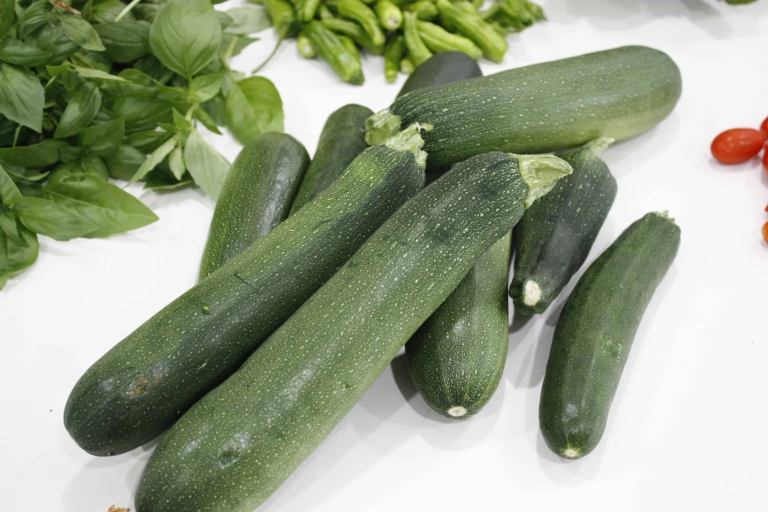
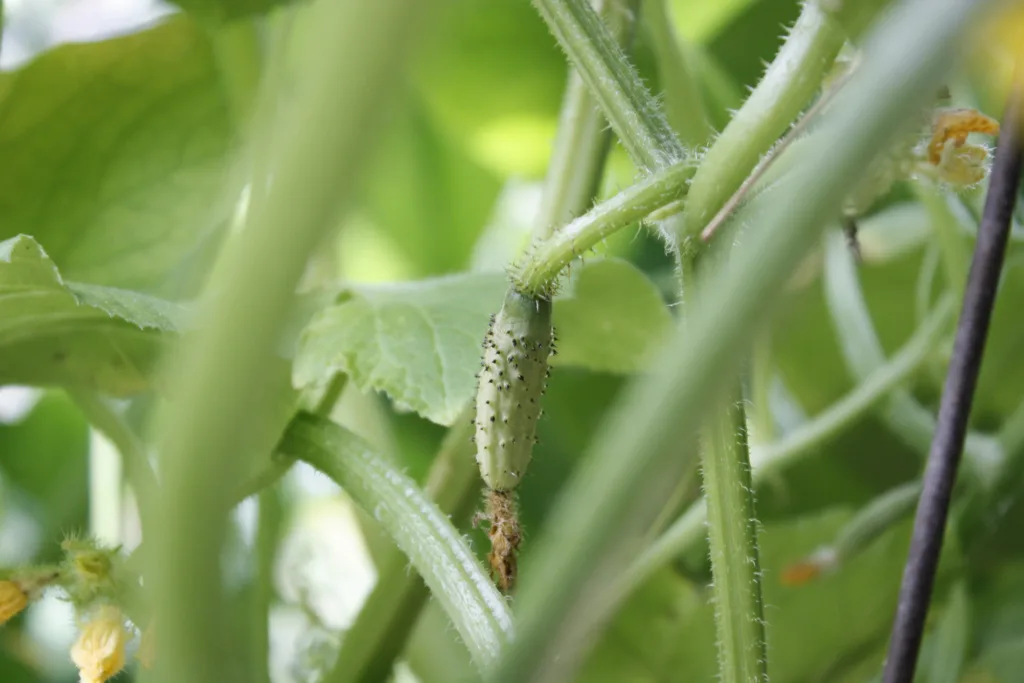
There are also some plants that require pollinators in order to produce fruit, such as zucchinis and cucumbers. It is possible for you to hand pollinate them as a home gardener, especially if you’re only growing a handful of plants. But from an agricultural perspective, it would be impossible if not extremely expensive to create technology to manually hand pollinate a field full of flowers.
Without the bees it would lead to a massive reduction in our food supply which would become a major issue as our population continues to grow.