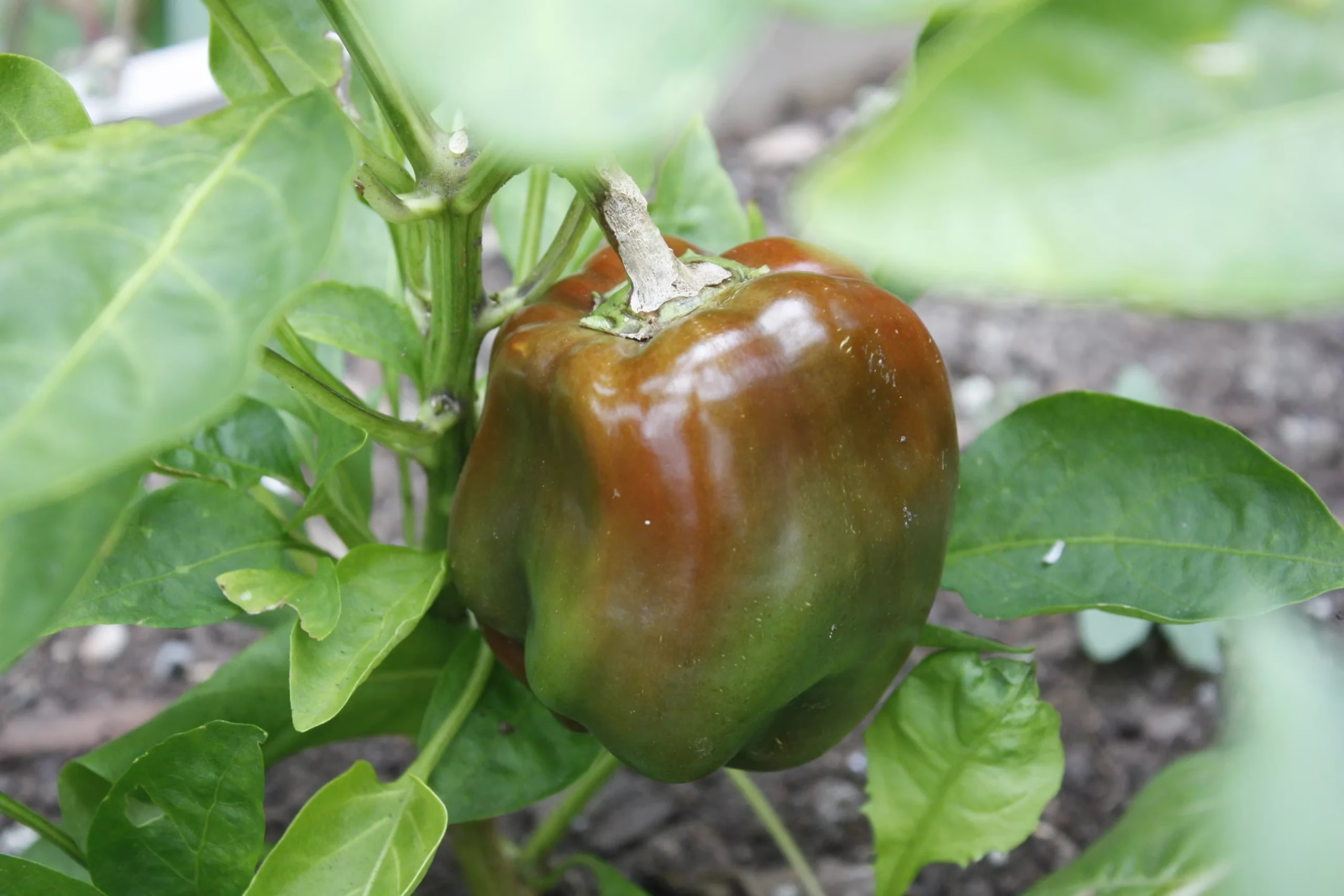
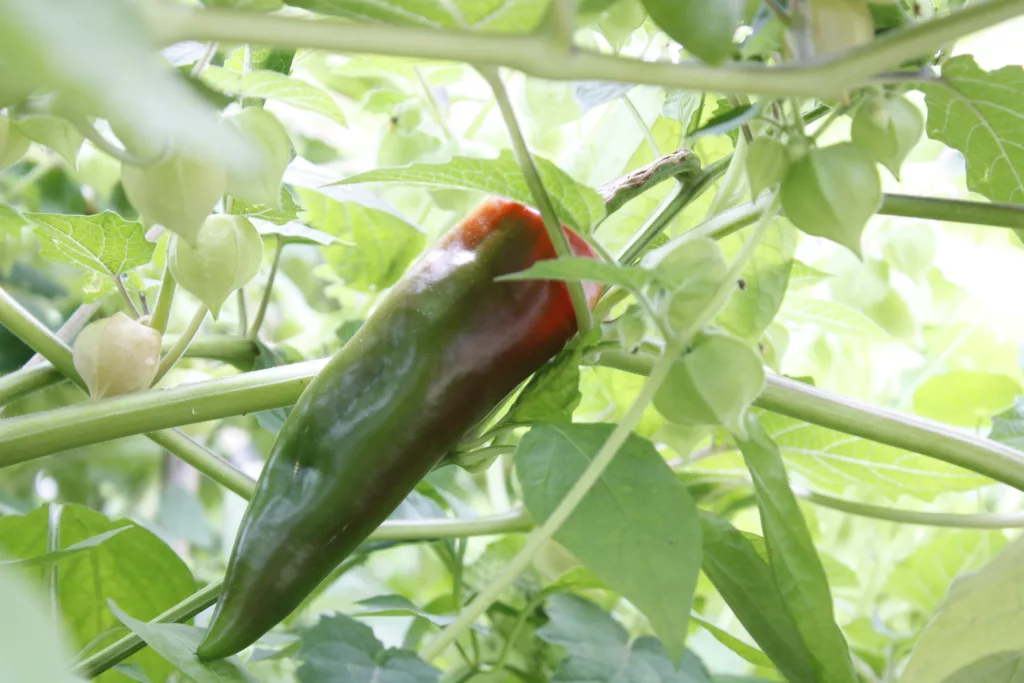
Peppers can be a challenge to grow in our short seasons here in Canada, but it is possible to grow amazing peppers with just a few small tweaks and tricks. When done right you can be drowning in a bumper crop of peppers that will allow you to be eating fresh, home grown food in all kinds of ways, from sautés to salsas.
A Quick Summary of Peppers
Peppers are a heat loving crop that come in a wide variety of shapes, sizes and flavours. They are a long season crop that require a lot of sunshine and heat and can be tricky to grow in Canada if you are new to growing. However, by the end of this article you will be growing as many mild, spicy or super hot peppers as you can fit, and eating peppers successfully by the end of the season.
Pepper Varieties
This blog is reader supported. Some of the links in this article are affiliates which earn us a small commission, at no extra cost to you.
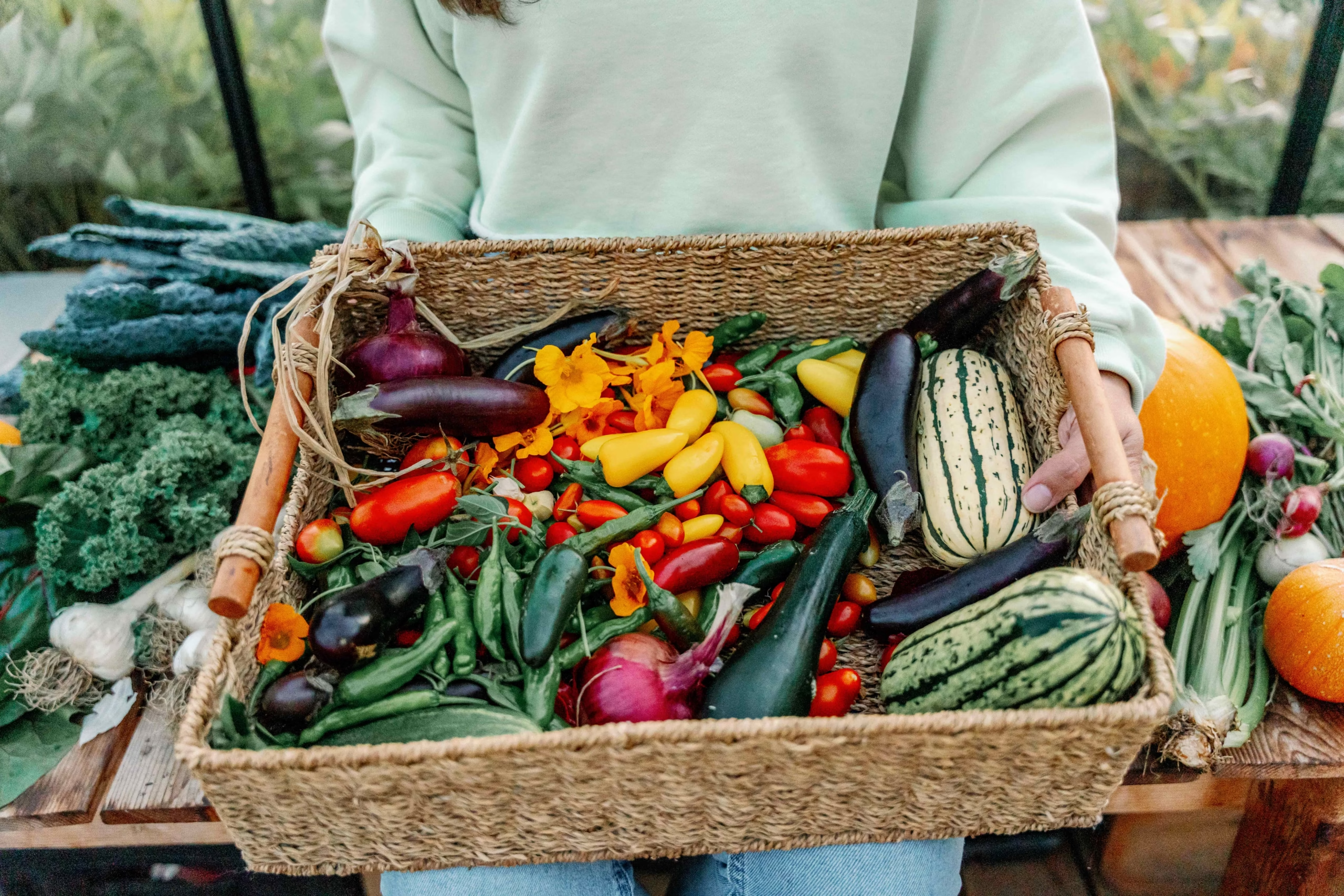
There are so many fun varieties of peppers to grow! There are great mild pepper varieties from large bell peppers like poblano or California Wonder, to small vigorous growers such as shishito. You can get roasting peppers, peppers for seasoning (paprika). Then there is the wide world of hot peppers. These peppers range from mild (like jalapenos) to super hot peppers. Not only do they come in a range of sizes and temperatures, but you can grow peppers that cover almost every colour in the rainbow.
Pepper Sun & Soil Requirements
Peppers love sun. They want to grow in an area that is full sun which is over 6 hours, however they prefer 8-10 hours, if possible. If you have limited sun, find a spot that gets sun from noon to late afternoon since this is the strongest sunshine during the day.
Peppers enjoy fertile, well draining soil. Once your plants start to flower feed them nutrition that has more pottasium and phosphorous in it to help support fruit growth (the P-K in N-P-K).
How to Plant Pepper Seeds
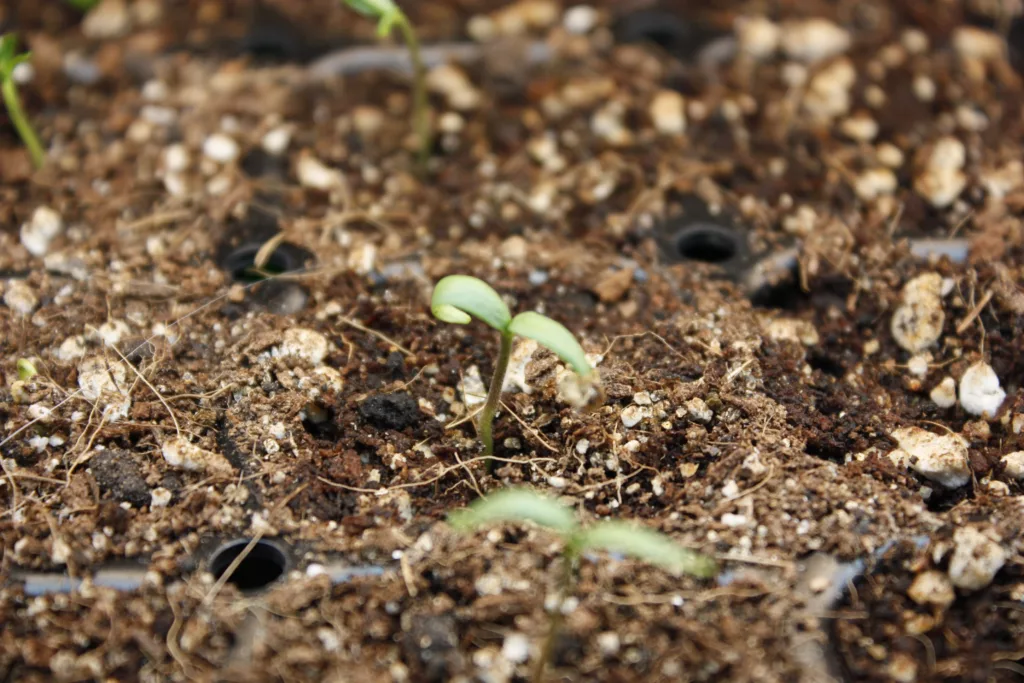
Peppers are a heat loving plant which means that the seeds prefer to be planted in a warm area. If you have access to a heat mat and a dome, use these tools to increase the germination rate and speed. If you don’t have access to a heat mat, use your floor register while the heat is on. Just make sure that your seed tray doesn’t overheat.
Now, here is the trick to growing peppers successfully in Canada. Start them early… very early. In zone 5 I start my peppers in mid-February. If you grow in a zone that is colder than this, you will want to start yours in late January to early February. This is the key to getting a proper pepper harvest, since the plants will be sizeable by your last frost date. This gives them a major head start so that they can start flowering early in the season, giving the fruit time to mature before your first frost.
Caring for Pepper Seedlings
Once your seeds have germinated, move them under grow lights. Make sure the lights are no more than 1-2″ above your seedlings so that they don’t get too leggy. Once your plants have grown 2-3 sets of true leaves you can upgrade them into pots that are 2″ in size.
Pepper seedlings can be prone to aphids if your soil is contaminated. Keep your eye on your seedlings. If you notice they aren’t growing in size, check carefully for aphids as they camouflage extremely well. If you find any aphids, you will need to clean them off every single day until you no longer see any. Be mindful that aphids multiply very, very quickly so you must be diligent.
Continue your garden learning:
- 5 Tips to Know When to Harvest Any Vegetable
- I Was Wrong About Crop Rotation – Let Me Explain
- Drowning in Tomatoes? Here are 11 Ways to Use Your Harvest!
- 8 Tips to Build Healthy Soil (When Yours Sucks)
- Drowning in Zucchini? Here are 11 Ways to Use Your Harvest!
Pepper Planting Guide
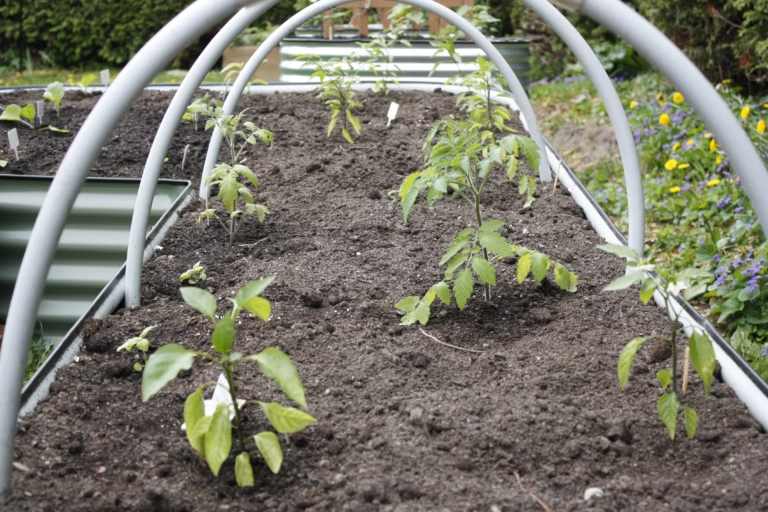
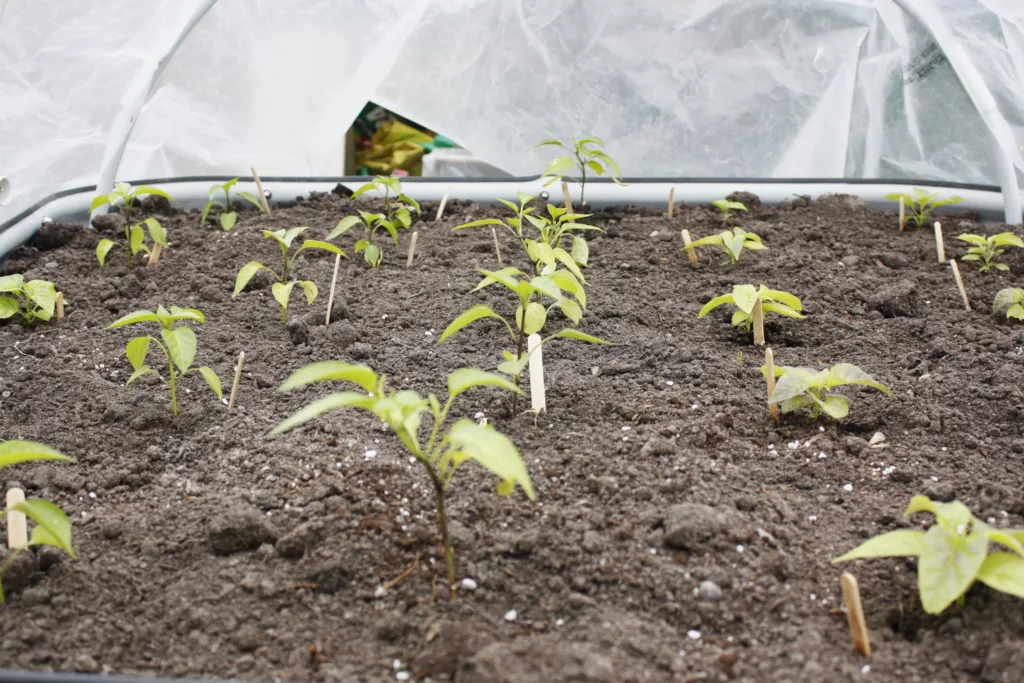
Since peppers are heat loving plants, only plant them out after your last frost date, or when night time temperatures are consistently at or above 10°C (50°F). You can plant them out slightly earlier if you plant them under cover (such as in a greenhouse, cold frame, or hoop house) but not much earlier.
I have found major success planting out my peppers when the spring warms up, and keeping them under cover even after my last frost date. By increasing the daytime temperatures a few degrees higher under cover, my peppers have grown faster, stronger and with better harvests. Sometimes I will keep my peppers under cover for the entire month of June. The only time I would open the cover to vent the garden is if the daytime temperatures were over 25°C (77°F).
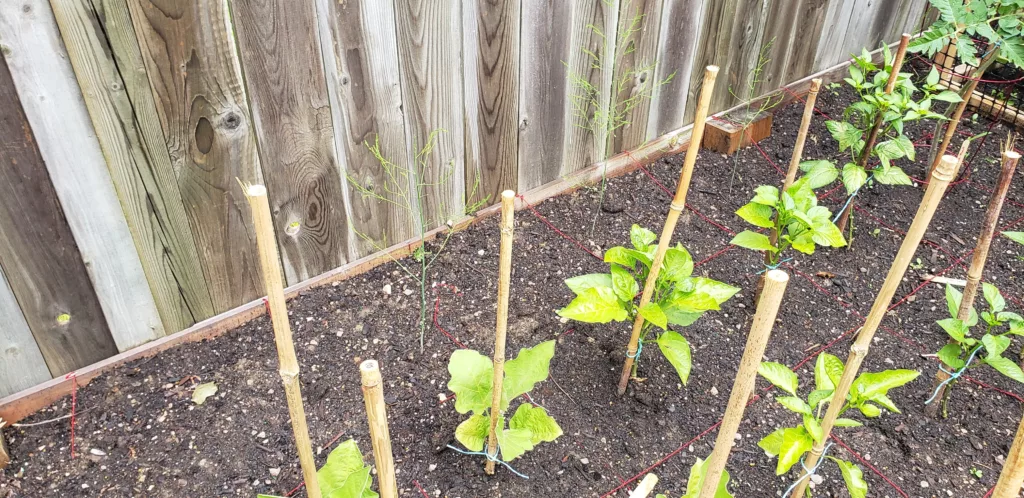
At the same time as planting your pepper seedlings, add a bamboo stake beside each plant. This will avoid injuring the roots of the plant and will allow you to stake the plant from the beginning of the season to avoid any damage from storms.
Watering Peppers
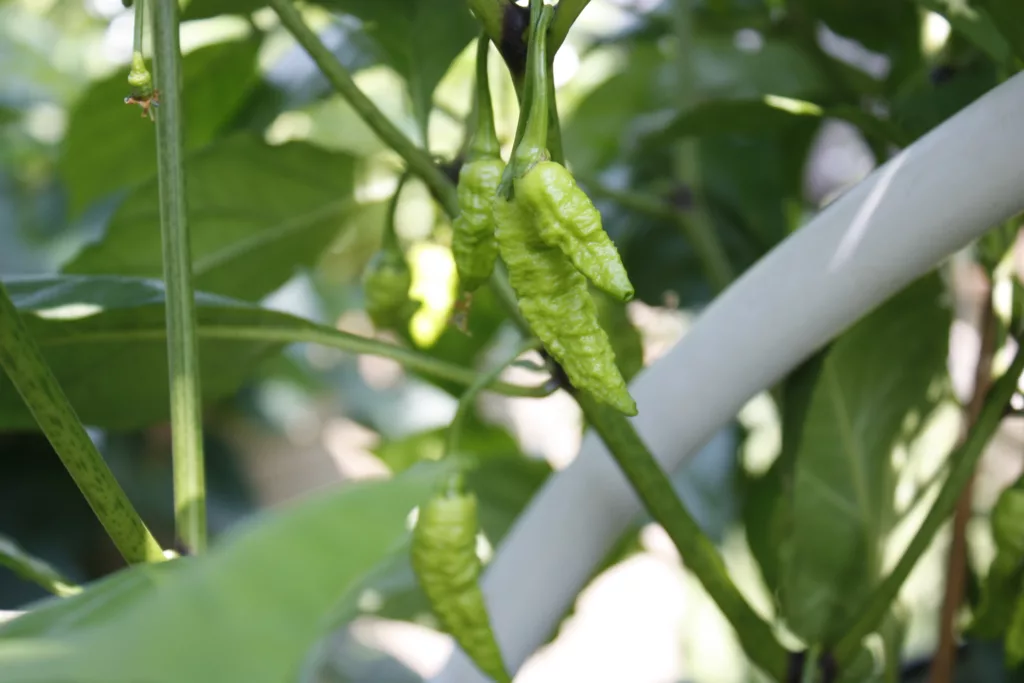
Peppers require regular watering, and can be prone to drooping if they are short on water, however they are quite drought tolerant. When the plants begin to bear fruit, it’s important to keep them well watered. There is one exception, however, to this. If you are growing hot peppers – the less you water them, the hotter the fruit. If you are growing mild peppers and forget to water them, they can also take on a bit of spice as well!
Therefore, if you are experiencing a wet season, do not water your hot peppers. Allow the rain to water them for you. If you experience a ton of rain it can cause your peppers to be more mild, however if you are growing superhots (such as reapers or ghost peppers) they will still be pretty hot!!
Harvesting Peppers

Peppers can be harvest at almost any time. You can harvest them when they are green for green peppers, or wait until they ripen to their final colour. Depending on how you want your pepper to taste or how you want to use it will determine when you harvest.
The more you harvest, the more flowers your plant will produce. However, as you near the end of the season, it’s important to remove any new flowers and allow the current fruit to mature. There won’t be enough time in the season for these flowers to mature into fruit. This is why it’s important to start your plants early in the winter.
Ways to Enjoy Peppers
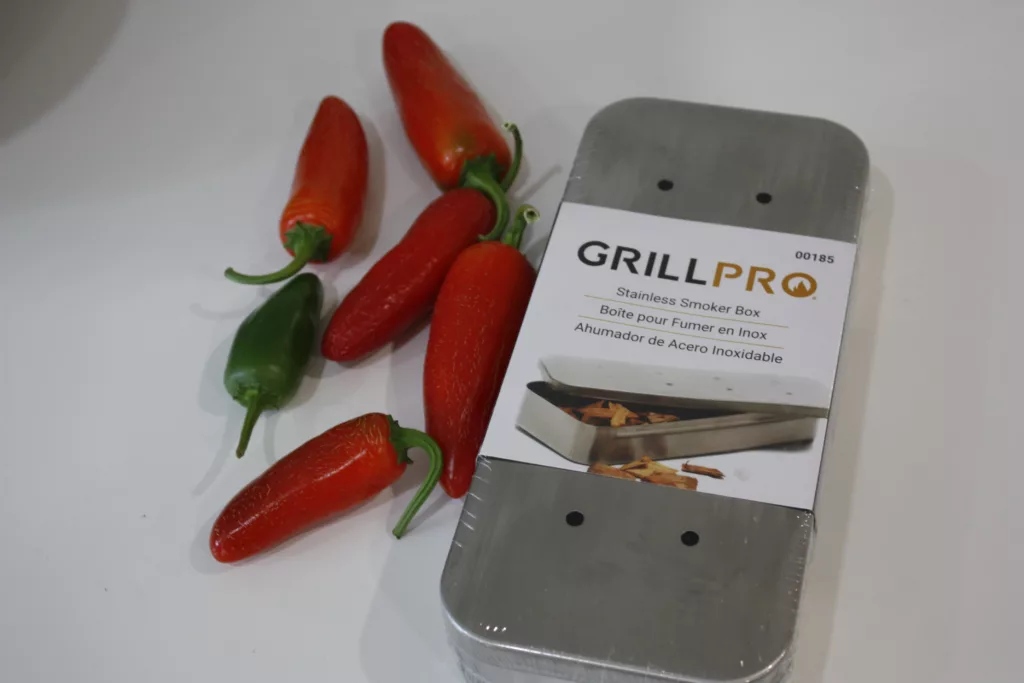
There are so many ways to enjoy peppers! You can enjoy them fresh in salads, sauteed in fajitas, in salsa, jams and jellies! Each pepper can be used in different ways. If you grow paprika you can dry it and crush it into paprika powder, or any hot peppers can be dried into hot pepper powder or hot pepper flakes. You can grow jalapenos to smoke into chipotle peppers. And you can turn your hot peppers into hot sauce. The ways to enjoy peppers is endless!
Common Pepper Pests & Problems
Overall, peppers are a fairly low maintenance plant to grow, however there are a few pests that can cause damage to your plants. Aphids can be a problem when your plants are smaller but I’ve never had an issue with aphids when my plants have reached their full size. Technically tomato hornworms can eat pepper plants too although I haven’t met anyone who has had this issue.
Corn earworms, earwigs or slugs might eat holes in your pepper leaves or in the fruit itself. If you see a hole in your pepper, you can still eat it but cut the pepper open first and see what the inside looks like. If it’s filled with frass (insect poop) you may not feel comfortable eating it. And without trying to freak you out, we have had a situation or two where an earwig comes running out of a pepper that we cut open. But this only happens when we have an influx of earwigs (thanks rain…).
Finally, in terms of disease I actually have never had an issue with disease on my peppers! However, I did find an extensive article from the Province of Alberta that lists the diseases that can affect your pepper plants. Hopefully your growing experience mirrors mine and you can grow your plants with virtually no issues at all.
Saving Pepper Seeds
To save pepper seeds follow these steps:
- Make sure that the pepper you are saving from is open pollinated or heirloom and isn’t a hybrid variety.
- Choose a ripe pepper that is fully mature. Either it has changed colours, has visual cracks, or feels softer than less mature peppers.
- Remove the seeds from the inside of the pepper. Wear gloves if you are saving from hot peppers to avoid any burns on your skin.
- Lay the seeds out in a single row to dry. Avoid using paper towel because the seeds will stick to it. Allow them to dry for one week, flipping them once a day. Using a small fan on the seeds will help them dry faster but isn’t necessary.
- Pack your seeds up in a labelled container and store them in a cool, dark place.
Pepper FAQs
I’ve seen people “top” their peppers online, should I do this?
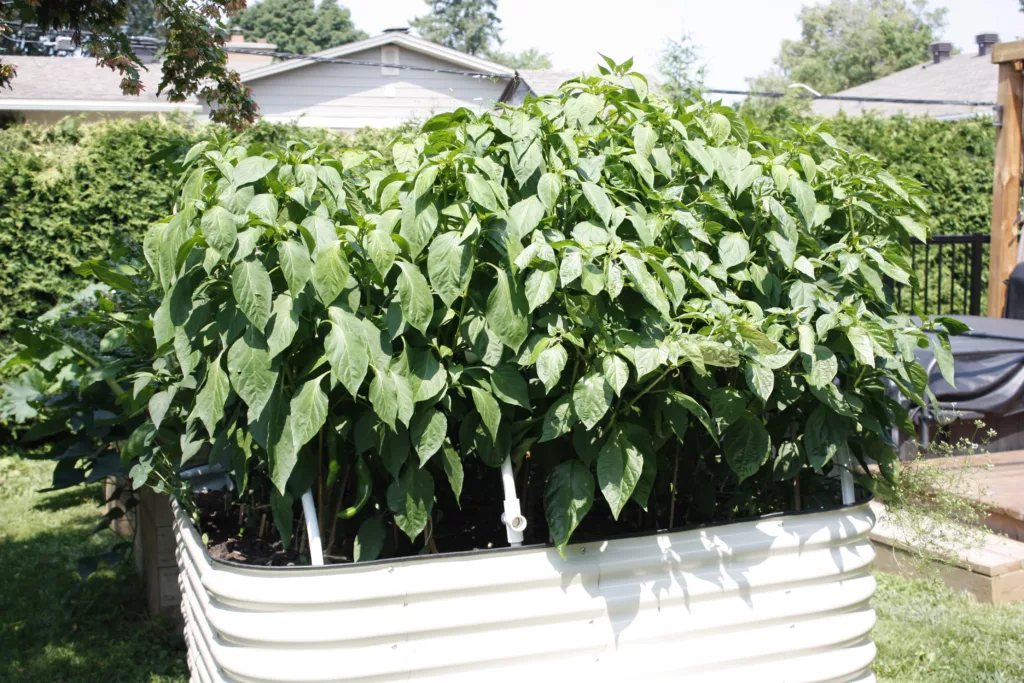
I personally don’t think topping peppers is a good idea for Canadian gardeners, however if you are in a warm zone or warm location, than you can do this. The theory behind topping peppers is to promote them to branch, however 90% of my pepper plants branch on their own naturally and I’ve never had an issue. See the above photo of my garden of peppers – as you can see they are perfectly bushy. Topping your peppers can set them back weeks which can result in a loss of your harvest. Especially if you top them too late. The only time I think it’s okay to top peppers is if you started them super early in the winter, or if you have a long growing season.