Growing your own seeds is a great skill to have because it opens up the plant varieties you have access to. When you buy from a greenhouse or garden centre, your only choice is what they have to offer, which mean, if they’re out of tomatoes then you have to look elsewhere or not grow them. When growing from seed, you have the ability to grow any type of vegetable your area allows, while also trying new varieties.
If you are new to seed starting and want to learn more, check out the full list of seed starting guides we have:
- How to Pick the Best Plants for Your Garden
- Avoid These 8 Mistakes When Starting from Seed
- How to Make Peat-Free Seed Starting Soil
- How to Read a Seed Packet
- 8 Easy To Grow Seeds for the Beginner Gardener
In this guide I will take you through the equipment that you need, and provide product recommendations that range in price, to allow you to create a seed starting setup that fits within your budget.
If you prefer to learn about the equipment over video you can check out my full YouTube video here that goes over all the products.
Shelving Unit

This blog is reader supported, and some of the links in this article are affiliates and earn us a small commission, at no cost to you.
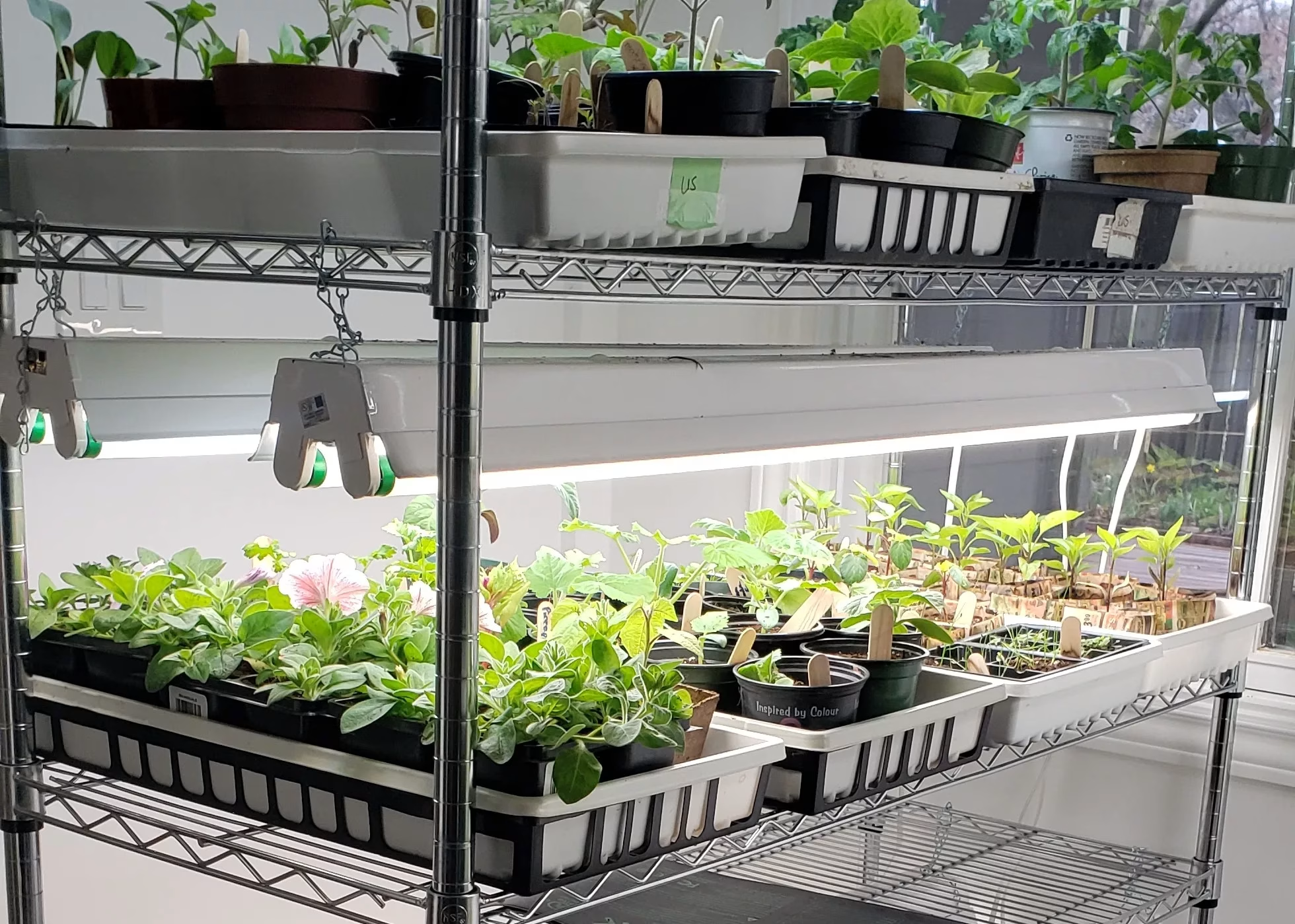
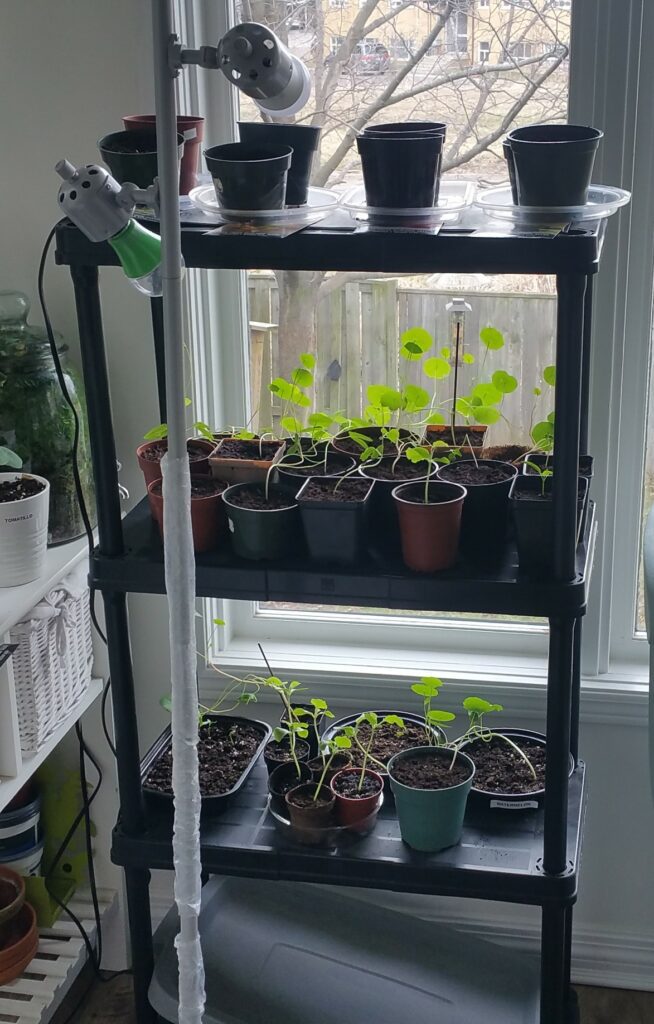
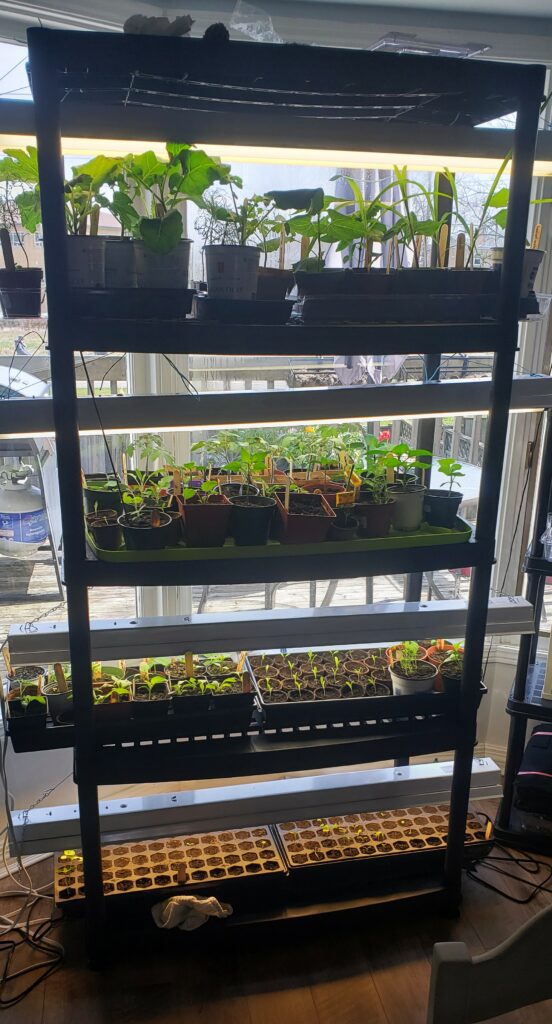
You can grow seeds on a table, windowsill or even on the floor, however having a designated seed growing stand is the easiest and most space saving option. Stands are affordable, and keep your plants organized without having them take over your entire house. Although seeds are small, as the plants grow, so do the pots and space that they require. What starts as a small spot on your dining room table will quickly grow into taking up the entire table until there’s no room left for you to eat!
The benefit of a plant stand is that it takes up minimal space but allows you to grow a lot of plants. There are shelving units with adjustable shelves, and others with non-adjustable shelves. If you choose an adjustable unit, you can adjust the shelves based on the height of the plants at the time, or you can have designated shelves that work for just seed starting, and other higher shelves for larger plants. If you choose a stand without adjustable shelves, just make sure you have the ability to raise and lower the lights.
Some factors that you want to consider when choosing a stand include:
- Your budget
- Your long term goals
- The size of the shelving unit
Budget
Shelving units can range from $50 to $200 depending on their size and material.
Long Term Goals
Do you see yourself growing from seed for a long time? Or are you just experimenting to see if it’s right for you? If you intend to do this long term, invest in a stand that will stand up against the test of time and fits the criteria you need perfectly (ie do you need it to adjust, does it need wheels etc). Then you only have to buy a shelf one time, vs having to upgrade. If you aren’t sure if growing from seed is for you, choosing the most budget-friendly shelf is the best way to go.
Size of the Shelving Unit
The three main things you want to look at when purchasing your unit is: the width of the unit, the depth of the shelves, and the number of shelves.
Width of the Shelves
Depending on the grow lights you choose for your setup, you want to ensure that they fit the stand. In the past I have used 48″ grow lights on a 36″ stand, which meant that on each end of the shelf was 6″ of overhanging light that I couldn’t grow under.
Depth of the Shelves
This is not critical, but is something that you may want to account for. For this, you’ll want to look at the size of the stand and the size of trays you want to use to determine if they fit the stand well, with minimum wasted space.
Number of Shelves
Understanding that the bottom shelf and the top shelf are often not used, you’ll want to account for this.
Recommendations
Here are some shelf recommendations based on current and past experience. I’ve included the description of the product, plus a link on where to find it. I prefer shelving units that are 48″ wide for our grow lights, as well as a stand made out of metal as I want it to stand the test of time, and also be recyclable at the end of its use. Listed below are shelves that would be a great addition to your seed starting journey.
Under $50
5 Shelf – Black Resin Plastic – 36W x 18D x 76H from Home Depot
Under $200
5 Shelf – Metal – 36W x 16D x 72H from Home Depot
5 Shelf – Adjustable – Metal – 48W x 18D x 72H from Home Depot (this is my preferred option)
Over $200
5 Shelf – Adjustable – Metal with Wheels – 48W x 18D x 72H from Home Depot
Light Fixtures and Bulbs
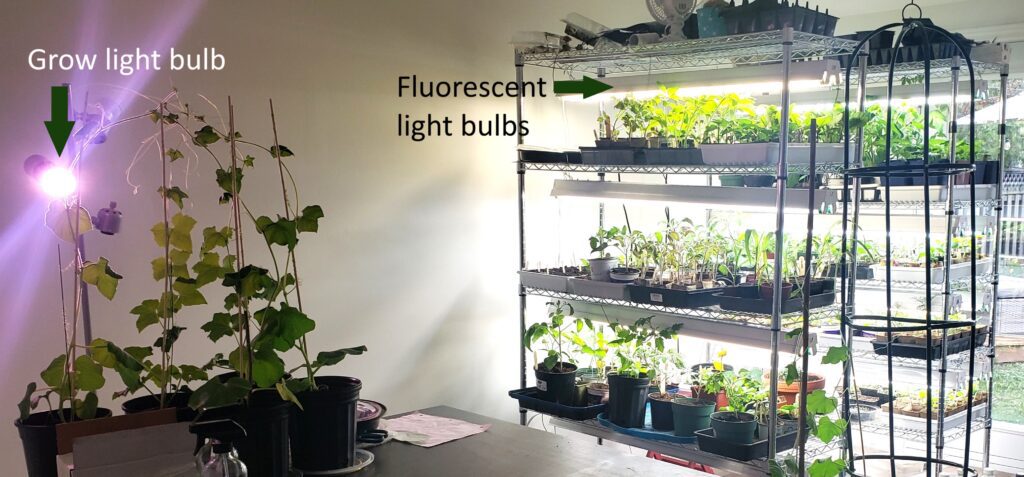
You can grow seeds on a window sill, however the winter sunlight in Canada isn’t strong, and the number of hours is short. What this means is that your seedlings will stretch for light which affects the strength of the plant. The good news is that grow lights are super affordable and will help you grow stronger seedlings.
Budget
Grow lights can range from $7 (grow lightbulbs you can put in any fixture) to over $1,000. Depending on the size of the fixture and whether it’s LED or another light bulb type.
Long Term Goals
Grow lights are now readily available in LED form which saves on electricity costs, as you’ll be running your lights 12 hours a day over multiple weeks. The alternative to LED is fluorescent lighting. If you choose to use fluorescent lighting, the bulbs will lose effectiveness over the seasons, as they run for multiple hours, and they’re expensive to run. You’ll want to factor this into your budget. Understanding your commitment to seed starting is important so you know if you want to invest in a full LED setup, if you have a shop light at home and want to use lightbulbs, or if you just want a table grow lamp.
Considerations
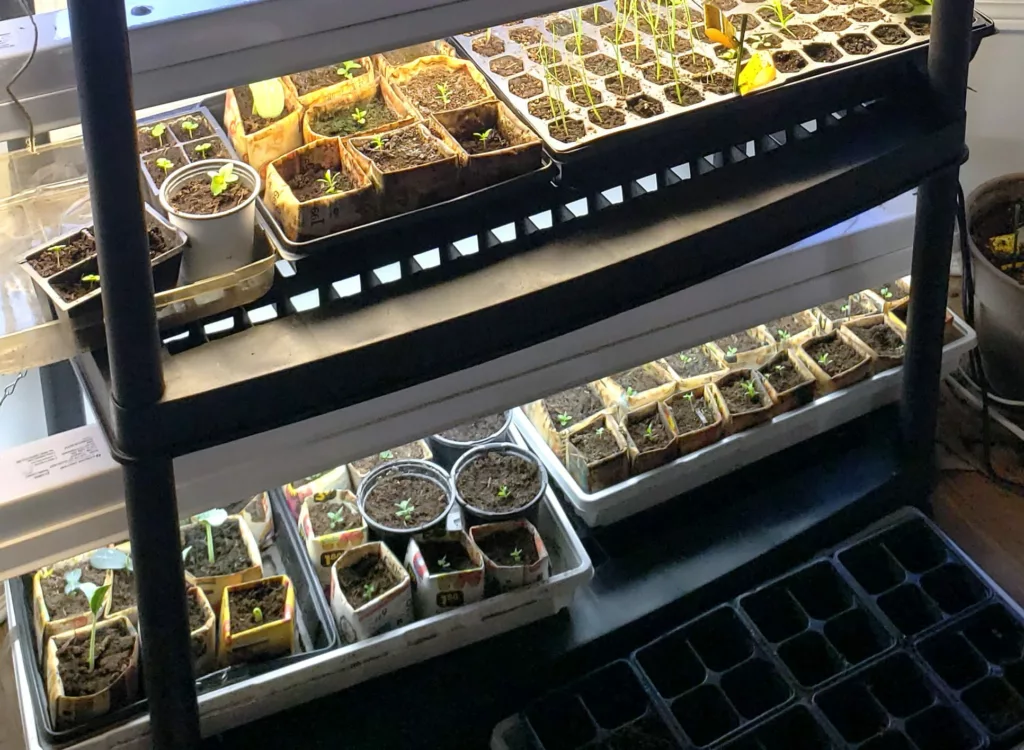
If you’re using a shelving unit (vs a grow light setup), choose light fixtures that fit on the unit perfectly (ie 36″ wide or 48″ wide lights). I use commercial shop lights that hold 2 fluorescent lightbulbs because, at the time I bought them, it was the most affordable option. If you choose to use similar lights to my setup, you need a fixture that has space for two lightbulbs to get the full light spectrum (a warm and a bright light). If you buy lights that are specifically branded as grow lights, then you don’t need to worry about this.
At the time of this writing, we can no longer find the fluorescent T8 light fixtures that we use. We suspect as LED becomes ever more popular, that the fluorescent tube lighting will become a thing of the past and will become more difficult to acquire. Since we bought our light fixtures over 5 years ago, the price has steadily increased, which will catalyst the phase out of these lights.
Recommendations
Because I don’t currently use LED lights, the below recommendations aren’t first hand recommendations but options that would be something I would look to invest in. The below links are also based on criteria that would fit in with pricing or the shelving unit recommendations provided above. A final note, the prices below are based on the total price, not price per light (as some recommendations are for multi-packs).
Under $50
NOMA Grow Light Bulb (can be used in table or floor lamps) from Canadian Tire
22″ NOMA T5 Grow Light from Canadian Tire
Grow Light with Table Attachment from Amazon
Under $200
Barrina 2ft T8 Grow Light – 6 pack – from Amazon
Barrina 3ft T8 Grow Light – 8 pack – from Amazon
Barrina 4ft T8 Grow Light – 6 pack – from Amazon
FloraFlex LED Clone Light – 2 pack – from Indoor Farmer
Heat Mat
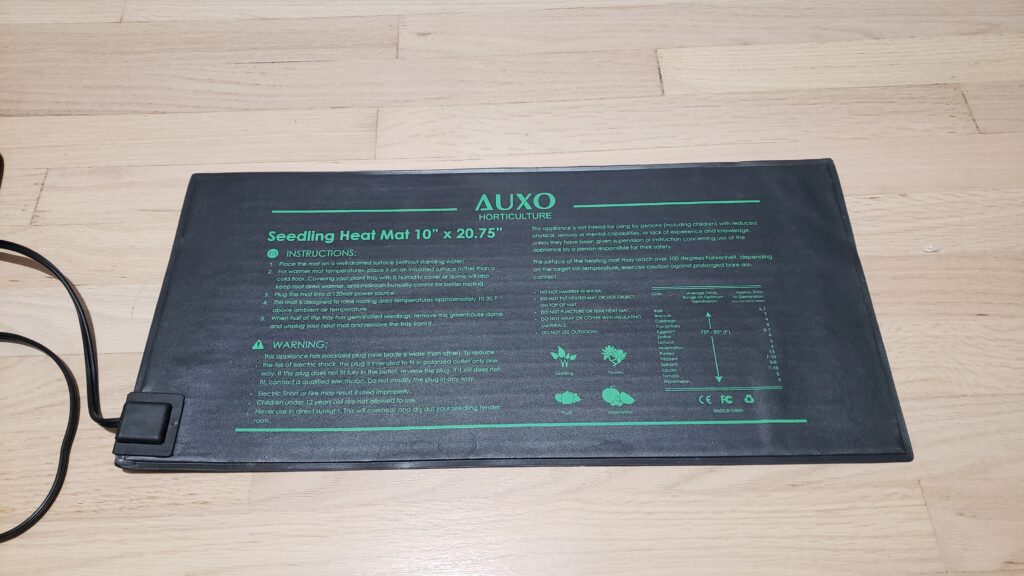
Heat mats are a super useful tool for seed starting. They’re affordable to buy, and make a considerable difference in the germination rate and success of many seeds. Heat mats are meant to be used on seeds that prefer warm soil to germinate, which includes tomatoes, peppers and eggplants. Although a heat mat isn’t required to grow from seed, it will speed up the germination rate and will result in more success with these specific seeds. The other thing to note is that heat mats are quite affordable so their usefulness outweighs their price, in my opinion.
Considerations
The main consideration is the size of the heat mat – you want it to be a similar size as your grow trays. The second consideration is determining how many mats you need, based on how many heat loving seeds you plan to grow. Your heat mat will stay on 24/7 until your seeds germinate, so you need multiple if you plan to grow a lot, all at one time.
Recommendations
Dual Pack Heating Mat from Amazon
AC Infinity Suncore with Controller – comes as a single or a pack of two from Indoor Farmer
AC Infinity Suncore in multiple size availabilities from Indoor Farmer
Humidity Dome

Humidity domes are clear lids that sit on top of your grow tray. Essentially, you’re trying to create a greenhouse effect while your seeds are waiting to germinate. Not all seeds like these conditions, as it makes it warmer and wetter, so be sure to check your seed growing requirements before using one. The benefits of the dome is that it keeps the soil warmer, keeps moisture in the soil for longer, and helps speed up germination. However, it can also hold in too much moisture and cause the seeds to rot. Being mindful of how wet your soil is can help prevent this from happening.
Considerations
There are three considerations with a heat dome. The first is ensuring that the dome fits the size of the tray that you’re growing in. The second is the height of the dome, and the third is if the dome has vents in it or not. When growing seedlings, the dome doesn’t need to be tall or have ventilation, it just needs to fit the tray since you’ll be taking the dome off as soon as the seeds germinate (to not hinder light reaching the plants). Domes that are taller and have vents in them are generally used for growing microgreens where you want the seedlings to stretch up as you harvest them at their early seedling size.
Recommendations
Seedling Dome 4″ from West Coast Seeds
Propagating Dome Tray Cover from William Dam Seeds
Seedling Trays
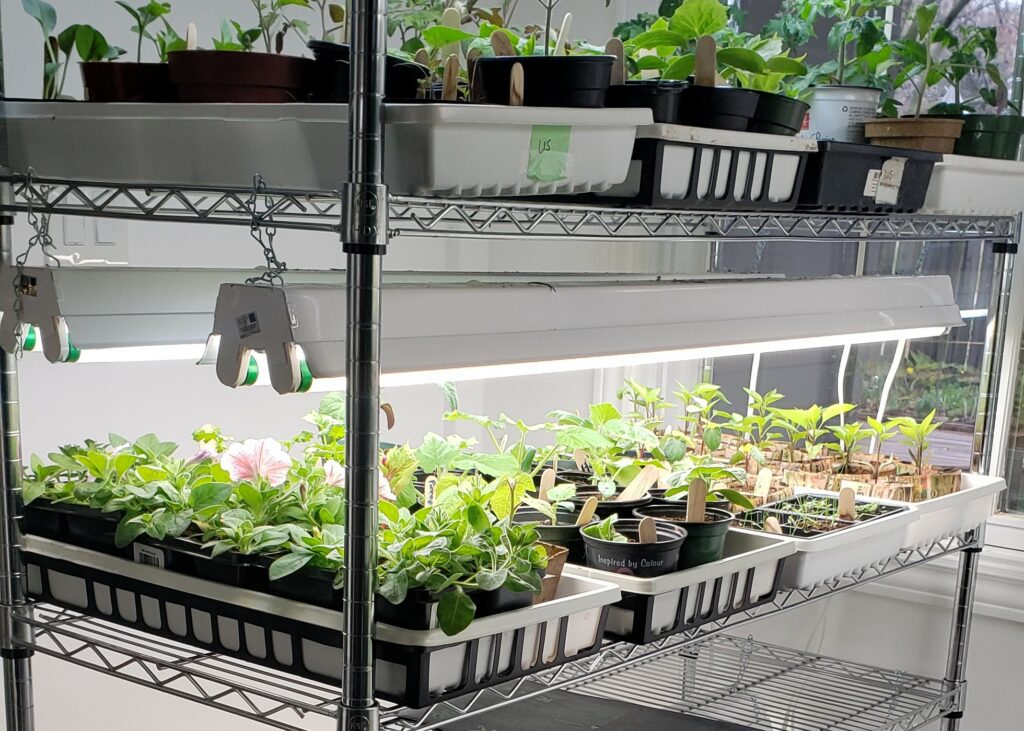
It is possible to grow plants in pots, on a storage bin lid and avoid using trays, but trays are an easy way to grow seedlings and keep them organized. Pots will get the job done, but they come with some complications. First, pots are tall so a heat meat isn’t effective at warming up the soil when you first plant seeds. Second, they require a lot of soil in the beginning to start your seeds, and most seeds don’t like being planted in large containers. Third, the pot shapes don’t always match so they take up a lot of space because they fit together awkwardly. And finally, it’s difficult to put a heat dome over pots because of their size and shape.
That being said, if you have access to pots (because they come from the greenhouse, or people recycle them regularly) and you’re on a strict budget, these will absolutely work. When I first got into seed growing I started in pots with a Rubbermaid lid underneath to catch the excess water. It wasn’t a perfect system, but it was my entry into seed starting.
Considerations
Most trays come in a standard 10×20 size, however you can find other sizes as well. Determining the best size for your needs is important. Additionally, trays will come with or without holes. Trays with holes are great if you have an outdoor greenhouse that you can water and let it drain out below, however when growing indoors, trays without holes is best. This allows you to bottom water your seedlings without making a huge, wet mess.
Trays can be very flimsy and break after multiple seasons of use from the weight of the plants or from disintegrating from age and exposure to light. The more affordable trays have a shorter lifespan than the more expensive investments. Knowing your commitment to growing from seed, your budget and your personal thoughts on replacing products will help determine which to go with.
Recommendations
Seedling Germination Trays (with or without holes) from West Coast Seeds
Bootstrap Farmer Extra Strength Seed Starting Trays from Indoor Farmer
Cell Packs
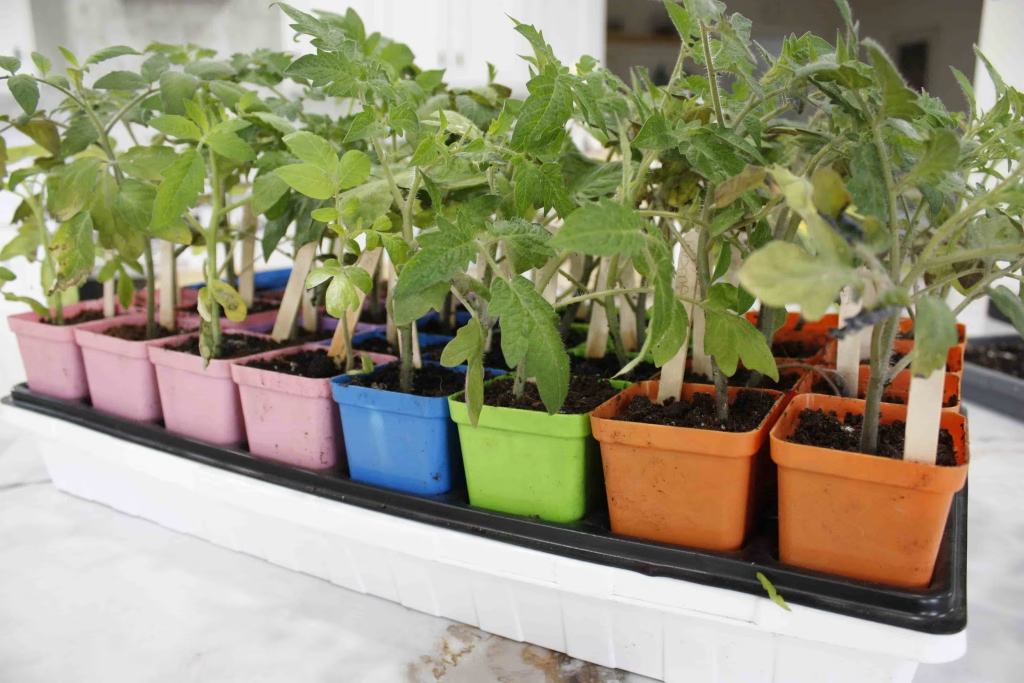
These are inserts made specifically to fit into the trays mentioned above. They come in multiple sizes from 128 cells to 12. This means you can own an assortment of trays and upgrade your seedlings into larger cell packs as they grow. The benefit of growing in cell packs is that they are uniform in size and shape and fit into trays perfectly. This allows you to keep your plants organized and grow a high volume of plants in a small space.
Considerations
It’s helpful to have more than one size of cell packs as the plants grow and need to be upgraded. I want to do as few upgrades as possible because it’s time consuming and can be expensive purchasing soil. Just be aware, if you plant in a cell tray that holds 128 seeds, they all fit in one tray, but if you upgrade them to 12 cell packs per tray, you’ll need 10 more trays to hold all of these plants. Cell packs are similar to trays in that they break down easily. Many cell packs available for sale are similar to the ones you buy from the nursery for your annual flowers. Often times they crack or break as you’re trying to pull the plant out of the tray. The price of the trays reflect their longevity (ie low price trays equal low longevity). And unfortunately, almost all cell packs are made of black plastic which is super harmful on the planet. I recommend when you’re using cell packs to either work with them carefully, or to invest in stronger cell packs that can last longer than a couple of seasons.
Recommendations
Plug Inserts 72 cells from West Coast Seeds
Plug Inserts 12 cells from West Coast Seeds
Bootstrap Farmer Tray 72 Cell from Indoor Farmer
Bootstrap Farmer Seed Starter Pots 2.5″ from Indoor Farmer
Labels
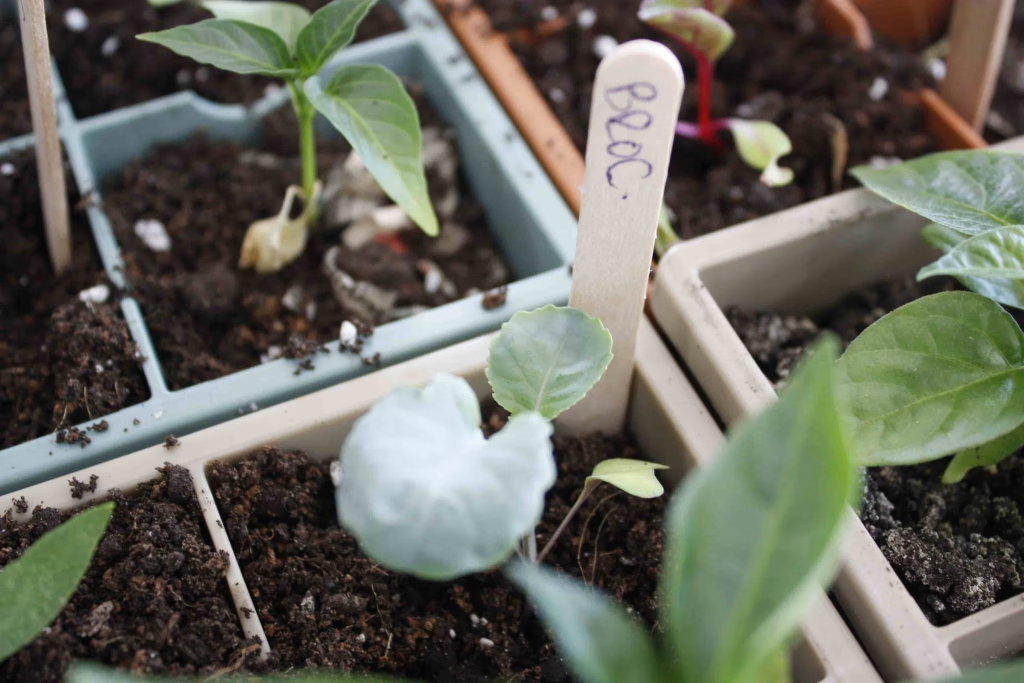
Labels are incredibly helpful when starting from seed. However, be prepared that all gardeners forget to label, lose labels and mix them up! If there’s a way to mix up a label, gardeners have found that way. If you intend to sell your seedlings then labelling is important, however my philosophy here is that labels are a recommendation, and not mandatory.
I like to use popsicle sticks for labels because they are more environmentally friendly than plastic labels, and you can buy them in bulk for an affordable price. Two things with popsicle sticks is; one, generally you have to break them in half to fit under a heat dome, and two, they soak up water. Because they soak up water, the label can smudge a bit or get mouldy, so I make sure to use a pen that won’t smudge when it gets humid or wet.
Mesh Trays
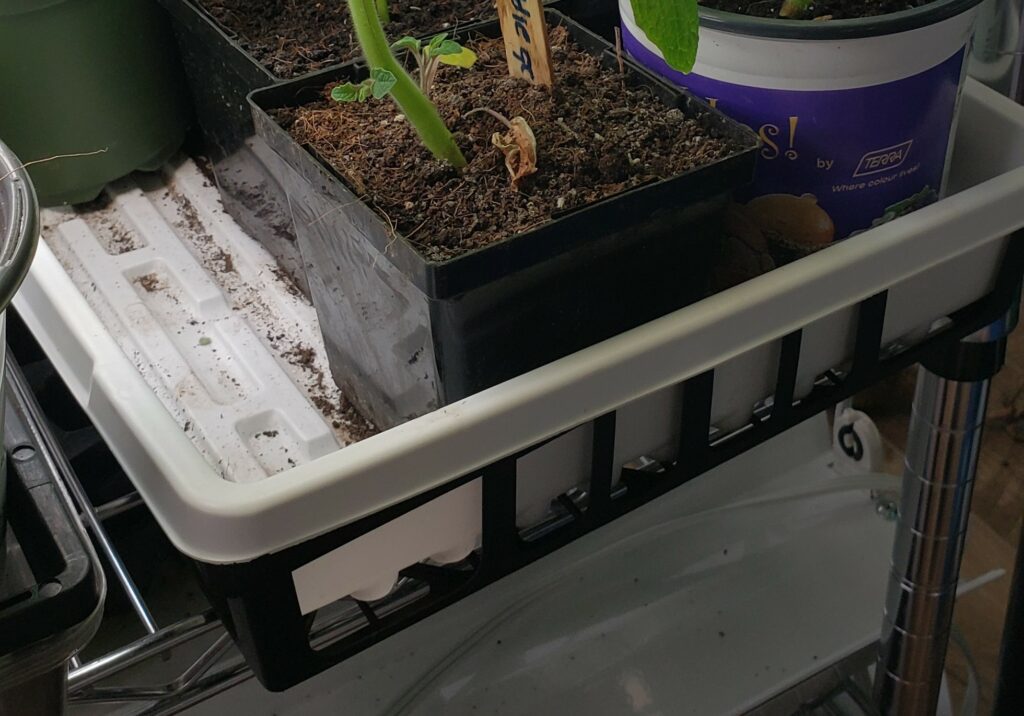
I love using mesh trays for two reasons: I place it under my grow trays and it adds strength to the tray; and once I start hardening my seedlings off outside, I switch over to just the mesh trays so that I can water from above and it’ll drain away. It also helps rain water drain away and not get caught in the trays.
Recommendations
Lightweight mesh tray from West Coast Seeds
Bootstrap Farmer 32 Cell Insert for 2.5″ Pots from Indoor Farmer (an alternative if you have the Bootstrap pots is to use this to help bring strength and carry the pots together)
Timer
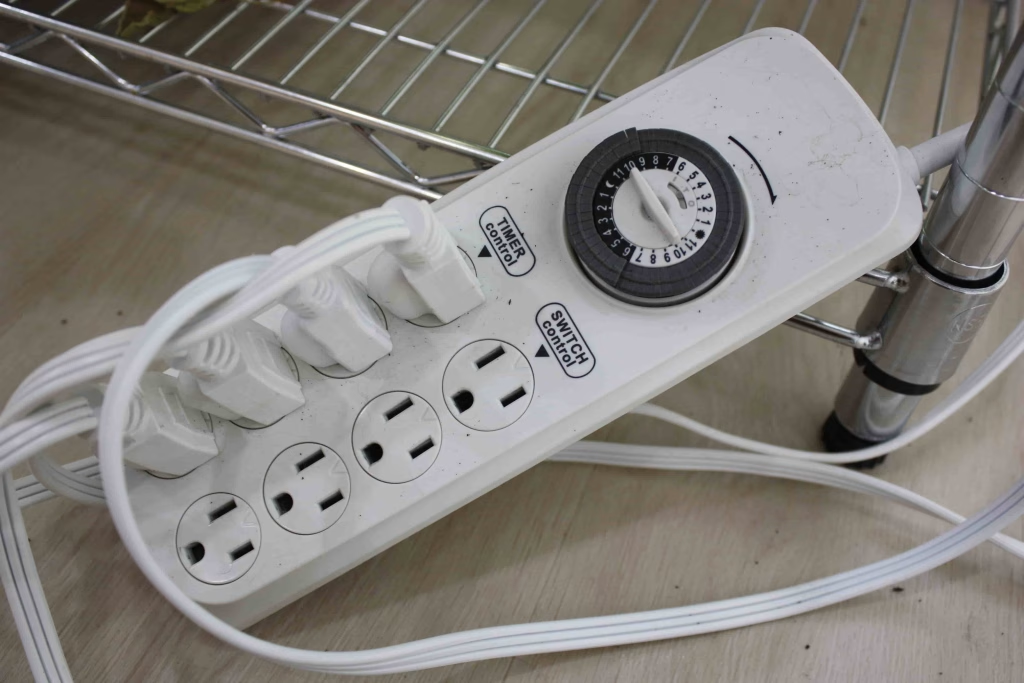
Growing from seed requires a lot of time and effort. Timers aren’t required but relieve a lot of that effort during seed starting season. Remembering to plug in the lights in the morning and unplug them at night is a big responsibility. Having a wall timer or an extension cord timer saves so much effort. There are new extension cords that have an app attached to them as well so you can schedule their on and off time, or even do it from your phone.
I prefer the extension cord with multiple outlets over a wall timer because generally there’s more than one light that is plugged in and needs to be turned on and off automatically. Often the extension cords have half the outlets timed with the other half always on. These work great so you can plug your heat mat into the always on outlets, and your lights into the timer outlet.
Recommendations
Autopilot 8-Outlet Analogy Timer w/ Surge Protection from Indoor Farmer
SunBaster 24 Hour Analog Timer from West Coast Seeds
Soil Blocker

Soil blockers are the new, popular kid on the block. These are slowly gaining popularity in the gardening world because they replace pots and cell packs. These are used to make small blocks of soil (hence the name!) that you plant your seeds in. You fill your tray up with these blocks and you allow the plant to grow.
The benefit of soil blockers (other than not needing cell packs anymore) is that they air prune the seedlings. When the roots grow to the point of coming out the sides of the soil blocks, they stop growing because they have nowhere left to go. When roots grow in a plastic pot, they never get to the point of finding the air so this is why they circle the bottom of a pot endlessly. Air pruning creates healthy plants because they grow to the capacity that the soil allows, and don’t overgrow and deplete nutrients in the soil.
Considerations
Soil blockers are expensive. However, they’re easier to store than a thousand plant pots. If you plan to grow from seed for multiple years, then this can be a good choice. Soil blockers also come in different sizes, and have accessories to help when planting up into larger soil blocks. Be sure to understand the measurements before purchasing to avoid getting a soil blocker that is too big, or too small, for your needs.
Recommendations
Ladbrooke Soil Blocker Mini 4 from Indoor Farmer
All soil blockers from West Coast Seeds
If you’ve made it to the end of this article, then I applaud you!
This is a long guide covering all of the seed starting options out there. I hope that you don’t feel too overwhelmed, and know that you can slowly build up your equipment setup. You don’t need to get it all at once, and growing in pots with a Rubbermaid tray, on a windowsill is still an amazing way to learn to grow!
I want you to have success, failures and learning as you continue on your gardening journey.