

If you’re new to gardening you might be unsure which seedlings are best to buy from the greenhouse, which ones are the healthiest, or if you should even be buying them at all – since they do grow from seeds that you could buy. If you want to buy the healthiest seedlings and get the best bang for your buck, you’ll want to check out this article. First we’ll go over some common questions you might have, and then give you some best practices, or tips, to help you pick the best seedlings for your garden.
When you go to the greenhouse you might notice that some people sort through the plants while others grab the plant at the front. Which may leave you wondering if it really matters which plant you pick from the stack of plants sitting on the shelf. For the most part you’ll get a good plant even if you just grab one from the shelf, but there are times where you’ll want to skip a plant and choose another. If the plant is browning, has a thin or weak stem or looks overall ‘sick’ you’ll want to skip that plant.
There are certain instances when growing from seed is better than buying seedlings. Some plants are really easy to grow from seed, and some plants prefer to be planted directly (such as root vegetables like beets and carrots). Also, most greenhouses and farmers sell popular varieties because they know they will sell. If you’re looking for a rare variety, growing from seed is going to be your best bet. However, if you are only growing one or two of a specific plant it makes more sense to buy it as a seedling. Finally, plants such as peppers, onions, celery and eggplant take a long time to grow from seed. Buying them as seedlings is often the better choice and makes starting other seeds way easier.
At the end of the selling season (which is surprisingly early in the season) you’ll notice that all of the vegetables and herbs go on sale. And sometimes it’s a really good sale! Are these seedlings worth buying, or are you just throwing away money on plants that are already dead? Well that depends. Often these annual herbs and vegetables go on sale at the beginning of June (or after your most popular planting weekend). This is a great time to buy seedlings, if you know what you’re looking for. The greenhouse will sell whatever plants they have remaining, even if it isn’t a good time to plant them so you need to know what is worth the money, and what is a waste of money.
Long-growing cold season plants won’t grow well being planted in June so these are plants you’ll want to skip. This includes broccoli, cauliflower and some varieties of cabbage. Onions may not perform well after being planted in June but if the price is good, they’re worth growing for their green tops.
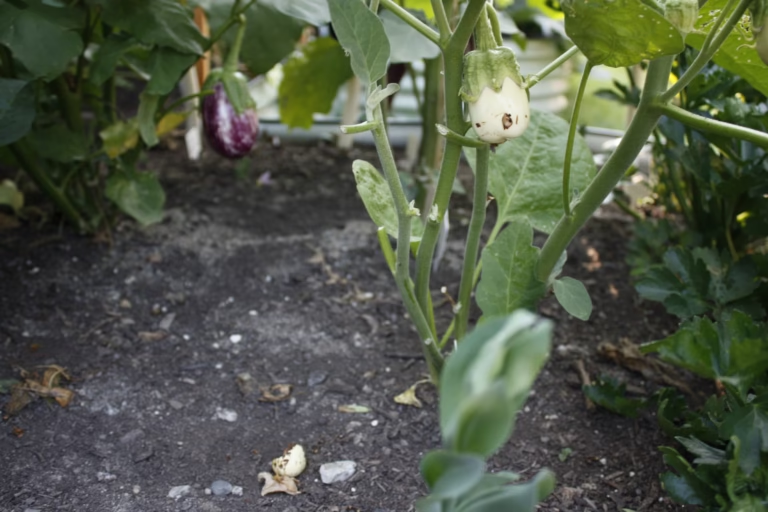
Tomatoes grow quickly and are a great plant to get on sale, as long as the plant looks healthy. Cucumbers and zucchini should perform well even if bought on sale and planted late. Plants that may, or may not perform well, include peppers and eggplants . They are slow growing annuals and may not grow to their full potential if planted late, so you can either avoid these or try them out as an experiment to see if they work for you.

Checking the roots of a plant is one of the best ways to guarantee the health of a seedling. It might feel uncomfortable pulling a plant out of its pot to look at the roots but as long as you do it carefully it shouldn’t damage the plant and it is easy to return the plant to its pot. I can’t count the number of times I’ve bought a houseplant and it had root rot. If a plant has a ton of roots that are circling the bottom of the pot it means that it’s root bound and could mean that the plant is stunted. Roots coming out of the bottom of the pot is okay, but a plant that as too many roots circling the bottom of the pot should be avoided. In the photo above you can see that there are a lot more roots at the bottom of the soil, and you don’t want to see more than that when checking the roots.
You also want to ensure the plant itself is healthy. You want the leaves to be green and healthy with little to no brown or yellowing leaves on the plant. The stem should be strong and healthy, and if it’s long and weak you want to avoid those. Leggy seedlings don’t hold up to wind and rain as well as strong stemmed plants.

You can get plant seedlings from greenhouses, big box stores, farmers markets or road side stands. Generally, the quality of the plants should be similar across all of the options. If you’re looking for common varieties or don’t care about the variety (ie you just want any type of bell pepper) you can find those at the big box stores. If you’re looking for unique varieties or want a variety name at all, farmers are your better choice. Often big box stores won’t label the variety of the plant, just the type of plant. For example, when you buy a jalapeno plant it’s just labelled ‘jalapeno’. However there’s actually dozens of jalapeno varieties that exist. So if the variety matters, or you want to save seeds from the plant, I recommend choosing plants from a farmers market or farm store. Also, we always recommend supporting your local farmer first if it’s within your budget and abilities.
If budget is one of the most important factors for you it’s important to check pricing across different locations. Although prices are similar, you may find a location that has sales such as 3 for $10 or other bundled sales. If price is important for you, often big box stores or greenhouses will have the best price on seedlings.
Farmers often will be more expensive because they are smaller scale producers and can’t produce at the scale of a big box store supplier. A great way to support farmers while keeping your budget down is to buy from big box stores if there are plants that you need in greater quantity, and if you plan on only buying one or two of a specific plant, supporting a farmer with those plants. I do find that tomatoes can be more expensive at big box stores and more affordable with farmers so comparing prices is always a good choice.

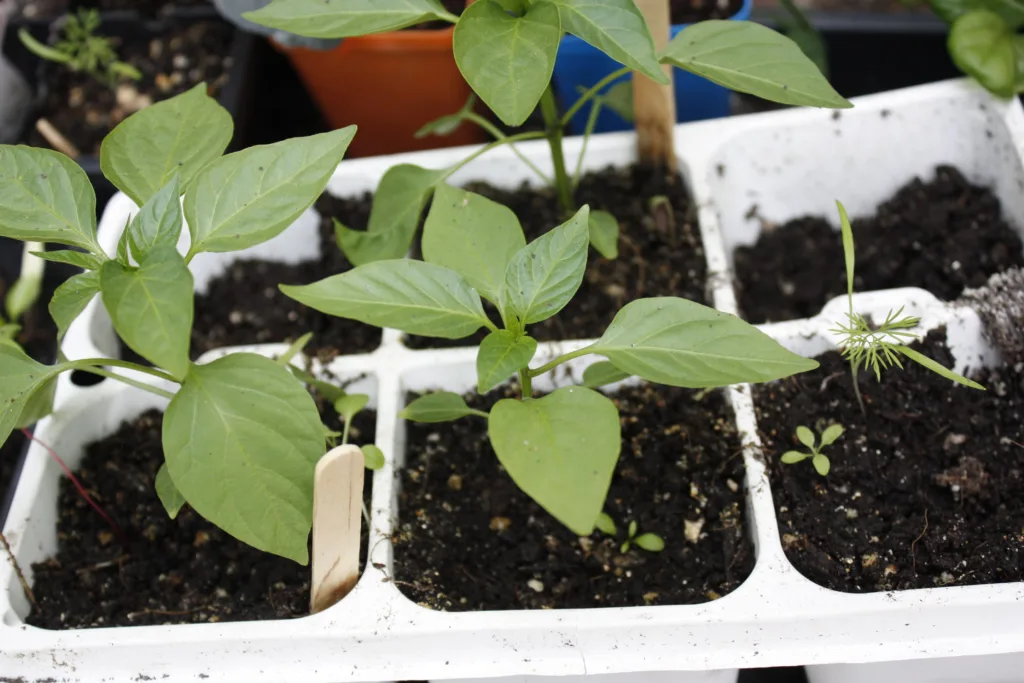
This is always when I feel like a winner when shopping for plants – when I get multiple plants in a single pot. Often cucumbers or peppers will come with more than one plant in a pot, and I’ll dig around the shelf to find which one has the most plants in it. This is a great way to get the most bang for your buck but you do want to be careful when doing this. Often the more plants in a pot, the smaller the plants. For fast growing seedlings it isn’t a big deal, such as cucumbers or zucchinis, but for peppers you’re risking not getting peppers in time, or having them only ripen late in the season. The plants can also be leggy if they’re fighting for light – so choosing healthy seedlings is key.
Greenhouses or big box stores get pallets of plants shipped to them to sell to gardeners. But just because they have the plant on the shelf doesn’t mean you should buy it. Planting broccoli or cauliflower after your last frost date is too late – they’re going to bolt before you ever get a harvest. If your local greenhouse starts selling seedlings early, that’s a good time to get them, but later in the season you’re throwing your money away. Also, you want to know what a plant looks like when it’s going to seed. Often these plants spend too long in pots which means their roots are overgrown, the plant is stunted and it has nothing left to do but produce seed. You want to avoid these plants when shopping because you won’t get anything from them but disappointment.